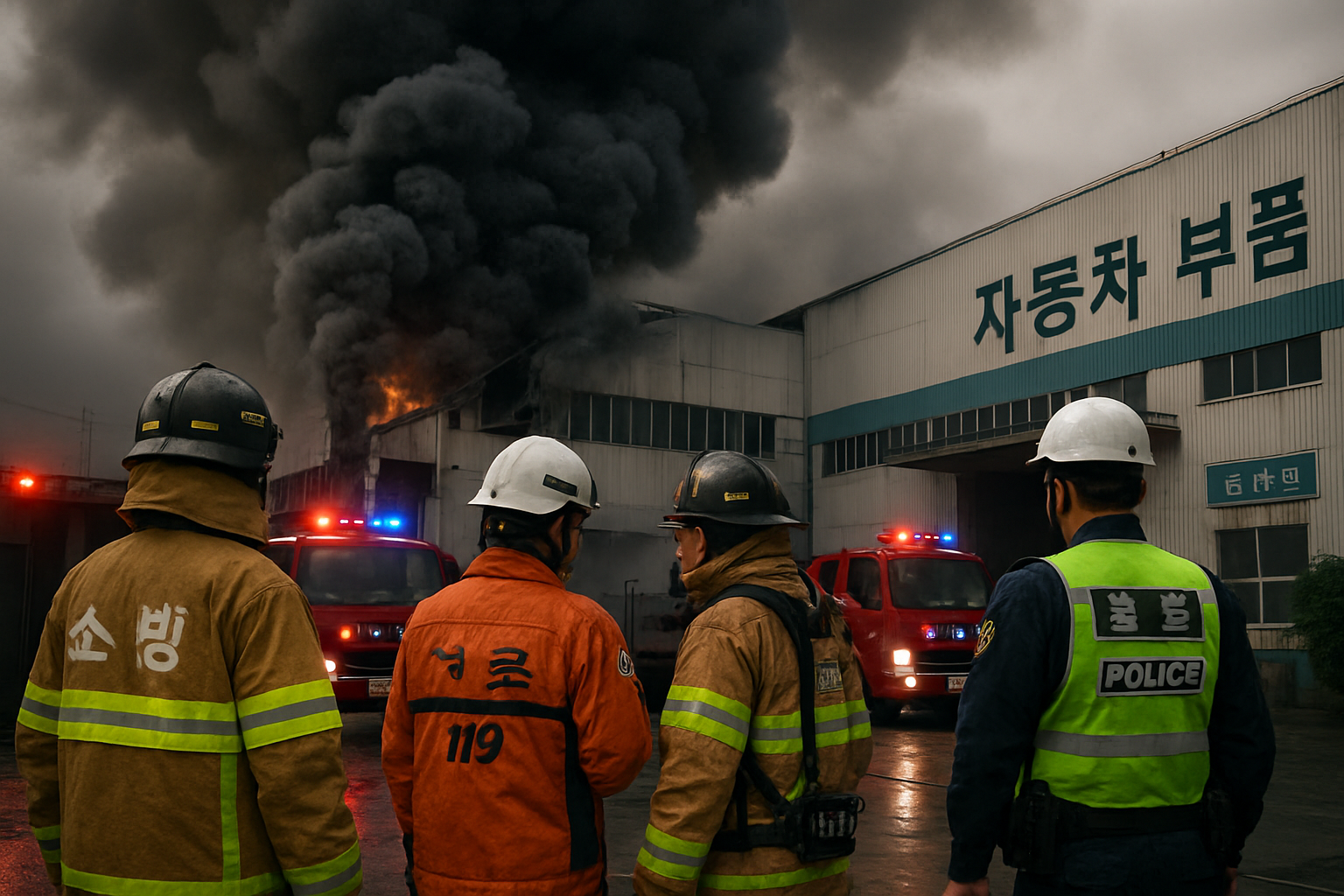
Fourteen people died and 60 others were injured in a devastating fire at an automotive parts factory in Daejeon, South Korea, marking the latest tragedy in what experts are calling an escalating industrial safety crisis across the country's manufacturing sector.
The fire erupted at approximately lunchtime on Friday at the automotive components manufacturing facility in South Korea's central city of Daejeon, according to fire authorities who confirmed the death toll on Saturday morning. Emergency responders battled the blaze for over 11 hours before finally containing it at 11:48 PM, the safety ministry reported.
Among the casualties, 25 people sustained serious injuries while an additional 35 suffered minor injuries, fire officials confirmed. As of Saturday morning, 28 people had been transported to hospitals, with four requiring emergency surgery for broken bones and other severe trauma.
Rescue Operations and Emergency Response
South Korean rescue workers spent hours recovering the remains of 14 victims from the charred wreckage of the facility. The intensity of the fire and structural damage to the building complicated rescue operations, with emergency teams deploying multiple units to coordinate the response.
The facility was reportedly operating at near-capacity when the fire broke out, with approximately 170 workers present during the midday shift. Dramatic footage from the scene showed thick gray smoke billowing from the industrial complex as workers could be seen jumping from windows to escape the rapidly spreading flames.
Fire officials have launched a comprehensive investigation into the cause of the blaze, focusing on potential safety violations, emergency evacuation procedures, and compliance with fire prevention regulations at the facility.
Context of Industrial Safety Crisis
This latest tragedy occurs against the backdrop of South Korea's record-breaking export performance, with the country achieving $67.45 billion in February 2026 outbound shipments—a 29% growth driven largely by semiconductor and automotive component manufacturing. However, this industrial success has come under scrutiny amid mounting workplace safety challenges.
"This incident highlights the critical importance of prioritizing worker safety alongside economic growth and industrial competitiveness."
— Ministry of Employment and Labor spokesperson
The automotive parts sector has experienced unprecedented demand as part of South Korea's broader manufacturing boom, but labor unions have increasingly demanded immediate workplace safety improvements and stronger enforcement of existing regulations.
Previous Safety Incidents
The Daejeon fire follows a concerning pattern of industrial accidents across South Korea's manufacturing sector. Just days earlier, another fire at a similar automotive parts facility resulted in multiple fatalities and dozens of injuries, prompting calls for comprehensive safety reform across the industry.
Labor authorities have announced a comprehensive investigation focusing on safety violations, emergency evacuation procedures, and fire prevention regulation compliance. Preliminary reports are examining the adequacy of safety equipment, employee training protocols, and building emergency exit systems.
Government Response and Investigation
The Ministry of Employment and Labor is expected to announce enhanced inspection procedures for automotive manufacturing plants following this latest incident. A crisis response center has been established in Daejeon to coordinate ongoing rescue operations and provide support to victims' families.
City administration officials announced a comprehensive review of industrial safety regulations in the region, with investigation results expected within weeks. Authorities have promised full transparency and accountability in their findings.
Broader Industrial Safety Concerns
The tragedy underscores the human cost of inadequate workplace safety measures in South Korea's rapidly expanding manufacturing sector. As the country has emerged as a major player in the global manufacturing supply chain—particularly in semiconductors and automotive components—safety advocates argue that worker protection has not kept pace with industrial growth.
The incident raises critical questions about the implementation of international safety standards in South Korean industrial facilities. With the country's manufacturing exports reaching record highs and global supply chain dependencies increasing, the spotlight on workplace safety has intensified.
Industry and Union Response
Labor unions have seized upon the latest tragedy to demand comprehensive reforms of workplace safety standards across the manufacturing sector. Union representatives argue that the pursuit of export growth and production targets has created an environment where safety protocols are insufficiently prioritized.
Industry associations have called for enhanced cooperation between government regulators, factory owners, and worker representatives to develop more robust safety frameworks that can prevent future tragedies while maintaining South Korea's competitive manufacturing edge.
Path Forward
As South Korea grapples with balancing its role as a critical global manufacturing hub with the imperative to protect worker safety, the Daejeon factory fire serves as a stark reminder of the stakes involved. The investigation's findings and subsequent policy responses will likely influence workplace safety standards not only in South Korea but potentially across the broader Asian manufacturing region.
The tragedy may serve as a catalyst for comprehensive reforms in workplace safety standards across South Korea's manufacturing sector, as the country seeks to maintain its competitive industrial edge while ensuring adequate protection for the workers who power its economic success.