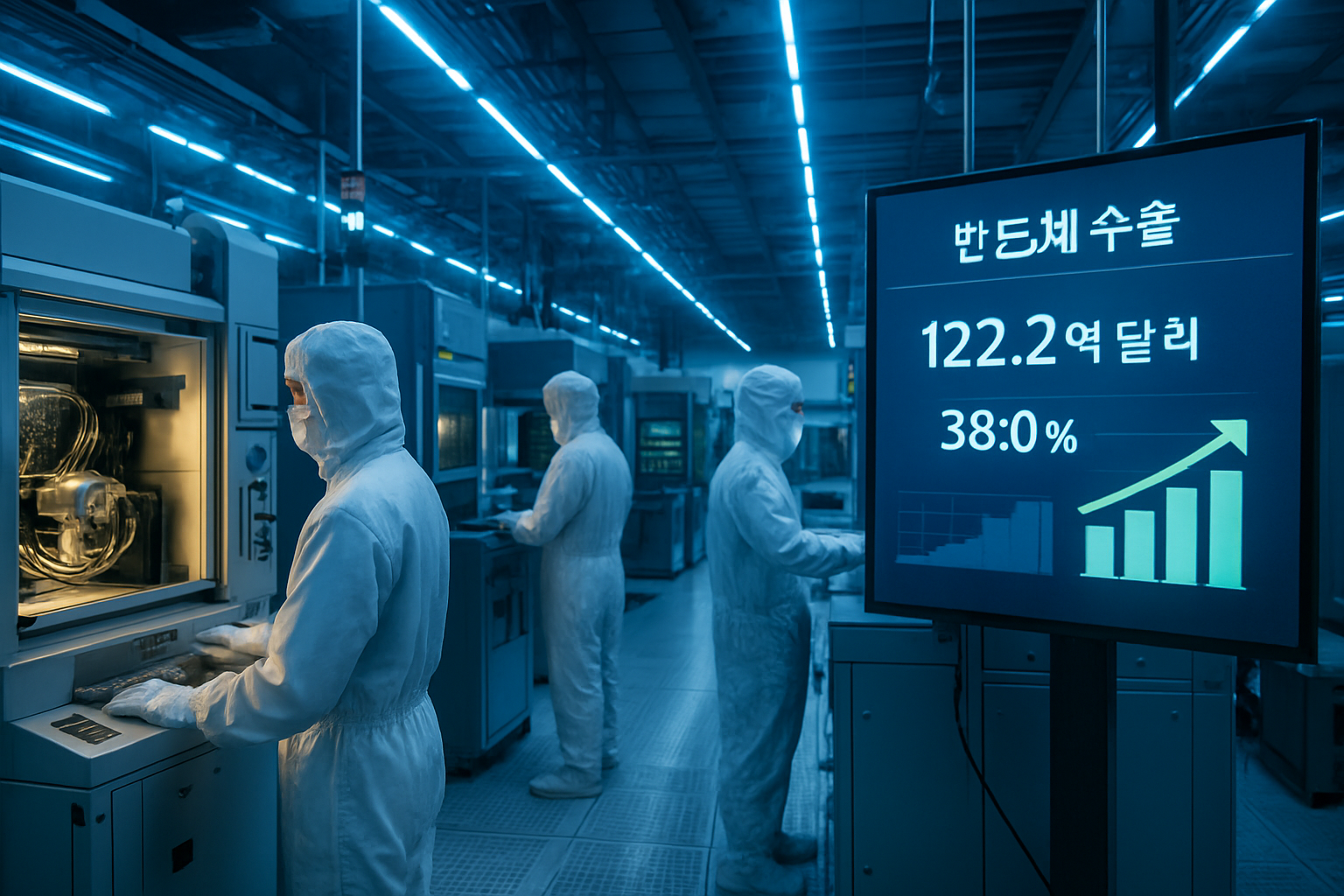
South Korea's exports soared to a record February high of $67.45 billion, marking an impressive 29 percent jump from the previous year as surging global semiconductor demand propelled the nation's economic recovery into its ninth consecutive month.
The remarkable performance, announced by the Ministry of Trade, Industry and Energy, represents a significant milestone for Asia's fourth-largest economy, with outbound shipments totaling $67.45 billion compared to $54.2 billion in February 2025. This achievement not only exceeded market forecasts but also established a new benchmark for February export performance in South Korean economic history.
Semiconductor Sector Drives Unprecedented Growth
The semiconductor industry emerged as the primary catalyst behind this export surge, capitalizing on a global memory chip shortage that has driven prices to unprecedented levels. Samsung, SK Hynix, and other South Korean chipmakers have experienced extraordinary demand as the ongoing global memory crisis continues to constrain supply across multiple sectors.
Industry analysts note that memory chip prices have increased sixfold since early 2024, creating exceptional opportunities for South Korean manufacturers who dominate global production. The shortage, expected to persist until new fabrication facilities come online in 2027, has positioned South Korea's semiconductor giants at the center of critical global supply chains.
"The semiconductor boom reflects not just temporary market conditions, but South Korea's strategic positioning in next-generation technology infrastructure,"
— Market Analysis, Yonhap News Agency
Nine-Month Expansion Streak Continues
February's stellar performance extends South Korea's export expansion streak to nine consecutive months, demonstrating the resilience of the country's export-oriented economy. This sustained growth trajectory has exceeded expectations throughout the recovery period, with consistent monthly gains reflecting both domestic industrial strength and favorable global market conditions.
The cumulative impact of this expansion has significantly boosted South Korea's economic outlook, with exports serving as a crucial engine for broader economic recovery. The consistent performance across multiple months indicates structural improvements rather than temporary market fluctuations.
Global Market Context and Competition
South Korea's export success occurs against a backdrop of complex global trade dynamics. While the country benefits from semiconductor demand, it faces increasing competition from China's advancing technology sector and ongoing supply chain realignments worldwide.
The performance contrasts sharply with economic challenges elsewhere in the region. Global financial markets have experienced significant volatility, including major corrections in cryptocurrency markets and concerns about artificial intelligence infrastructure investments. South Korea's traditional export sectors have proven more resilient than speculative technology investments.
Regional competitors have struggled with various challenges. China faces regulatory pressures on its technology sector, while Japan continues adapting to demographic constraints and shifting trade relationships. South Korea's focused approach to high-value manufacturing has provided competitive advantages during this period.
Sectoral Performance Beyond Semiconductors
While semiconductors led the charge, other South Korean export sectors also contributed to February's strong performance. The automotive industry, including both traditional vehicles and electric vehicle components, showed steady growth as global manufacturers seek reliable suppliers for advanced automotive technologies.
Shipbuilding, another traditional South Korean strength, benefited from renewed global trade activity and energy infrastructure investments. The country's advanced manufacturing capabilities in both maritime and energy sectors supported diversified export growth beyond the semiconductor focus.
Chemical and petrochemical exports also performed well, supported by global industrial recovery and South Korea's integrated production facilities. This sectoral diversity provides stability even as semiconductor demand fluctuates.
Economic Policy Implications
The export surge validates South Korea's long-term industrial policy focus on high-technology manufacturing and innovation. Government investments in research and development, particularly in semiconductor technology and advanced manufacturing, have positioned the country to capitalize on current market opportunities.
South Korea's KOSPI stock index has reflected this export strength, achieving historic milestones including breaking through the 5,500-point barrier for the first time in February. The stock market performance demonstrates investor confidence in the country's export-driven growth model.
The sustained export growth also supports the Korean won's stability and provides the Bank of Korea with flexibility in monetary policy decisions. Strong export earnings help offset global economic uncertainties and provide resources for continued industrial investment.
Looking Forward: Challenges and Opportunities
Despite February's exceptional performance, South Korea faces several challenges in maintaining export momentum. The global memory chip shortage that currently benefits Korean manufacturers will eventually resolve as new production capacity comes online, potentially normalizing prices and profit margins.
Geopolitical tensions, particularly involving major trading partners, create ongoing uncertainty for export-dependent economies. South Korea must navigate complex international relationships while maintaining access to key markets for its advanced manufacturing products.
Climate change and sustainability requirements are also reshaping global trade patterns. South Korea's ability to adapt its export industries to meet evolving environmental standards will determine long-term competitiveness in key sectors.
Regional and Global Significance
South Korea's export success carries implications beyond national borders. As a key supplier of semiconductors and advanced manufacturing components, the country's performance affects global supply chains across multiple industries.
The sustained growth also demonstrates the potential for export-oriented economies to achieve rapid recovery when positioned in high-demand sectors. This model may influence policy decisions in other countries seeking to rebuild their manufacturing capabilities.
For global businesses, South Korea's export surge underscores the critical importance of semiconductor supply chains and the strategic value of maintaining diverse supplier relationships. The current shortage has highlighted vulnerabilities in global technology infrastructure that extend far beyond individual companies or sectors.
As South Korea continues its export expansion streak, the country's experience provides valuable insights into managing economic recovery in an increasingly complex global environment. The combination of technological expertise, industrial capacity, and strategic market positioning has enabled exceptional performance during a challenging period for the global economy.