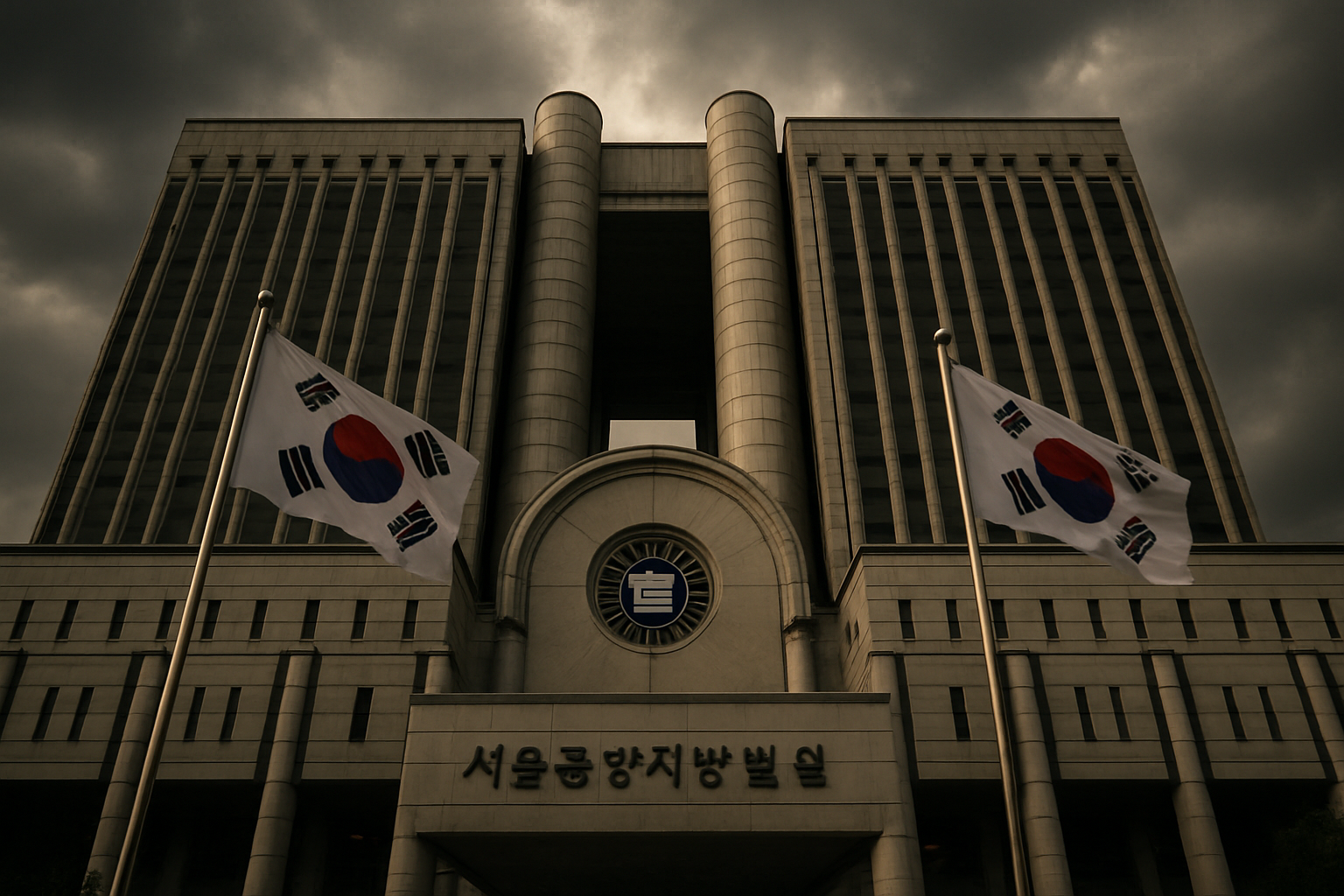
A South Korean court sentenced former President Yoon Suk Yeol to life imprisonment on Thursday, February 19, 2026, after finding him guilty of leading an insurrection and abuse of authority stemming from his December 2024 attempt to impose martial law.
The Seoul Central District Court delivered the historic verdict in what prosecutors had described as an "unconstitutional and illegal emergency martial law" that sought to "undermine the function of the National Assembly and the Election Commission," effectively "destroying the liberal democratic constitutional order."
Judge Ji Gui-yeon announced the sentence to a packed courtroom, declaring "We sentence Yoon to life imprisonment" for his conviction on charges of masterminding an insurrection. Special prosecutors had originally sought the death penalty in this closely watched case that has deeply divided the nation.
The Failed Martial Law Bid
Yoon's dramatic attempt to impose martial law in December 2024 lasted only hours but triggered a national political crisis that tested South Korea's democratic resilience. The former prosecutor-turned-president declared emergency rule in what prosecutors characterized as an attempt to gain more political power and suppress opposition forces.
The martial law declaration was swiftly overturned by the National Assembly, leading to Yoon's impeachment and removal from office. The failed coup attempt marked one of the most serious threats to South Korean democracy since the country's transition from military rule in the 1980s.
"This unconstitutional and illegal emergency martial law undermined the function of the National Assembly and the Election Commission... actually destroying the liberal democratic constitutional order."
— South Korean Prosecutors, January 2026
A Prosecutor's Fall from Grace
The verdict carries particular symbolic weight given Yoon's background as a former prosecutor who had once sworn to defend constitutional order. His transformation from a legal professional dedicated to upholding the law to a convicted insurrectionist represents what some observers have called the most ironic chapter in South Korea's modern political history.
Yoon had built his political career on promises to strengthen democratic institutions and combat corruption. His electoral victory in 2022 was seen as a mandate for conservative governance and closer ties with the United States. However, his presidency became increasingly marked by political polarization and constitutional confrontations.
Widespread International Coverage
The sentencing has drawn extensive international attention, with major news outlets across Europe, Asia, and the Americas covering the unprecedented nature of the case. From Germany's FAZ describing it as a "coup attempt," to France24's characterization as an "insurrection," the global media has emphasized the gravity of the charges and their implications for democratic governance.
The case has been particularly closely monitored in neighboring Asian democracies, where it serves as both a cautionary tale about democratic fragility and a testament to institutional resilience when faced with authoritarian threats.
Co-Defendants and Broader Accountability
The court also sentenced several of Yoon's key allies who were involved in the martial law plot. Former Defense Minister Kim Yong-hyun received a 30-year prison sentence for his role in the conspiracy, while former intelligence chief Roh Sang-won was sentenced to 18 years in prison.
Additional sentences were handed down to other officials involved in the scheme, including former Seoul Police Chief Kim Bong-sik, who received 10 years, and Mok Hyun-tae, former chief of the National Assembly's police guard, who was sentenced to three years in prison.
Defense Claims and Appeal Plans
Yoon's legal team has maintained his innocence throughout the proceedings, with his lawyers arguing that the former president was "prejudged" and claiming that the conviction was not supported by evidence. The defense team has indicated they will consider appealing the verdict, though they have not yet made a final decision.
The defense had argued that Yoon's actions, while controversial, did not constitute insurrection under South Korean law. However, the court rejected these arguments, finding that the systematic attempt to suppress democratic institutions met the legal threshold for the most serious charges.
Public and Political Response
The verdict has elicited strong reactions across South Korea's political spectrum. National Assembly Speaker Woo Won-shik urged Yoon to apologize to the nation for his actions, stating that the former president should acknowledge the harm caused by his martial law attempt.
Public opinion remains deeply divided, reflecting the broader polarization that characterized Yoon's presidency. Supporters view him as a victim of political persecution, while opponents see the sentence as necessary accountability for an unprecedented assault on democratic norms.
Historical Context and Precedent
South Korea's modern history is marked by periods of military rule and democratic struggle, making Yoon's case particularly resonant. The country's transition to democracy in the late 1980s was hard-won, and many citizens view any attempt to impose martial law as an unacceptable regression.
This marks the most serious constitutional crisis South Korea has faced since democratization, and the life sentence represents the courts' determination to establish clear consequences for attacks on democratic institutions. The case sets an important precedent for how South Korea will handle future threats to its constitutional order.
International Implications
The case has drawn attention from democracy advocates worldwide as an example of how established democracies can respond to internal threats. The successful prosecution of a sitting president for attempting to overthrow constitutional government sends a strong message about the rule of law's primacy.
For South Korea's international relationships, the case demonstrates the stability and maturity of its democratic institutions, even when facing severe internal challenges. This institutional resilience is particularly important given the country's strategic position in Northeast Asia amid ongoing regional tensions.
Looking Forward
While Yoon's conviction represents a conclusion to the immediate constitutional crisis, South Korea continues to grapple with the deeper political divisions that made such an extreme action possible. The case has prompted calls for institutional reforms to prevent future attempts to subvert democratic governance.
The life sentence, while avoiding the death penalty originally sought by prosecutors, sends a clear signal that attacks on democratic institutions will face the full force of the law. As South Korea moves forward from this dark chapter, the focus now turns to healing political divisions and strengthening democratic resilience.
The historic nature of this case – involving the conviction of a former president for insurrection – underscores both the fragility and the ultimate strength of democratic institutions when they are put to the ultimate test. For South Korea, it represents both a moment of reckoning and an opportunity for democratic renewal.