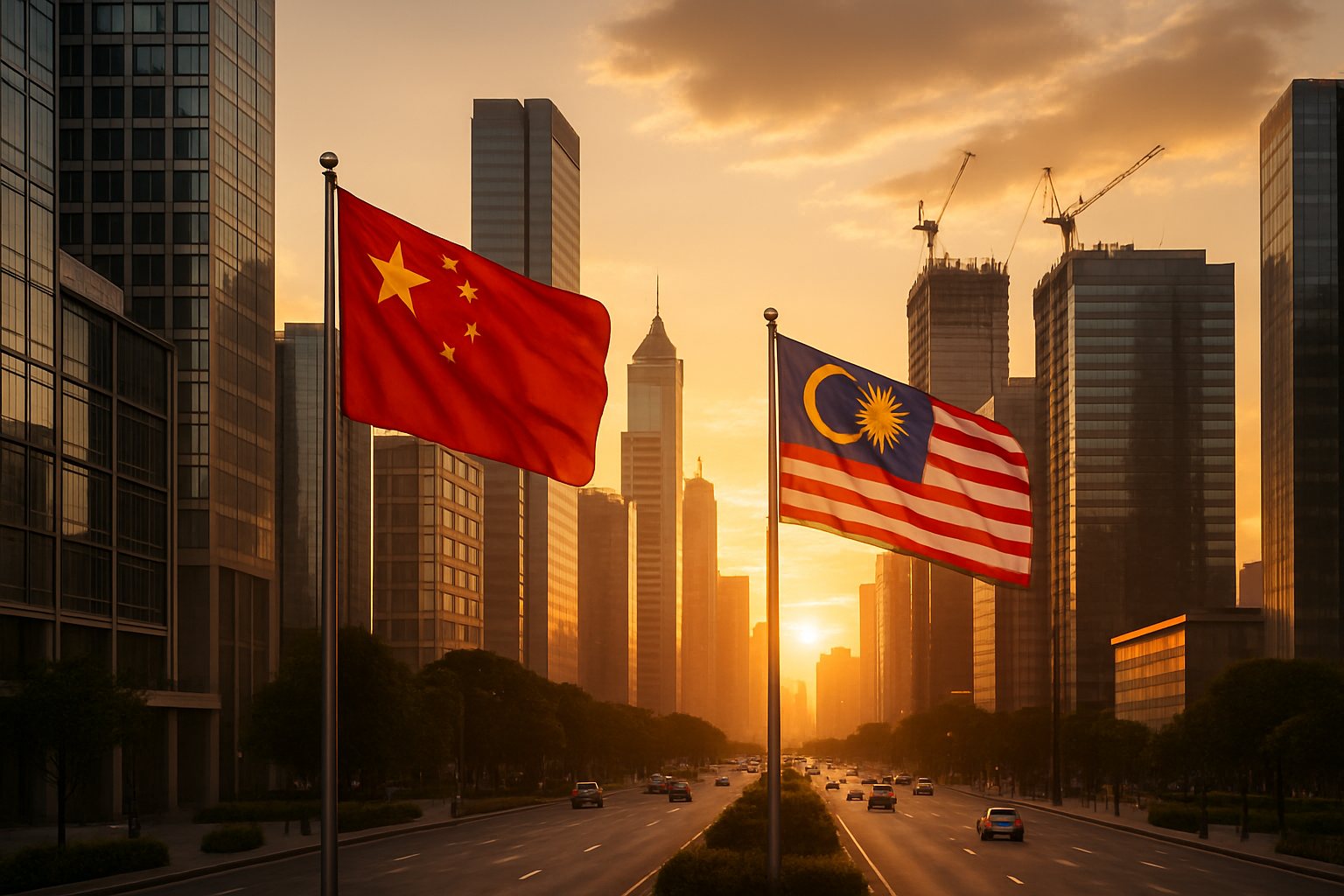
Southeast Asia is experiencing a significant wave of Chinese investment in automotive manufacturing and infrastructure development, with major commitments flowing into Pakistan's electric vehicle sector while Malaysian political dynamics continue to evolve, marking a pivotal moment in the region's economic transformation.
The most substantial development centers on Pakistan's Punjab province, where a 17-member Chinese delegation led by Lu Jinhai, Chairman of Aerospace Development Industry Investment Group Co. Ltd., met with Provincial Minister for Industries and Commerce Chaudhry Shafay Hussain to discuss large-scale investment opportunities in the rapidly growing electric vehicle sector.
Major Chinese EV Investment in Pakistan
The Chinese investment group has expressed strong interest in establishing comprehensive manufacturing infrastructure across Pakistan's automotive ecosystem. Lu Jinhai outlined ambitious plans to establish assembly plants for two-wheelers, three-wheelers, and four-wheel electric vehicles, representing a multi-sector approach to the country's transportation electrification.
Beyond manufacturing, the Chinese consortium intends to create the supporting infrastructure essential for widespread EV adoption, including the manufacture and installation of charging stations across Punjab province. This integrated approach addresses one of the primary barriers to electric vehicle adoption in developing markets - the lack of reliable charging infrastructure.
"The company is also planning to manufacture and install EV charging stations across the province."
— Lu Jinhai, Chairman, Aerospace Development Industry Investment Group Co. Ltd.
The investment aligns with broader global trends in automotive manufacturing, where Chinese companies are increasingly establishing production facilities in overseas markets to serve local and regional demand while avoiding potential trade barriers.
Malaysian Political Developments Impact Business Environment
Meanwhile, Malaysia's political landscape continues to evolve with developments that could significantly impact the country's business environment and international partnerships. Recent political discussions have centered on historical lobbying efforts and party consolidation activities that reflect the ongoing maturation of Malaysia's democratic institutions.
The political developments come at a crucial time as Malaysia seeks to maintain its position as a key destination for international investment while navigating complex regional partnerships with China, the United States, and other major economies.
According to historical context from our memory archives, Malaysia has been actively pursuing diverse international partnerships while maintaining a balanced engagement approach, seeking to benefit from Chinese investment while preserving strategic autonomy.
Regional Investment Context and Trends
The Pakistani investment announcement occurs within a broader context of significant Chinese engagement across Southeast and South Asia. Previous developments have shown China's strategic approach to automotive sector investment, including comprehensive bans on hidden door handles in vehicles effective January 2027, requiring mechanical releases for safety purposes - regulations that affect Tesla, BYD, NIO, and XPeng operations globally.
China's automotive sector influence extends beyond manufacturing to regulatory standards-setting, with the country's policies increasingly influencing international automotive design and safety requirements due to its position as the world's largest automotive market.
Supply Chain Considerations
The investments come amid ongoing global supply chain challenges, including memory chip shortages causing sixfold price increases affecting vehicle control systems. China maintains dominance in critical materials production (60% of global production and 90% of refining capacity), creating both opportunities and vulnerabilities for markets like Pakistan and other Southeast Asian nations.
The US-EU-Japan Critical Minerals Partnership, involving 55 countries and seven African suppliers, represents efforts to diversify supply chains away from Chinese dominance, though these alternatives require years of development and massive capital investment.
Economic Development Implications
The Chinese investment in Pakistan's automotive sector represents more than simple foreign direct investment - it signifies the potential transformation of Pakistan's industrial base toward advanced manufacturing in growth sectors. The electric vehicle industry offers opportunities for technology transfer, workforce development, and integration into global automotive supply chains.
For the broader region, such investments demonstrate the ongoing importance of Chinese capital in Southeast Asian development, despite geopolitical tensions between China and Western nations. Countries like Pakistan and Malaysia continue to view Chinese investment as essential for infrastructure modernization and industrial development.
The automotive sector investments align with global climate commitments and the international push toward transportation electrification. Pakistan's participation in this transition through Chinese partnership could position the country as a regional hub for electric vehicle production and export.
Strategic Regional Implications
These developments reflect broader strategic competition in Southeast Asia, where Chinese economic engagement competes with initiatives from the United States, European Union, Japan, and other major economies. The success of Chinese investments in sectors like automotive manufacturing strengthens China's economic influence and creates dependencies that could have long-term geopolitical implications.
Malaysia's political stability and institutional development remain crucial for maintaining investor confidence, while Pakistan's embrace of Chinese automotive investment demonstrates the country's commitment to modernizing its industrial base despite ongoing economic challenges.
The convergence of Chinese capital, Southeast Asian manufacturing capabilities, and global demand for electric vehicles creates opportunities for mutually beneficial economic relationships, though these must be balanced against concerns about technological dependence and economic sovereignty.
Future Outlook
The success of these investments will likely influence additional Chinese engagement across Southeast Asia's automotive and infrastructure sectors. Pakistan's experience with Chinese EV manufacturing could serve as a template for similar developments in other regional markets, while Malaysia's political evolution will determine its capacity to attract and effectively utilize international investment.
As global supply chains continue to evolve and countries seek to reduce dependencies on single sources, the Southeast Asian region's role as a manufacturing and investment destination becomes increasingly important for both Chinese companies seeking overseas expansion and regional governments pursuing industrial development.