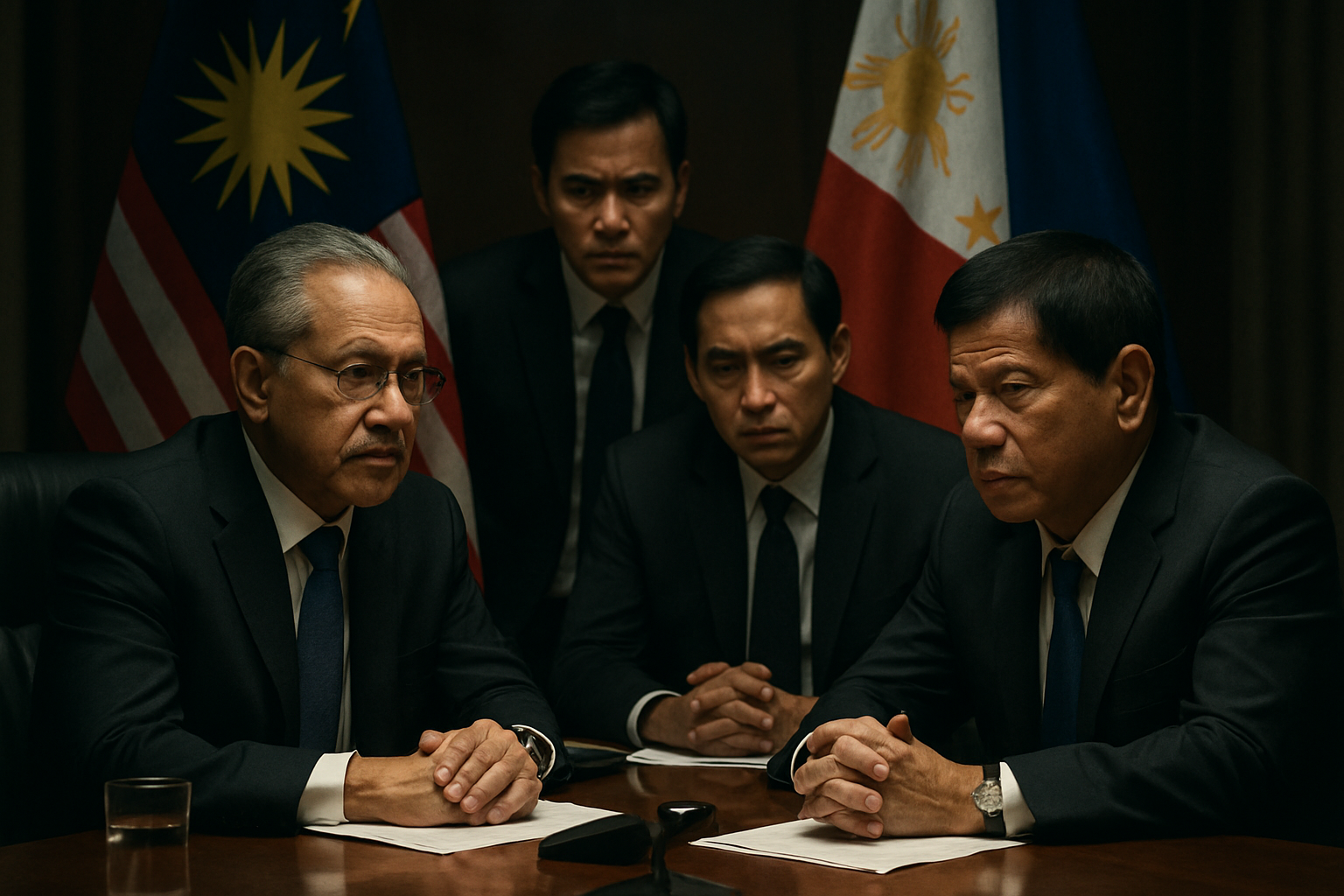
Southeast Asia finds itself at a critical political juncture as two of its most prominent democracies navigate significant institutional challenges, with the Philippines narrowly averting a Senate leadership coup and Thailand's establishment Democratic Party struggling to maintain relevance in an increasingly polarized electoral landscape.
The political drama unfolded simultaneously across both nations on February 4, 2026, highlighting the fragility of democratic institutions and the evolving nature of power dynamics in a region grappling with economic pressures and shifting geopolitical alignments.
Philippines: Senate Power Play Exposed
In a dramatic scene that played out in the hallowed halls of the Philippine Senate, Senator Loren Legarda briefly assumed the presiding officer's chair on Wednesday, February 4, sparking immediate speculation about a potential coup against Senate President Tito Sotto. The moment, captured during the resumption of session after a suspension of more than an hour, saw Senate Majority Floor Leader Migz Zubiri address Legarda as "Madame President," while Senators Tito Sotto and JV Ejercito were observed smiling behind Zubiri, seemingly sharing in what appeared to be either jest or political maneuvering.
The incident was not merely ceremonial. Since Monday, rumors had been circulating within political circles that the minority bloc was actively courting Legarda to challenge Sotto's leadership of the upper chamber. The timing of these efforts was particularly significant, coming amid the draft Senate blue ribbon committee report that recommended plunder charges against senators Chiz Escudero, Joel Villanueva, and Jinggoy Estrada over alleged anomalous flood control projects.
"The minority bloc had secured enough votes to make a leadership change possible, but the majority successfully countered the attempt."
— Senate sources, speaking on condition of anonymity
According to sources within the Senate, the coup attempt was more than mere speculation. Multiple posts on social media platforms had claimed that the minority bloc had secured sufficient support to challenge the existing leadership structure. However, Sotto's allies moved quickly to neutralize the threat, demonstrating the complex chess game that characterizes Philippine legislative politics.
The attempted power grab comes at a particularly sensitive time for Philippine politics, with corruption scandals and governance issues dominating public discourse. The flood control project anomalies that sparked the current controversy involve millions of pesos in questionable expenditures, reflecting broader concerns about institutional accountability and transparency in government operations.
Thailand: Democrats' Diminishing Influence
Meanwhile, in Thailand, a different but equally significant political story is unfolding as the country prepares for its 2026 elections. Abhisit Vejjajiva, the Oxford-educated former prime minister and current leader of the Democrat Party, finds his political movement relegated to the margins of what was once its traditional sphere of influence.
The Democrat Party, Thailand's oldest active political formation, is facing an unprecedented crisis of relevance. Current polling data suggests the party is unlikely to secure more than 40 seats in the upcoming election, a dramatic decline from its historical position as a major force in Thai politics. This represents a fundamental shift in the country's political landscape, where establishment politics increasingly struggle to compete with populist movements and regional power bases.
Vejjajiva's candidacy represents what analysts describe as "the most traditional establishment option in a race increasingly defined by polarisation and political fragmentation." Despite his impressive educational credentials and previous experience as prime minister, his ability to connect with contemporary Thai voters appears limited, reflecting broader challenges faced by traditional political elites across Southeast Asia.
The decline of the Democrats is particularly striking given Thailand's complex political history. The party has historically served as a counterweight to more populist forces, representing urban, educated constituencies and traditional establishment interests. Its current marginalization suggests a profound realignment in Thai political preferences, with voters increasingly drawn to more radical alternatives or regional power brokers.
Regional Implications
These concurrent political dramas reflect broader trends affecting democratic governance across Southeast Asia. Both the Philippines and Thailand are experiencing what political scientists characterize as "institutional stress," where traditional democratic mechanisms face challenges from both internal corruption and external pressures.
The Philippines' near-miss with a Senate leadership change demonstrates the ongoing volatility within its legislative institutions. While the country has maintained democratic governance since the end of the Marcos era, recent years have seen increasing polarization and institutional conflicts that threaten governmental stability.
Thailand's political evolution, meanwhile, reflects the challenges facing traditional parties in adapting to rapidly changing demographic and economic conditions. The Democrat Party's struggle mirrors similar challenges faced by establishment political movements across the region, as voters increasingly demand more responsive and less elitist governance approaches.
Economic and Security Context
These political developments occur against a backdrop of significant economic and security challenges facing both nations. The Philippines continues to grapple with corruption issues that undermine public confidence in government institutions, while Thailand faces pressure to maintain its position as a regional economic hub amid increasing competition from neighboring countries.
Both nations are also navigating complex geopolitical pressures, with China's growing influence in the region creating new diplomatic and economic dynamics that traditional political establishments struggle to address effectively. The marginalization of traditional parties like Thailand's Democrats may reflect voter frustration with perceived inadequate responses to these regional challenges.
Looking Forward
The simultaneous political upheavals in both countries underscore the fragile nature of democratic institutions in Southeast Asia. While both the Philippines and Thailand have maintained democratic frameworks, recent events suggest that these systems face ongoing challenges that require careful management and potential reform.
The success of the Sotto bloc in maintaining Senate leadership in the Philippines may provide short-term stability, but underlying issues related to corruption and institutional accountability remain unresolved. Similarly, while Thailand's upcoming elections will likely proceed as planned, the marginalization of traditional political forces raises questions about the long-term stability of the country's democratic institutions.
For the broader Southeast Asian region, these developments serve as important indicators of democratic health and institutional resilience. The ability of both countries to navigate their current political challenges while maintaining democratic norms will have significant implications for regional stability and the broader trajectory of democratic governance in Southeast Asia.
As both nations continue to grapple with these institutional challenges, international observers will be watching closely to see whether democratic mechanisms prove robust enough to handle the pressures of modern governance in an increasingly complex regional and global environment.