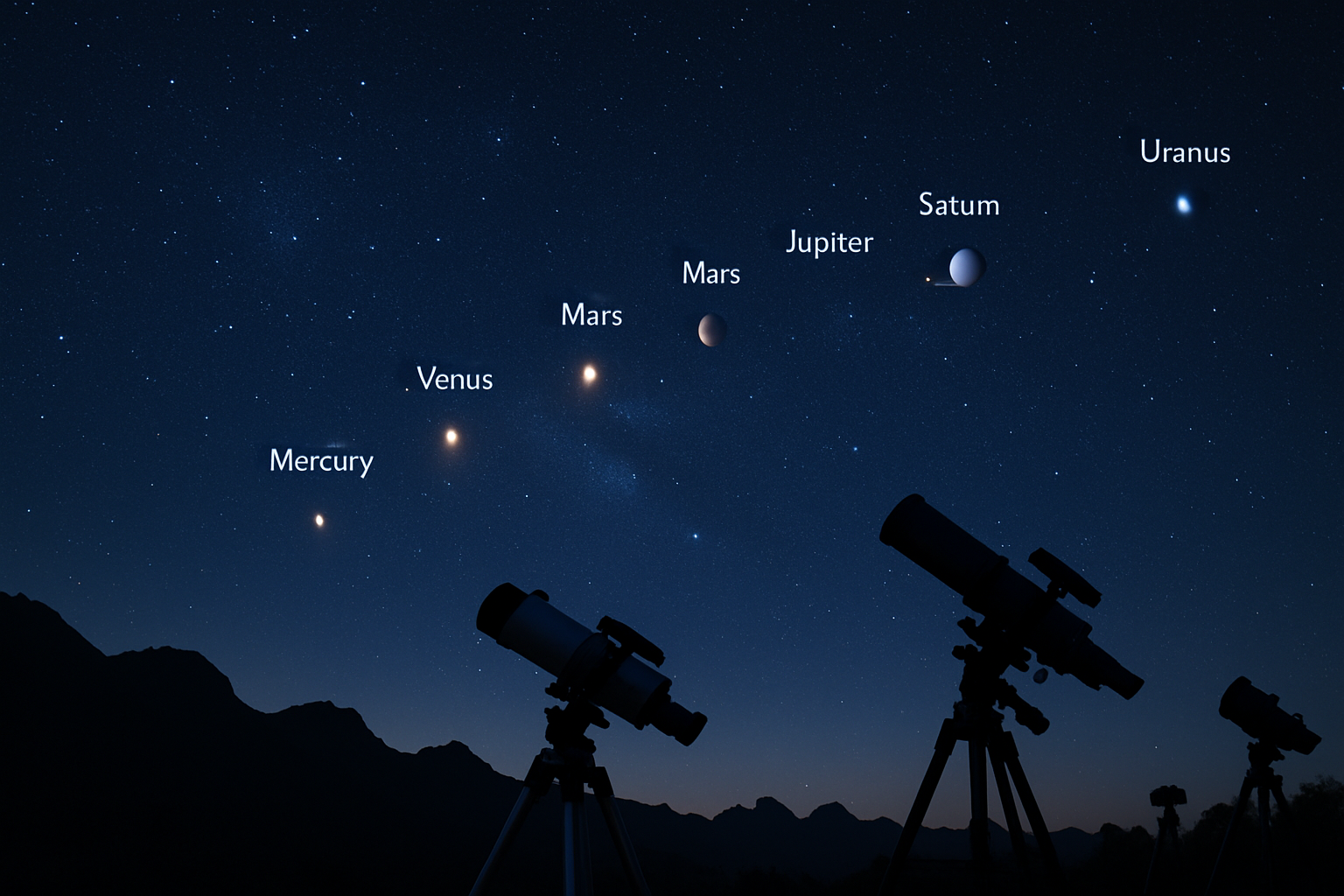
February 2026 has emerged as a landmark month for space and astronomy discoveries, with groundbreaking findings spanning from distant black holes to revolutionary space photography techniques, promising new astronomical spectacles for Earth-bound observers.
Revolutionary Black Hole Discovery Challenges Cosmic Understanding
In what scientists are calling one of the most unusual astronomical events in decades, a supermassive black hole located approximately 665 million light-years from Earth has been exhibiting extraordinary behavior that defies conventional understanding of these cosmic giants. The black hole has been continuously ejecting matter into space for over six years after consuming a star, in what researchers describe as "very poor eating habits."
This phenomenon, technically known as a tidal disruption event, typically involves a black hole violently tearing apart and consuming a star before briefly expelling excess matter. However, this particular black hole appears to be suffering from cosmic "indigestion," continuously "burping" material long after the initial stellar consumption.
"This represents a fundamental challenge to our understanding of how black holes process stellar material. The sustained ejection over six years suggests far more complex feeding mechanisms than we previously thought possible."
— Research Team, International Observatory Network
The discovery builds upon previous research documented in our archives, which noted similar persistent emissions challenging conventional tidal disruption event models. This latest observation provides crucial data for understanding long-term black hole dynamics and their role in galactic evolution.
NASA Embraces Consumer Technology for Lunar Photography
In a groundbreaking move that bridges consumer technology with space exploration, NASA has officially certified Apple smartphones for astronaut photography during the upcoming Artemis II lunar mission. This historic decision marks the first time consumer-grade technology will be formally integrated into NASA's lunar photography protocols.
The Artemis II mission, scheduled to send four astronauts around the Moon in the coming weeks, will utilize iPhone technology to capture unprecedented imagery of the lunar surface and far-side regions. This represents a significant departure from traditional specialized space photography equipment, demonstrating how consumer technology has reached sufficient quality standards for scientific documentation.
The decision comes as NASA continues preparations for what will be humanity's first crewed mission beyond Earth orbit since Apollo 17 in 1972. Our archives show the Artemis II program has faced several technical challenges, including hydrogen leak issues that delayed the mission from its original February launch window to March 2026.
Promising Comet Discovery Sparks Astronomical Excitement
Astronomers worldwide are buzzing with excitement over a newly discovered comet that promises to deliver a spectacular celestial show in early April 2026. The comet, recently identified through international observation networks, represents one of the most promising astronomical events for amateur and professional observers alike.
Early observations suggest the comet could become visible to the naked eye as it approaches its closest point to the Sun, potentially rivaling some of the most memorable cometary displays in recent decades. The discovery timing is particularly fortuitous, as it coincides with an extraordinary period of space exploration and astronomical discovery.
This comet discovery adds to the remarkable astronomical events documented throughout early 2026, including the recent identification of the largest sulfur-containing organic molecules ever found in interstellar space, which scientists have described as a "missing link" in understanding cosmic chemistry and life's origins.
James Webb Telescope Continues Revolutionary Observations
The James Webb Space Telescope continues to revolutionize our understanding of the cosmos with groundbreaking observations of distant galaxy clusters. Recent imagery of the Abell S1063 galaxy cluster, located approximately 4.5 billion light-years from Earth in the constellation Grus (the Crane), demonstrates the telescope's unprecedented capabilities in capturing deep-space phenomena.
These observations represent part of the telescope's ongoing mission to peer deeper into space and further back in time than ever before possible. The Webb telescope, a joint project of NASA, ESA, and the Canadian Space Agency, continues to benefit from its unique L2 Lagrange point positioning, allowing for unobstructed observations of the universe.
Our archives show that the James Webb telescope has been instrumental in several recent breakthroughs, including the historic detection of cosmic rays in the Barnard 68 nebula, achieved by researchers at the Technion-Israel Institute of Technology. This work opened what scientists call a "new field of astrophysics research."
Extreme Environments: From Space to Ocean Depths
While space discoveries dominated headlines, researchers also made remarkable progress in understanding extreme environments closer to home. The discovery and filming of a massive phantom jellyfish in the Atlantic Ocean, described as "large as a school bus," provides crucial insights into deep-sea ecosystems that may parallel conditions in other planetary oceans.
This mysterious deep-sea predator, rarely captured on film, features distinctive "flags" that can extend up to ten meters in length. Such discoveries are particularly relevant as scientists increasingly recognize the importance of studying extreme Earth environments to better understand potential life conditions on moons like Europa and Enceladus.
International Cooperation Drives Space Advancement
The February 2026 discoveries underscore the critical importance of international cooperation in space research. From the multi-national teams operating the James Webb telescope to the global network of astronomers tracking the new comet, these achievements represent coordinated efforts across borders and institutions.
This collaborative approach occurs within a broader context of expanding space capabilities. Our archives document Thailand's appointment as chair of the UN Scientific and Technical Subcommittee for space governance, representing emerging nations' growing influence in space policy. Meanwhile, technological advances continue with developments in space-based AI systems and autonomous exploration capabilities.
Looking Forward: Space Economy and Exploration
These discoveries come at a pivotal moment in space exploration history. Analysts identify 2026 as a transition year from the AI revolution of 2020-2025 to what they term the "space economy golden age." The convergence of commercial space capabilities, international cooperation, and scientific discovery is establishing space as a critical frontier for human technological development.
The integration of consumer technology like iPhone photography into NASA missions represents just one example of how the boundaries between commercial and professional space technology continue to blur. This democratization of space technology, combined with remarkable scientific discoveries, suggests that 2026 may be remembered as a watershed year for space exploration and astronomical understanding.
As the newly discovered comet approaches its April 2026 appearance, and as black holes continue to reveal their secrets through extended observation campaigns, the cosmic landscape appears more dynamic and accessible than ever before. These discoveries not only expand our scientific understanding but also inspire continued investment in space exploration and astronomical research for future generations.