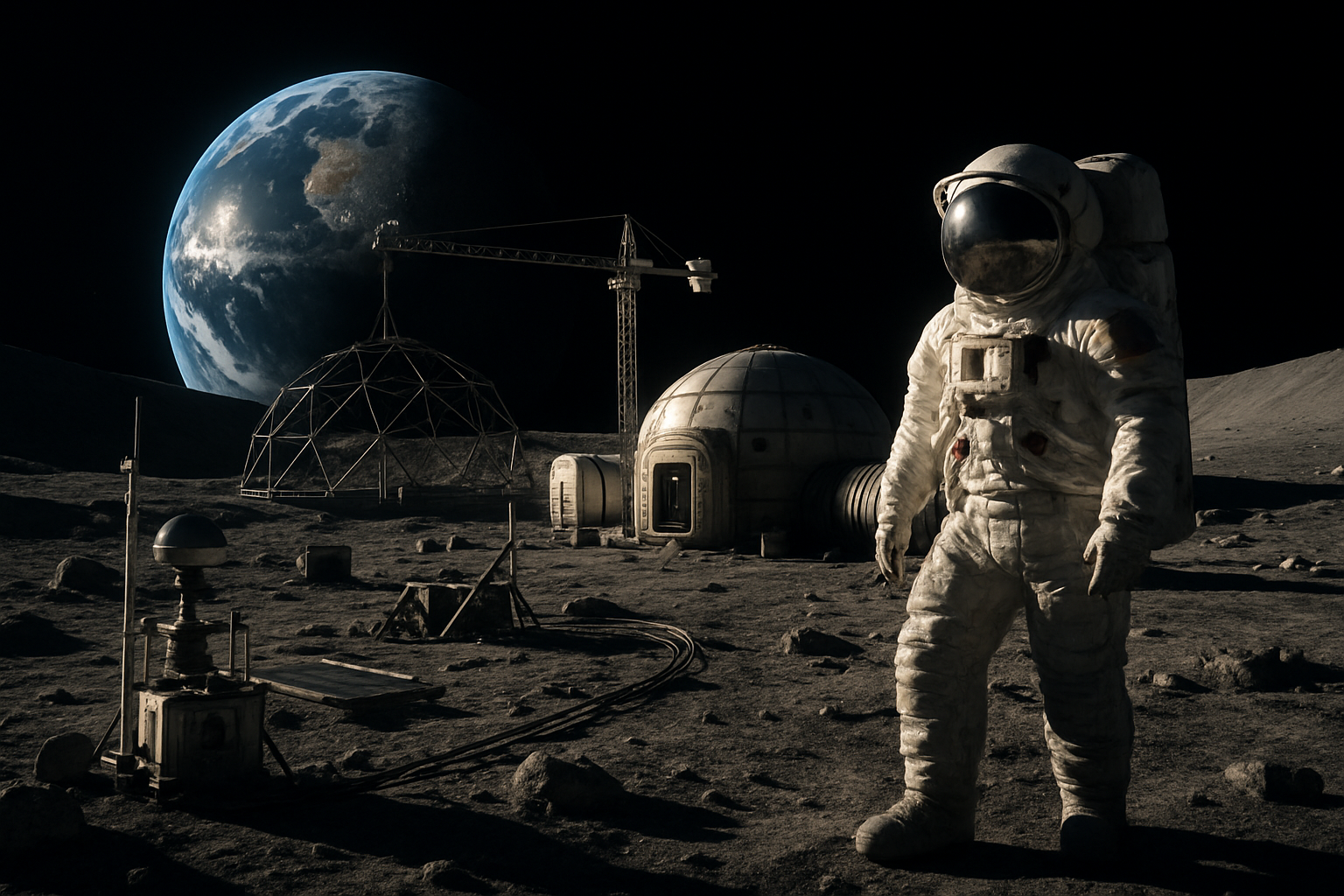
Space exploration programs worldwide are grappling with significant technical challenges and schedule delays as the international community races to establish a sustainable human presence beyond Earth, with NASA's flagship Artemis program postponing critical missions while Russia advances its lunar research initiatives.
The latest developments reveal the persistent complexity of deep space exploration, as NASA continues to address technical issues with its Space Launch System (SLS) rocket while international partners pursue their own ambitious lunar exploration goals. The delays underscore the delicate balance between maintaining rigorous safety standards and meeting increasingly competitive timelines in what industry experts describe as the "space economy golden age."
NASA Artemis Program Confronts Ongoing Delays
NASA's Artemis II mission has experienced its third major delay, pushing the crucial lunar flyby mission beyond the originally planned March 2026 launch window. The latest postponement stems from critical helium system failures affecting the SLS rocket's upper stage, compounded by persistent hydrogen leak issues that have plagued the program for months.
NASA Administrator Jared Isaacman emphasized the agency's commitment to crew safety over schedule adherence, stating "we will only launch when we believe we are ready." This approach reflects institutional learning from historical space program tragedies and demonstrates NASA's evolved safety-first culture.
The Artemis II mission is designed to carry four astronauts—Canadian Jeremy Hansen, NASA's Reid Wiseman (commander), Christina Koch, and Victor Glover—on a 10-day lunar flyby covering approximately 600,000 miles. The mission represents humanity's first crewed venture beyond Earth orbit since Apollo 17 in December 1972, making it a critical stepping stone toward the planned Artemis III lunar landing in 2027.
Technical Challenges Reveal System Complexity
The technical problems affecting the SLS rocket highlight the sophisticated engineering requirements for deep space exploration. The helium system failures occurred during critical testing phases, with the system being essential for engine purging and fuel tank pressurization—functions that cannot be compromised without risking crew safety.
The 322-foot SLS rocket, weighing 5.75 million pounds when fully fueled, requires over 700,000 gallons of liquid hydrogen and oxygen. Issues emerged consistently at T-minus 5 minutes during simulated countdowns, forcing teams to extend their timeline for methodical problem resolution.
These challenges demonstrate the complexity of transitioning from the successful but aging Space Shuttle program to next-generation deep space transportation systems. The SLS represents the most powerful rocket NASA has ever built, designed specifically for lunar missions and eventual Mars exploration.
Russia Advances Lunar Research Initiatives
While NASA addresses technical setbacks, Russia has made significant progress in lunar research capabilities. Russian scientists have identified potential locations on the Moon for future exploration activities, representing a strategic advancement in the international lunar race.
This development occurs alongside Russia's continued space program operations despite international sanctions related to the Ukraine conflict. The country's space agency has maintained its technical capabilities and research programs, including collaborative efforts on the International Space Station and independent lunar exploration initiatives.
Russia's lunar research comes at a time when multiple nations are developing their own space exploration capabilities, creating a competitive environment that contrasts sharply with the collaborative Apollo-era space race dynamics.
International Space Competition Intensifies
The current space exploration landscape reflects a fundamental shift from the Cold War-era US-Soviet competition to a multi-polar environment involving commercial entities, emerging space powers, and established agencies. China's Shenlong reusable spacecraft program continues advancing, Pakistan has selected astronaut candidates for missions to China's Tiangong space station, and European nations are expanding their independent launch capabilities.
SpaceX, preparing for what could be a trillion-dollar IPO in June 2026, has strategically pivoted from Mars colonization to lunar settlement development, recognizing the Moon's advantages including three-day travel times, frequent launch windows, and real-time communication capabilities compared to Mars's 26-month alignment cycles.
This commercial space sector expansion occurs alongside a global memory crisis, with semiconductor prices increasing sixfold, driving interest in space-based data center solutions that could provide unlimited expansion capabilities without terrestrial cooling requirements.
Safety-First Approach Shapes Mission Planning
NASA's methodical approach to resolving technical challenges reflects lessons learned from previous space program tragedies. The recent classification of Boeing's Starliner mission as a "Type A" mishap—the same severity level as the Challenger and Columbia disasters—reinforces the agency's comprehensive safety assessment protocols.
The International Space Station has provided valuable experience in space medicine research, including studies of Space-Associated Neuro-Ocular Syndrome (SANS) affecting astronaut vision during extended missions. French astronaut Sophie Adenot's record eight-month mission has contributed crucial data for understanding long-duration spaceflight effects on human biology.
This research directly informs lunar base and Mars mission medical protocols, as future deep space missions will operate far beyond Earth's protective magnetic field and emergency evacuation capabilities.
Economic and Strategic Implications
The space exploration delays occur during a period industry experts characterize as transitioning from the "AI revolution" to the "space economy golden age." The economic stakes have grown substantially, with space infrastructure investments now measured in the hundreds of billions of dollars globally.
International cooperation continues through programs like the Artemis Accords, even as competitive dynamics intensify. The successful restoration of the ISS to full seven-person capacity following an unprecedented medical evacuation demonstrates the resilience of international space partnerships despite terrestrial tensions.
Thailand's leadership in UN space governance frameworks and Germany's €10 billion SATCOMBw 4 satellite system investment illustrate how emerging and established nations alike are prioritizing space capabilities as essential infrastructure rather than experimental ventures.
Looking Forward: Sustainable Space Presence
Despite current technical challenges, space exploration programs are making measurable progress toward establishing sustainable human presence beyond Earth. NASA's breakthrough DAGGER AI system now provides 30-minute warnings for geomagnetic storms, protecting billions of dollars in satellite infrastructure. Autonomous Mars rover missions have demonstrated the viability of AI-planned deep space operations.
The convergence of historical Apollo program methodologies with modern commercial capabilities positions the space industry for unprecedented expansion. Recent astronomical discoveries, including the resolution of 50-year-old lunar magnetic field mysteries using Apollo samples, demonstrate the long-term value of space exploration investments.
As technical challenges are systematically addressed and international cooperation frameworks mature, the foundation is being established for humanity's next major leap into the cosmos. The current delays, while frustrating, represent the careful, methodical approach necessary for successful long-term space exploration and the eventual establishment of self-sustaining settlements beyond Earth.