Revolutionary scientific research published Thursday reveals critical insights into human reproduction in space, as Australian scientists used innovative "obstacle course" experiments to test sperm behavior in zero gravity conditions, while NASA advances ambitious lunar colonization programs and New Zealand employs satellite technology to monitor endangered sea turtle populations.
Pioneering Zero-Gravity Reproduction Research
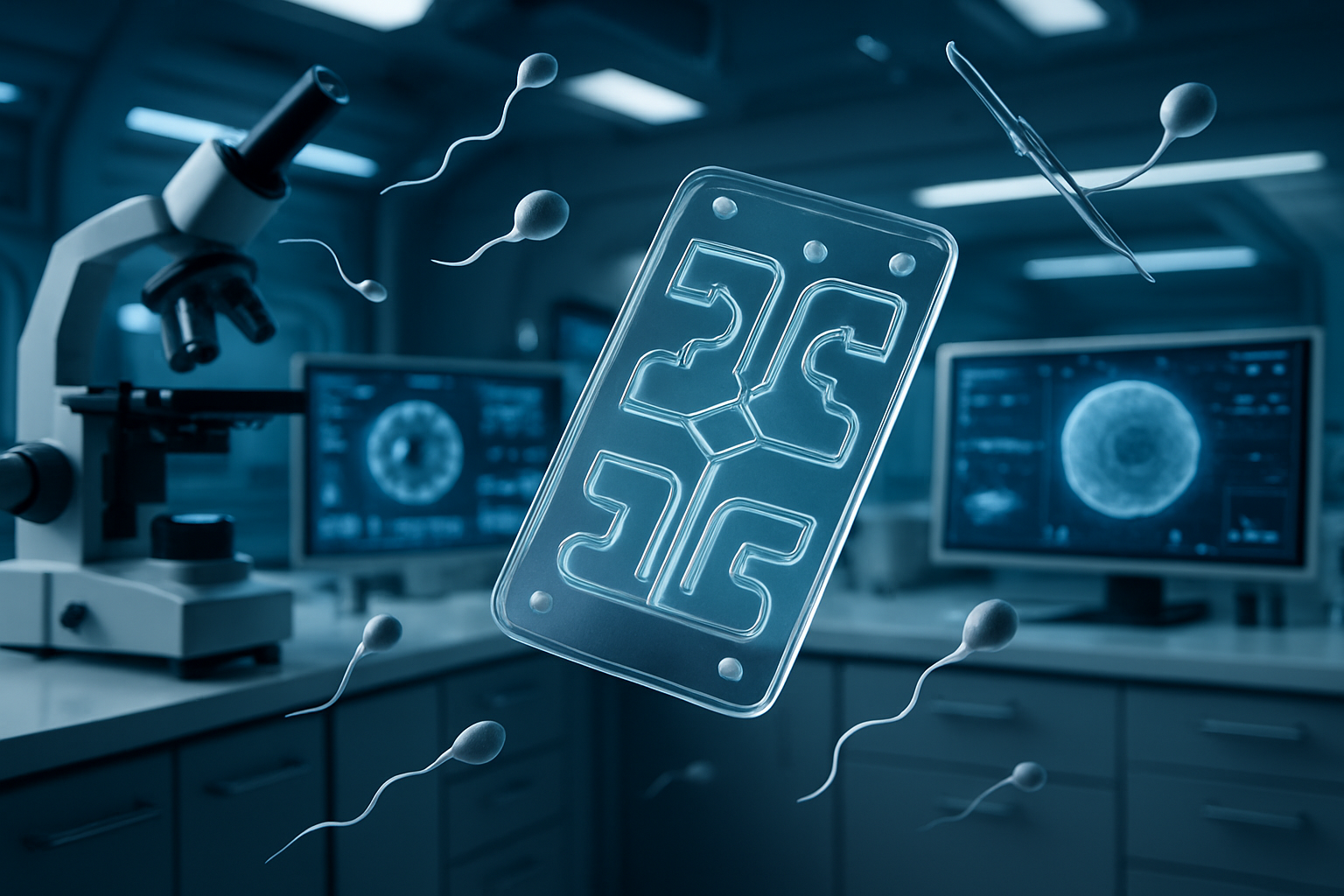
Australian researchers have achieved a groundbreaking milestone in space medicine by conducting the first comprehensive study of human reproductive cell behavior under weightless conditions. Using miniaturized plastic obstacle courses designed to simulate the challenging navigation requirements of human reproduction, scientists tested how sperm cells would perform during conception attempts in the weightlessness of space.
The results published Thursday reveal both promising possibilities and significant concerns for humanity's spacefaring future. While some particularly resilient sperm cells successfully navigated the experimental maze structures, suggesting that conceiving children in space remains biologically feasible, researchers uncovered more troubling implications for embryonic development post-fertilization.
"The bigger problem could be that the development of embryos after fertilisation was harmed by a lack of gravity," the Australian research team concluded. This finding represents a critical consideration for long-term space missions, permanent lunar settlements, and eventual Mars colonization efforts where human reproduction would be essential for establishing sustainable populations.
NASA's Ambitious $20 Billion Lunar Base Strategy
The reproductive research findings come as NASA Administrator Jared Isaacman announced unprecedented strategic shifts in America's space exploration priorities. In a stunning policy reversal, NASA has cancelled the multibillion-dollar Lunar Gateway orbiting space station project, redirecting $20 billion toward establishing a permanent lunar surface base by 2030.
This historic decision follows December presidential directives for accelerated lunar presence amid intensifying international competition. Gateway components previously developed by Northrop Grumman and Vantor will now be repurposed for surface infrastructure rather than orbital operations, representing the largest space infrastructure investment in NASA history.
"NASA is committed to once again achieving the nearly impossible goal - returning to the Moon by the end of President Trump's term, building a lunar base, establishing ourselves there for the long term, and taking other actions necessary to ensure American leadership in space," Administrator Isaacman declared.
The ambitious seven-year timeline occurs despite ongoing technical challenges with the Artemis II mission, which continues facing delays due to persistent hydrogen leak issues and helium system failures affecting the Space Launch System rocket. The four-astronaut crew, including Canadian Jeremy Hansen (the first Canadian beyond Earth orbit), Reid Wiseman, Christina Koch, and Victor Glover, still awaits their historic 10-day lunar flyby - the first crewed mission beyond Earth orbit since Apollo 17 in 1972.
International Space Cooperation and Conservation
Meanwhile, innovative applications of space technology for Earth-based conservation demonstrate the expanding utility of orbital infrastructure. In Florida, veterinary staff at a sea turtle hospital are receiving unprecedented assistance from space-based monitoring systems to track rehabilitated animals, with particular focus on amputee turtles adapting to ocean life.
A three-limbed Kemp's ridley sea turtle, representing one of the world's most endangered species, is now being tracked via satellite as it navigates Atlantic waters. This groundbreaking conservation effort showcases how space-based infrastructure supports both extraterrestrial exploration and terrestrial environmental protection.
The sea turtle monitoring program exemplifies the democratization of space technology, where satellite capabilities once reserved for military or major scientific institutions now support local conservation efforts. This technological accessibility reflects broader trends in the emerging "space economy golden age," where commercial enterprises drive innovation beyond traditional government programs.
Implications for Humanity's Spacefaring Future
The convergence of reproductive research, lunar base planning, and conservation technology highlights critical considerations for humanity's expansion beyond Earth. The Australian sperm navigation studies directly inform medical protocols for future lunar settlements and Mars missions, where extended stays may require natural human reproduction for sustainable populations.
Space medicine research conducted aboard the International Space Station, including French astronaut Sophie Adenot's record eight-month mission focusing on lung tissue cultivation and Space-Associated Neuro-Ocular Syndrome studies, provides complementary data about long-duration spaceflight effects on human biology. This research proves essential for understanding the physiological challenges facing space-born populations.
The reproductive challenges identified in weightless conditions may necessitate artificial gravity systems in permanent space settlements, potentially achieved through rotating habitats or other engineering solutions. Such considerations directly influence lunar base design requirements and Mars mission planning, where natural reproduction could determine the success of permanent human presence beyond Earth.
Nuclear-Powered Mars Exploration Initiative
NASA's strategic pivot includes ambitious nuclear-powered spacecraft development for Mars exploration through the Space Reactor 1 Freedom program. This nuclear propulsion system provides the energy density necessary for interplanetary missions and sustainable deep space operations where solar power proves insufficient.
The nuclear Mars initiative complements increased lunar robotic missions designed to prepare infrastructure for permanent human settlement. This comprehensive approach positions America for leadership in the trillion-dollar space economy projected by 2030, while addressing fundamental questions about human reproductive biology in cosmic environments.
Looking Forward: Space Medicine and Human Adaptation
The reproductive research breakthroughs occur during what space industry analysts term the transition from "AI revolution to space economy golden age," characterized by unprecedented international cooperation and commercial space expansion. SpaceX preparations for a potential trillion-dollar IPO in June 2026 exemplify the massive economic opportunities emerging from space exploration investments.
International cooperation continues expanding through programs including Pakistan's astronaut selection for China's Tiangong space station missions planned for October-November 2026, and Thailand's leadership role in UN space governance initiatives. These developments demonstrate space capability democratization enabling diverse nations to contribute to humanity's cosmic future.
The Australian reproductive research, NASA's lunar base commitment, and innovative conservation applications collectively represent critical foundations for sustainable human presence beyond Earth. As humanity prepares for permanent space settlements, understanding reproductive biology in weightless conditions becomes essential for ensuring our species' successful transition to a spacefaring civilization.
With continued advances in space medicine, nuclear propulsion technology, and international cooperation frameworks, the challenges identified in current research may ultimately be overcome through innovative engineering solutions and comprehensive biological adaptation protocols. The path toward permanent human space settlements now includes detailed consideration of reproduction, development, and long-term physiological adaptation in environments far removed from Earth's gravitational and atmospheric conditions.