March 2026 has witnessed unprecedented developments in space exploration, with NASA Administrator Jared Isaacman announcing a historic $20 billion commitment to establish a permanent lunar surface base by 2030, while European rocket launches face technical delays highlighting the complex engineering challenges confronting the emerging space economy.
NASA's Historic Lunar Base Investment
In a dramatic strategic pivot announced on March 24, NASA Administrator Jared Isaacman revealed the cancellation of the multibillion-dollar Lunar Gateway orbiting space station project, redirecting those resources toward establishing humanity's first permanent lunar surface base. The decision follows a December presidential directive calling for accelerated lunar presence amid intensifying international competition, particularly with China planning to send crews to the Moon by 2030.
"This represents the largest space infrastructure commitment in NASA history," Isaacman stated during the announcement. "We're moving from temporary visits to permanent human settlement beyond Earth." The $20 billion investment will repurpose components originally designed for the Gateway project, including systems from Northrop Grumman and Vantor, to create comprehensive surface infrastructure rather than an orbital outpost.
"We're not just going to the Moon to visit anymore. We're going to stay, to build, and to prepare for Mars."
— Jared Isaacman, NASA Administrator
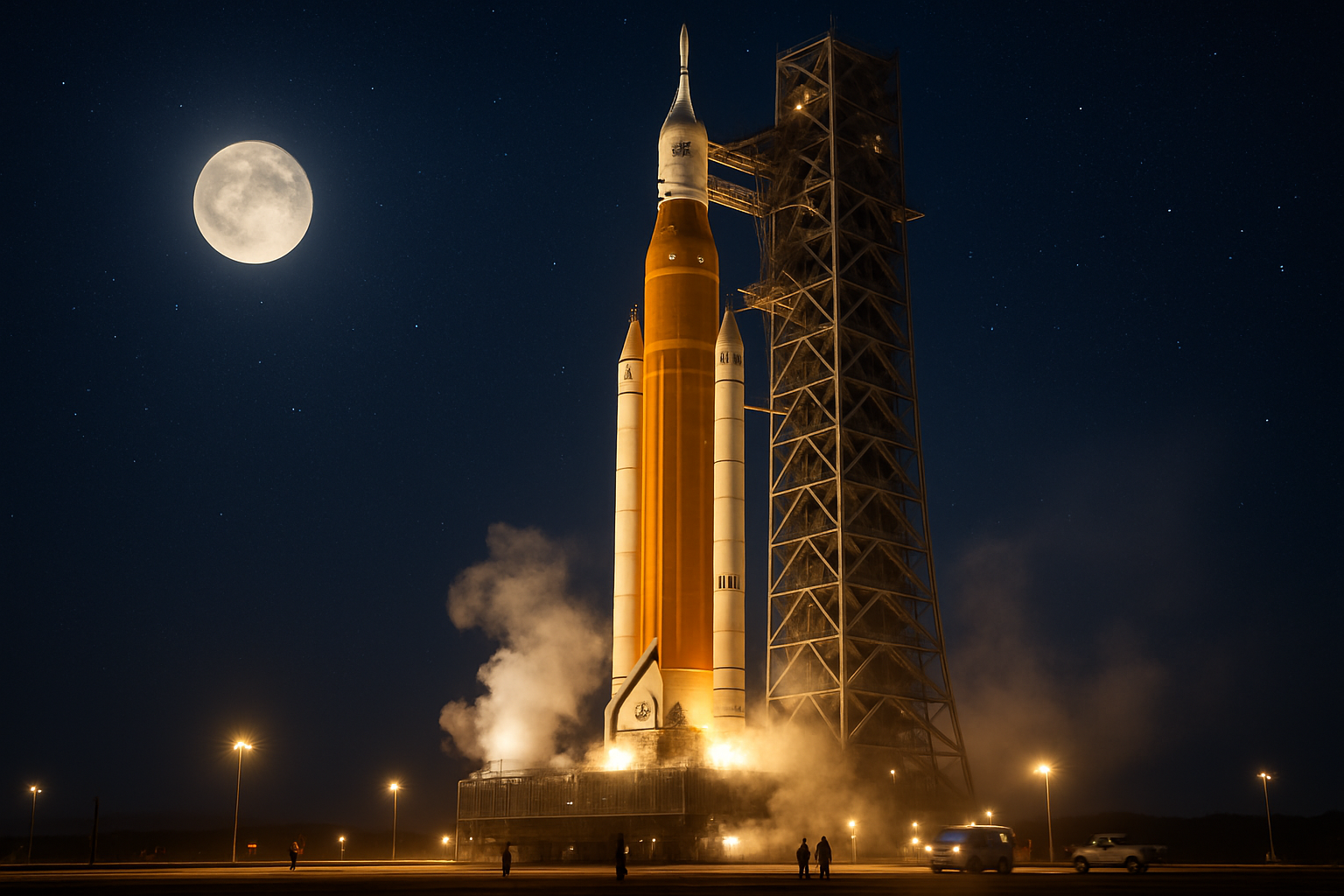
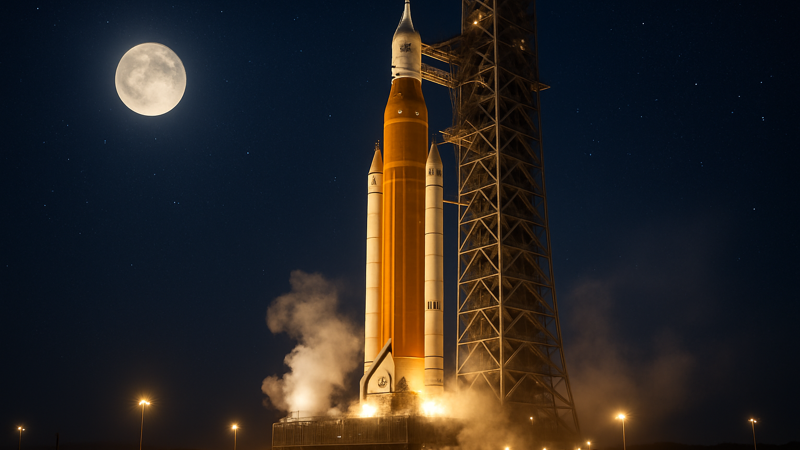
The ambitious seven-year timeline comes despite ongoing technical challenges with the Artemis II mission, which continues to face delays due to hydrogen leaks and helium system failures affecting the massive Space Launch System (SLS) rocket. The 322-foot, 5.75 million-pound rocket - the most powerful NASA has ever built - requires over 700,000 gallons of liquid hydrogen and oxygen, creating complex engineering challenges that have pushed the lunar flyby mission beyond its original March 2026 target.
European Rocket Launch Setbacks
While NASA charts its lunar future, European space efforts have encountered significant setbacks. Norwegian sources report that rocket launches from the Andøya Space Center faced critical failures, with Wednesday evening's attempt by Isar Aerospace requiring last-minute abortion. The German company, which operates testing facilities in Sweden capable of producing 30 engines monthly, represents Europe's drive for launch independence from American and Russian systems.
"We know what went wrong last time," officials stated regarding Friday's planned retry, demonstrating the methodical problem-solving approach that characterizes the space industry's safety-first culture. These delays underscore the technical complexity of achieving reliable orbital access, even as the global space economy transitions into what experts call the "golden age" phase.
International Space Station Operations Continue
Despite terrestrial launch challenges, international cooperation in space continues through ongoing International Space Station operations. French astronaut Sophie Adenot's record-breaking eight-month mission has provided crucial data on Space-Associated Neuro-Ocular Syndrome (SANS) and lung tissue cultivation in microgravity - research directly applicable to the permanent lunar settlements NASA now envisions.
NASA astronaut Don Pettit recently shared intriguing images from the ISS showing unusual tentacle-like objects that have sparked widespread speculation, demonstrating how space-based research continues to generate both scientific data and public fascination. These observations, while potentially routine biological experiments, highlight the ongoing scientific value of the ISS as plans develop for its eventual deorbiting around 2030.
The Broader Space Economy Context
These developments occur during a transformative period for the space industry. SpaceX continues preparing for its potentially trillion-dollar initial public offering scheduled for June 2026, while maintaining its strategic pivot from Mars colonization to lunar settlement development. The company's decision to focus on establishing self-sustaining lunar cities within 10 years reflects a broader industry maturation toward pragmatic, achievable near-term objectives.
International competition intensifies as China advances its Shenlong reusable spacecraft program and Pakistan prepares to send astronaut candidates to China's Tiangong space station in October-November 2026. These developments demonstrate the democratization of space capabilities beyond traditional spacefaring nations, creating a more complex and competitive international environment.
Technical Challenges and Safety Protocols
The persistent technical issues affecting NASA's Artemis program reflect the space industry's commitment to comprehensive safety protocols. Recent classification of Boeing's Starliner mission as a "Type A" mishap - the same severity level as the Challenger and Columbia disasters - reinforces NASA's institutional learning from historical tragedies.
"We will only launch when we believe we are ready," Administrator Isaacman emphasized, echoing the methodical approach that prioritizes crew protection over schedule adherence. This philosophy, while causing delays, builds long-term confidence in deep space transportation systems essential for sustainable lunar presence and eventual Mars exploration.
The four-astronaut Artemis II crew - Canadian Jeremy Hansen, NASA Commander Reid Wiseman, Christina Koch, and Victor Glover - continues training for what will be the first crewed mission beyond Earth orbit since Apollo 17 in December 1972, representing a 54-year gap in human deep space exploration.
Economic and Strategic Implications
The convergence of NASA's lunar base commitment with ongoing commercial space expansion positions the United States for leadership in an emerging space economy projected to exceed $1 trillion by 2030. Permanent lunar presence enables resource extraction, advanced manufacturing, scientific research, and Mars mission training - capabilities that could define 21st-century economic and technological competitiveness.
However, success requires resolving current technical challenges while maintaining international cooperation frameworks like the Artemis Accords. The permanent settlement will need comprehensive governance addressing resource utilization, environmental protection, and emergency protocols - complex issues that extend far beyond engineering into international law and diplomacy.
Looking Toward a Spacefaring Future
March 2026 represents a pivotal moment in humanity's expansion beyond Earth. NASA's strategic pivot from temporary visits to permanent settlement, combined with the complex technical realities demonstrated by ongoing delays and international competition, illustrates both the ambitious vision and practical challenges of becoming a spacefaring civilization.
The success of these initiatives will require not only overcoming engineering obstacles but also sustained political commitment, international cooperation, and public support for long-term goals that extend beyond traditional electoral cycles. As Administrator Isaacman noted, this transition from experimental space exploration to essential space infrastructure could define the next era of human development.
Whether measured by NASA's lunar base timeline, European launch capabilities, or the broader commercial space economy, the coming months will prove crucial in determining humanity's trajectory toward becoming a multi-planetary species. The stakes extend beyond national prestige to encompass resource access, technological development, and the fundamental question of human survival and prosperity beyond Earth.