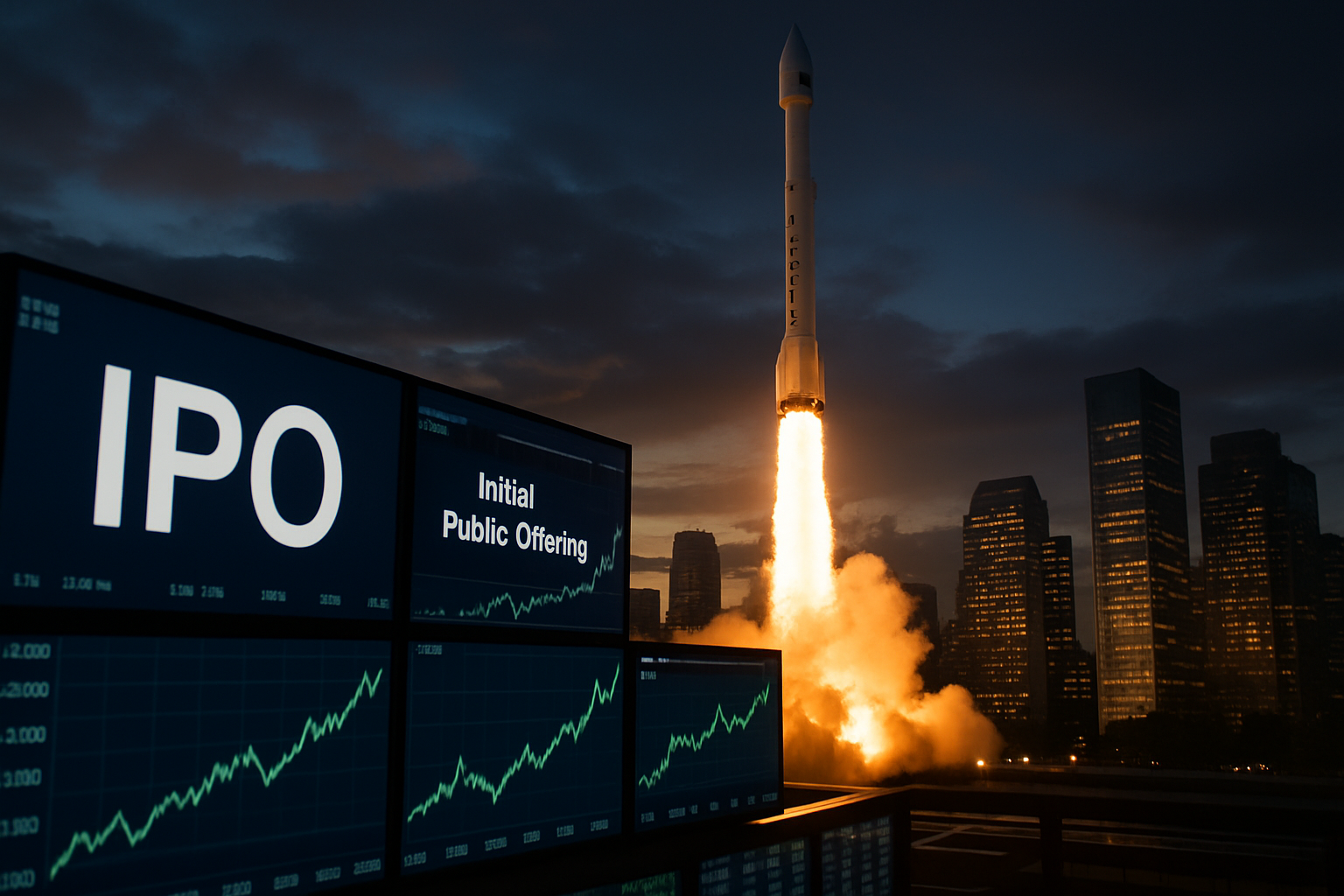
SpaceX has filed confidentially with the Securities and Exchange Commission for an initial public offering that could become the largest in history, sources familiar with the matter revealed, bringing Elon Musk's space and AI empire closer to a potential $1.7 trillion valuation that would cement his path to becoming the world's first trillionaire.
The confidential filing, submitted ahead of a planned June 2026 public offering, represents the culmination of an extraordinary transformation for the company that has captured global attention through its vast satellite network and pioneering space exploration initiatives. The move follows February's historic $1.25 trillion merger between SpaceX and Musk's AI company xAI, creating what industry analysts describe as the world's most valuable private company.
Unprecedented Scale and Strategic Timing
According to people familiar with the matter, the IPO could potentially value the combined SpaceX-xAI entity at over $1.7 trillion, significantly exceeding the previous IPO record. This valuation reflects the company's strategic pivot from experimental Mars colonization to pragmatic lunar settlement objectives within the next decade, positioning it at the forefront of what industry experts term the transition from "AI revolution to space economy golden age."
The timing is particularly strategic, coming as SpaceX has demonstrated unprecedented capabilities including the successful blocking of unauthorized Russian use of its Starlink satellite network in Ukraine, showcasing the geopolitical significance of its space-based infrastructure. The company has completed over 573 successful booster recoveries globally, establishing routine space operations that were once considered experimental.
Space-Based Data Centers Drive Valuation
Central to the company's enhanced valuation is its revolutionary space-based data center initiative, designed to address the ongoing global memory crisis that has seen semiconductor prices increase sixfold, affecting major manufacturers including Samsung, SK Hynix, and Micron through 2027. Musk has predicted that space-based AI computing will become more cost-effective than terrestrial alternatives within 36 months, citing advantages including continuous solar power, unlimited expansion potential, and the elimination of cooling requirements that consume billions of gallons of water annually in Earth-based facilities.
"This represents the convergence of space technology and artificial intelligence in ways that could fundamentally alter how we approach computing infrastructure."
— Industry analyst speaking on condition of anonymity
The World Bank projects that AI water demand could reach 4.2 to 6.6 billion cubic meters by 2027 for data center cooling alone, making space-based alternatives increasingly attractive for environmental and economic reasons.
From Mars Dreams to Lunar Reality
SpaceX's strategic pivot from Mars colonization to lunar city development within ten years reflects a maturation toward achievable objectives. The Moon offers significant advantages including three-day travel times enabling rapid resupply and emergency response, monthly launch windows versus Mars's 26-month alignment cycles, and real-time communication capabilities that make sustained settlement more feasible.
This shift aligns with NASA's Artemis program and the agency's historic $20 billion lunar base commitment by 2030, creating synergies between public and private space initiatives. The company's space-based infrastructure development supports both current Starlink constellation operations and future lunar mission requirements.
Regulatory Challenges and Global Competition
Despite its technological achievements, SpaceX faces significant regulatory challenges, particularly in Europe where Musk has encountered legal difficulties. French cybercrime units recently raided X platform offices over alleged violations related to the Grok AI system, while multiple European jurisdictions are coordinating regulatory responses to platform accountability issues.
International competition is intensifying across multiple fronts. China has advanced its Shenlong reusable spacecraft program, Pakistan has selected astronauts for missions to China's Tiangong station, and European nations are pursuing space independence through initiatives like Germany's €10 billion SATCOMBw 4 satellite system and Sweden's Isar Aerospace facilities testing 30 engines monthly.
Environmental Concerns and Sustainability
Recent Austrian research documenting atmospheric pollution from Falcon-9 rocket debris, including lithium concentrations ten times above normal levels, has raised environmental concerns about exponential increases in launch frequency. The European Space Agency warns that over 34,000 tracked orbital objects, plus millions of untrackable debris pieces, create collision risks at 17,500 mph that could trigger cascade effects rendering orbital regions unusable.
These environmental considerations come as SpaceX has proposed launching up to one million satellites into Earth orbit, raising unprecedented questions about sustainable space development and the potential creation of an "orbital cage" that could affect humanity's long-term access to space.
Financial Implications and Market Impact
Musk's net worth, already exceeding $839 billion according to Forbes, could reach unprecedented levels following the IPO. Analysts speculate that a successful public offering at projected valuations could position him to become the world's first trillionaire, a milestone that would represent a significant concentration of wealth in emerging space and AI technologies.
The IPO comes during broader market volatility described as the "SaaSpocalypse," where traditional software companies have lost hundreds of billions in market capitalization as AI technologies disrupt established business models. This disruption has created opportunities for integrated space-AI companies like the merged SpaceX-xAI entity.
International Cooperation and Strategic Control
SpaceX has demonstrated strategic capabilities beyond commercial operations, notably blocking Russian military use of Starlink services in Ukraine following coordination with Ukrainian Defense Minister Rustem Umerov. This capability to exercise geopolitical control over space-based infrastructure highlights the strategic importance of space assets in modern international relations.
The company continues international cooperation through NASA partnerships, including support for the International Space Station and upcoming Artemis lunar missions, while maintaining competitive advantages in the global space economy projected to exceed $1 trillion by 2030.
Looking Toward a Space-Based Future
The SpaceX IPO represents more than a financial milestone; it symbolizes humanity's transition toward a spacefaring civilization where space-based infrastructure becomes essential rather than experimental. Success in establishing sustainable space-based systems could determine humanity's capacity to address semiconductor shortages, AI energy consumption, and the development of resilient computing infrastructure that transcends terrestrial limitations.
As the company prepares for its June 2026 public debut, investors and industry observers are watching closely to see whether SpaceX can deliver on its ambitious promises of lunar settlements, space-based data centers, and a new era of space commerce that could reshape both technological capabilities and economic structures for generations to come.
The confidential filing marks the beginning of what could be the most significant public offering in history, one that may well determine not just Musk's financial legacy, but humanity's next chapter among the stars.