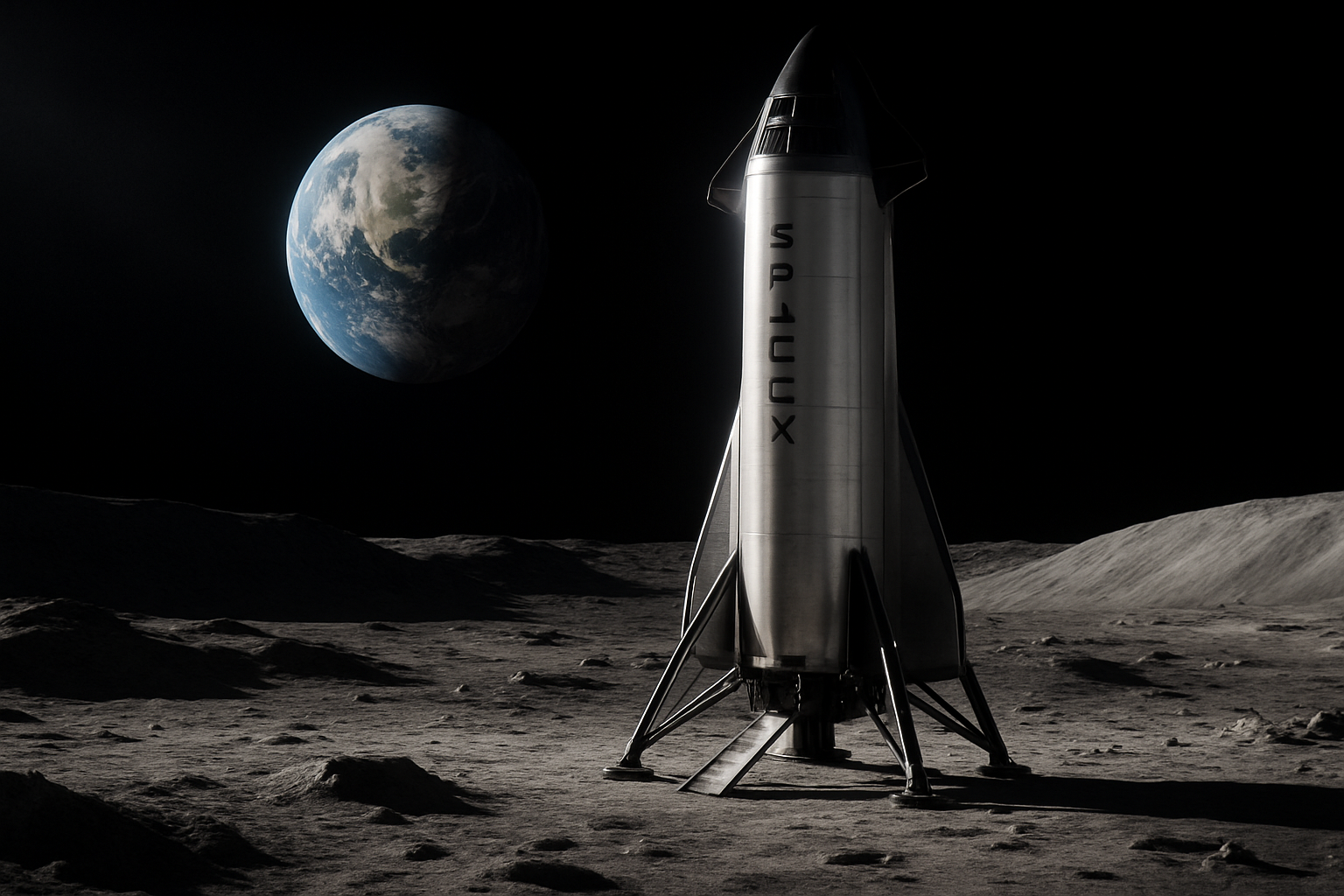
SpaceX President Gwynne Shotwell has declared that humans could return to the Moon by 2030, marking a bold timeline for lunar exploration as the private space company accelerates its cosmic ambitions amid intensifying international competition and the emergence of a "space economy golden age."
Speaking in a recent interview, Shotwell outlined SpaceX's ambitious vision for lunar exploration, positioning the company at the forefront of humanity's return to the Moon after a 54-year gap since Apollo 17's historic mission in December 1972. This announcement comes as SpaceX prepares for a potential trillion-dollar IPO in June 2026, fundamentally reshaping the commercial space landscape.
Strategic Shift from Mars to Moon
The 2030 lunar target represents a significant strategic pivot for SpaceX, which has historically focused on Mars colonization under Elon Musk's leadership. According to industry sources, the company has shifted its primary focus toward establishing self-sustaining lunar settlements within the next decade, leveraging the Moon's distinct advantages over Mars exploration.
"The strategic decision reflects pragmatic advantages including monthly launch windows versus Mars's 26-month cycles, three-day travel time enabling rapid resupply and emergency response, and real-time communication capabilities," according to analysis of SpaceX's recent strategic documents.
This lunar pivot demonstrates the company's maturation from speculative Mars ambitions to achievable near-term objectives, building a foundation for eventual interplanetary expansion while capitalizing on the Moon's accessibility and strategic value.
International Space Competition Context
Shotwell's announcement occurs during a period of unprecedented international competition in lunar exploration. China has announced plans for crewed lunar missions by 2030, while NASA's Artemis program faces ongoing technical challenges with the Space Launch System rocket experiencing persistent hydrogen leak issues and helium system failures.
NASA Administrator Jared Isaacman recently confirmed that Artemis II, the first crewed mission beyond Earth orbit since Apollo 17, is targeting April 1, 2026, after resolving critical technical issues. The mission will carry four astronauts—Canadian Jeremy Hansen, NASA Commander Reid Wiseman, Christina Koch, and Victor Glover—on a 10-day lunar flyby covering 600,000 miles.
"We will only launch when we believe we are ready,"
— Jared Isaacman, NASA Administrator
The contrast between NASA's methodical safety-first approach and SpaceX's rapid innovation cycle highlights the dual nature of contemporary space exploration, where government programs emphasize comprehensive safety protocols while commercial enterprises drive aggressive timeline acceleration.
Technical Capabilities and Challenges
SpaceX's lunar ambitions center on the Starship rocket system, which has faced its own development challenges. NASA's Inspector General confirmed that Starship has accumulated at least two years of development delays since its selection as the Artemis lunar lander in 2021, primarily due to complex fuel transfer operations requiring multiple tanker vehicles for orbital refueling—a process unprecedented at the required scale.
Despite these technical hurdles, SpaceX maintains significant advantages in its proven track record of ISS crew rotations and successful cargo delivery systems. The company's Falcon Heavy and Dragon spacecraft have demonstrated reliable performance in low Earth orbit operations, providing a foundation for deep space missions.
Key technical requirements for lunar missions include:
- Advanced life support systems for extended space travel
- Radiation protection beyond Earth's magnetic field
- Precision landing capabilities on the lunar surface
- In-situ resource utilization for fuel production
- Reliable communication systems for Earth-Moon operations
Economic and Strategic Implications
The 2030 timeline positions SpaceX at the center of the emerging space economy, projected to exceed $1 trillion by 2030. The company's potential June 2026 IPO, with valuations exceeding $1 trillion, represents the maturation of commercial space enterprises from experimental ventures to essential infrastructure providers.
This economic transformation reflects a broader shift from the "AI revolution" to the "space economy golden age," where space-based operations become integral to terrestrial systems. SpaceX's lunar focus enables multiple revenue streams including NASA contracts, commercial lunar transport, space tourism, and resource extraction opportunities.
NASA recently announced a historic $20 billion commitment toward establishing a permanent lunar surface base by 2030, canceling the Lunar Gateway orbiting station project and redirecting funds toward surface infrastructure. This strategic pivot aligns with SpaceX's lunar capabilities and creates substantial commercial opportunities for the company.
International Cooperation and Competition
The lunar race extends beyond US-China competition to include emerging space nations. Pakistan has selected astronaut candidates for China's Tiangong station missions in October-November 2026, while European nations advance independent launch capabilities through facilities like Germany's Isar Aerospace Swedish operations, which test 30 engines monthly.
Thailand's leadership role in UN space governance reflects the democratization of space capabilities, with bilateral partnerships and regional cooperation networks driving innovation through distributed research models. This international dynamic creates both opportunities and challenges for SpaceX's lunar ambitions.
Space Medicine and Long-Duration Missions
Critical to any 2030 lunar mission timeline is the ongoing research aboard the International Space Station. French astronaut Sophie Adenot's record eight-month mission provides invaluable data on long-duration spaceflight effects, including studies on Space-Associated Neuro-Ocular Syndrome (SANS) affecting astronaut vision and lung tissue cultivation in microgravity environments.
These medical research efforts directly inform protocols for lunar missions, where astronauts may spend extended periods without the possibility of Earth evacuation. Understanding human adaptation to space environments remains crucial for sustainable lunar settlements that could serve as stepping stones to Mars exploration.
Environmental and Sustainability Considerations
As space exploration accelerates, environmental impact considerations become increasingly important. Austrian research has documented atmospheric pollution from rocket debris, including tenfold lithium elevation, emphasizing the need for sustainable space development practices.
SpaceX's reusable rocket technology addresses some environmental concerns while reducing costs, but the scale of lunar operations envisioned for the 2030 timeline will require comprehensive environmental management strategies both on Earth and in space.
Looking Ahead: The Path to 2030
Achieving Shotwell's 2030 timeline requires resolving multiple technical, regulatory, and financial challenges. Success depends on:
- Completing Starship development and demonstrating reliable deep space capabilities
- Securing NASA contracts and maintaining Artemis program integration
- Developing sustainable lunar infrastructure including power systems and habitats
- Establishing international partnerships for technology sharing and risk distribution
- Creating economic models that justify massive infrastructure investments
The convergence of technical innovation, international competition, and commercial investment creates unprecedented momentum for lunar exploration. Whether SpaceX can deliver on Shotwell's ambitious 2030 prediction will largely determine the trajectory of human space exploration for the coming decade.
As the space industry transitions from government-dominated programs to commercial leadership, SpaceX's lunar timeline represents more than a corporate objective—it symbolizes humanity's renewed commitment to cosmic exploration and the establishment of a spacefaring civilization capable of thriving beyond Earth.