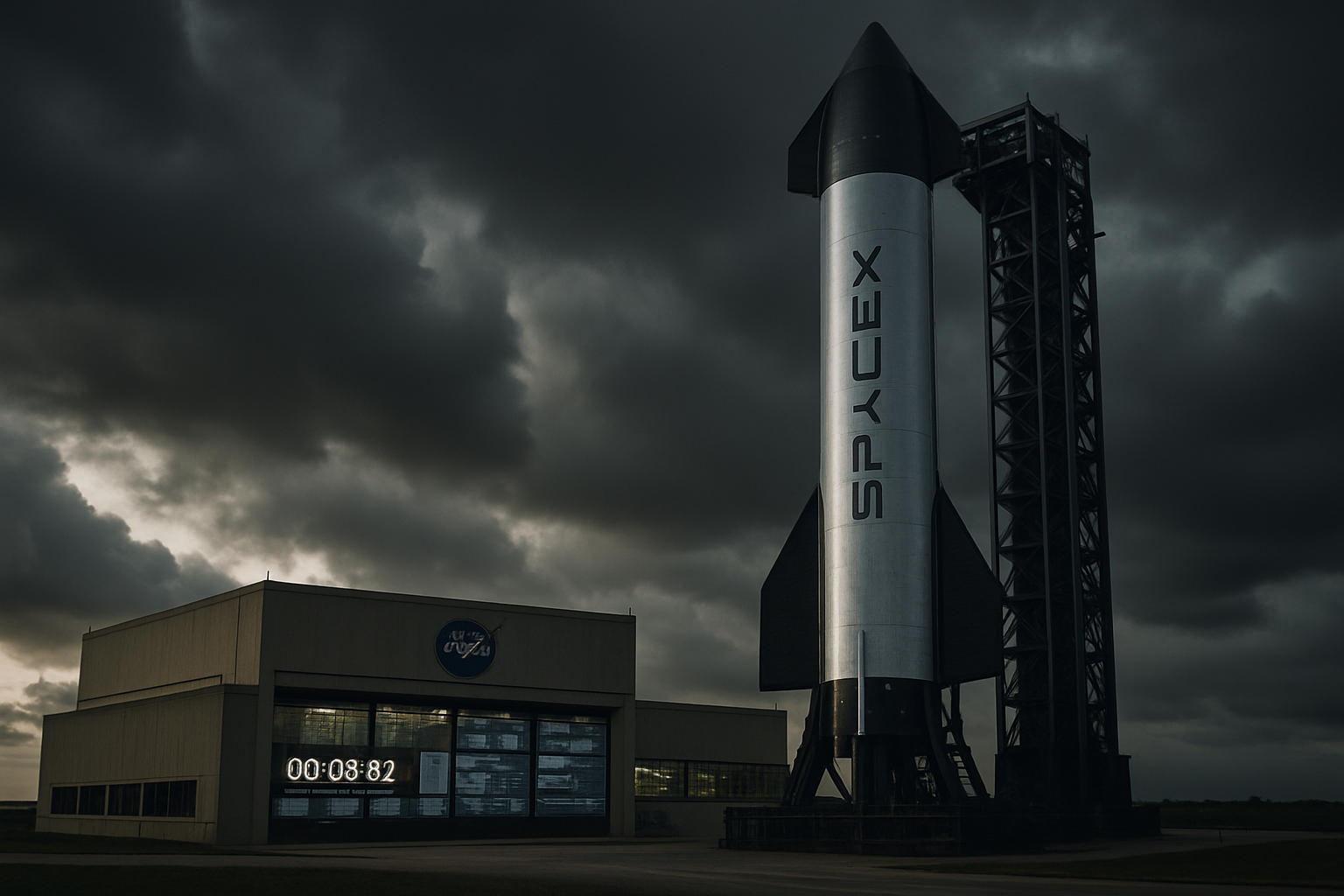
SpaceX's Starship has accumulated at least two years of development delays since NASA selected the rocket as an astronaut moon lander in 2021, and is expected to require more time to clear remaining hurdles before landing on the Moon, NASA's inspector general announced Tuesday as the agency studies plans to accelerate the troubled program.
The mounting delays in Starship's development have gradually pushed back what was originally an ambitious 2024 target for returning humans to the lunar surface – though officials at the time treated the 2024 deadline with considerable skepticism given the technical complexities involved.
NASA has been working with an array of companies, most prominently Elon Musk's SpaceX and Jeff Bezos' Blue Origin, in its multibillion-dollar Artemis program to kickstart routine astronaut missions to the Moon. The urgency has intensified as China prepares to send its own crews to the lunar surface by around 2030, creating a new space race dynamic not seen since the Apollo era.
Technical Challenges Mount for Starship
Among the most challenging steps in Starship's path to becoming operational for lunar missions are the complex fuel transfer operations required in Earth orbit. The system requires multiple Starship tanker vehicles to refuel the lunar-bound variant before it can depart for the Moon – a process that has never been attempted at the scale required.
The delays come amid a broader pattern of setbacks for NASA's Artemis program. The agency has repeatedly postponed Artemis II, the first crewed lunar flyby mission since Apollo 17 in 1972, due to persistent hydrogen leak issues and helium system failures affecting the Space Launch System (SLS) rocket. The mission, originally planned for February 2026, has been pushed beyond March 2026 as technical problems continue to emerge during countdown simulations.
NASA Administrator Jared Isaacman has maintained the agency's safety-first approach, stating "we will only launch when we believe we are ready" – a philosophy that reflects institutional learning from historical space program tragedies.
Artemis Program Restructuring
In response to these mounting challenges, NASA announced a comprehensive restructuring of the Artemis program in late February 2026. The changes include adding a new test mission between Artemis II and the actual lunar landing to build "launch muscle memory," moving the Moon landing from Artemis III to Artemis IV, and canceling a multibillion-dollar Boeing upgrade to the SLS rocket core stage.
Despite these adjustments, NASA maintains its commitment to returning humans to the lunar surface by 2028, though this timeline now appears increasingly ambitious given the accumulating delays across multiple program elements.
"The methodical approach we're taking builds long-term confidence in our deep space systems and prioritizes crew safety over arbitrary schedules."
— NASA spokesperson on Artemis restructuring
International Competition Intensifies
These delays occur during what industry analysts term the "space economy golden age," with unprecedented commercial space activity and intensifying international competition. China has successfully launched its fourth Shenlong reusable spacecraft and continues advancing its lunar exploration capabilities, while European nations pursue launch independence through facilities like Germany's Isar Aerospace expansion in Sweden.
Meanwhile, SpaceX continues its broader space operations success, maintaining regular crew rotations to the International Space Station and preparing for a potentially trillion-dollar initial public offering in June 2026. The company has also strategically pivoted from Mars colonization to lunar settlement development, targeting self-sustaining lunar cities within 10 years.
Pakistan has selected astronaut candidates for China's Tiangong station missions scheduled for October-November 2026, while emerging nations gain space capabilities through international partnerships and technology democratization.
Safety-First Approach Under Scrutiny
NASA's methodical safety-focused approach has drawn both praise and criticism. Recent assessment of Boeing's Starliner mission classified it as a "Type A" mishap – the same severity level as the Challenger and Columbia disasters – reinforcing the agency's emphasis on comprehensive safety protocols.
The current Artemis II crew, including Canadian astronaut Jeremy Hansen, NASA's Reid Wiseman, Christina Koch, and Victor Glover, continues training for their 10-day lunar flyby mission covering 600,000 miles. The mission will use the 322-foot SLS rocket weighing 5.75 million pounds when fully fueled with over 700,000 gallons of liquid hydrogen and oxygen.
Economic and Strategic Implications
The Artemis program represents billions in space infrastructure investment and aims to establish America's space leadership amid commercial sector expansion and international cooperation through Artemis Accords partnerships. Success would enable the next phase of human space exploration toward permanent lunar settlements and eventual Mars missions.
The program's delays have strategic implications beyond scientific achievement. The ability to establish sustainable lunar presence could provide advantages in resource access, scientific discovery, and technological development that will define spacefaring capabilities for decades to come.
Current ISS research, including French astronaut Sophie Adenot's record eight-month mission conducting lung tissue cultivation and Space-Associated Neuro-Ocular Syndrome studies, continues providing essential data for deep space exploration medical protocols.
Path Forward
Despite the setbacks, NASA officials emphasize that the delays reflect institutional maturity in prioritizing comprehensive testing over schedule pressure. The agency points to successful achievements in other areas, including fully AI-planned Mars rover missions and breakthrough geomagnetic storm prediction capabilities.
The Starship delays underscore the technical complexity of human spaceflight beyond Earth orbit and the challenges of coordinating multiple complex systems for lunar operations. As NASA studies plans to accelerate the program while maintaining safety standards, the coming months will be crucial in determining whether the 2028 lunar landing timeline remains achievable.
The ultimate success of Artemis will require not only resolving Starship's development challenges but also ensuring seamless integration between SpaceX's commercial capabilities and NASA's government-led program management – a model that could define the future of human space exploration.