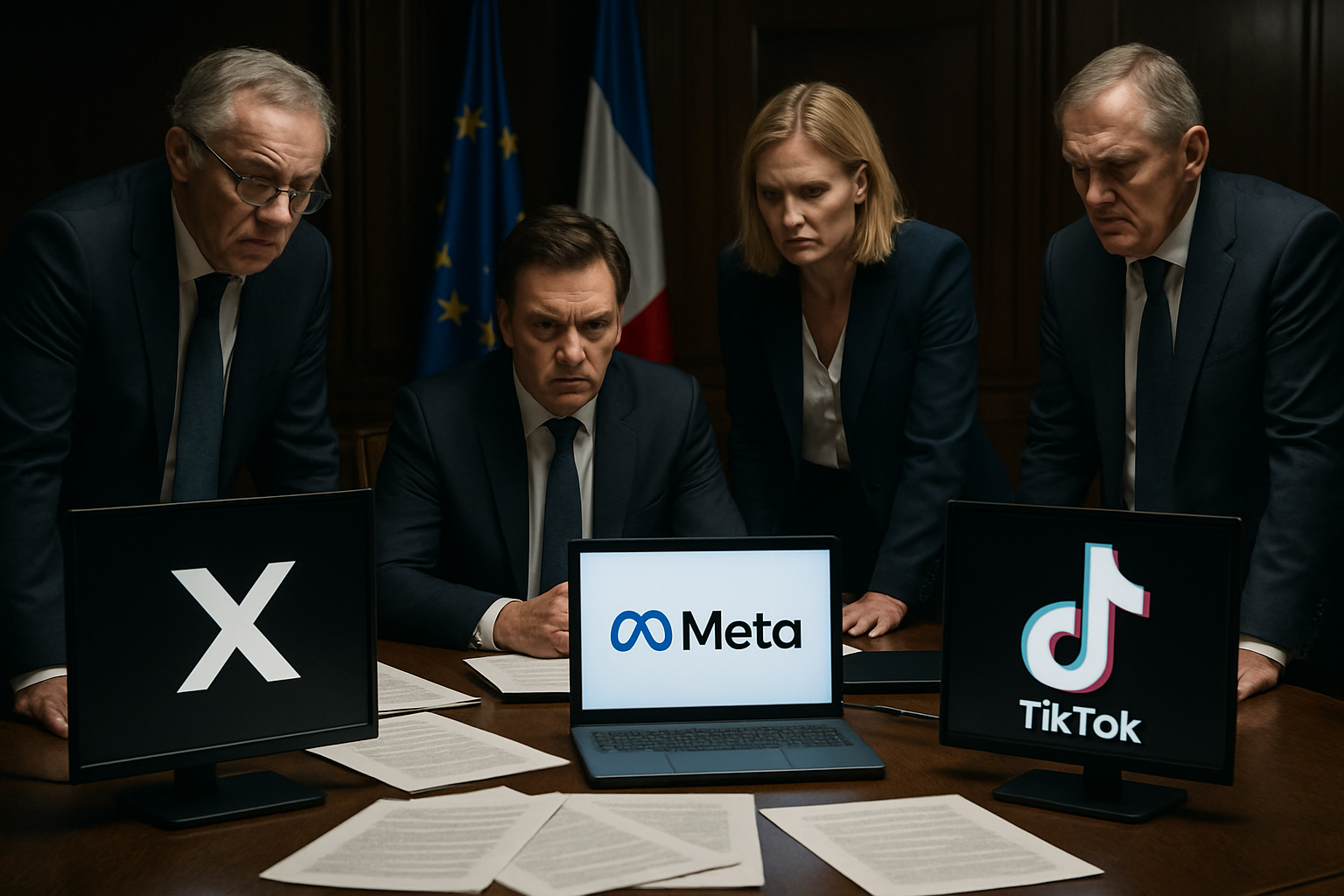
The Spanish government has ordered prosecutors to launch a criminal investigation into social media giants X, Meta, and TikTok for allegedly spreading AI-generated child sexual abuse material, marking a dramatic escalation in the global regulatory battle against Big Tech platforms.
Prime Minister Pedro Sánchez announced the unprecedented action on Tuesday, declaring on his X account that "these platforms are undermining the mental health, dignity, and rights of our children." The Spanish leader added emphatically: "The state cannot allow this. The impunity of these giants must end."
This announcement represents the latest development in Spain's revolutionary approach to platform regulation, which has already positioned the country as the global leader in implementing criminal executive liability for technology companies. The investigation comes as European regulators intensify their crackdown on Big Tech companies, moving beyond traditional corporate penalties to potentially holding individual executives personally accountable through imprisonment.
Building on Spain's Regulatory Revolution
The criminal investigation builds upon Spain's groundbreaking five-point regulatory framework announced earlier this year at the World Government Summit in Dubai. This comprehensive package includes a complete ban on social media access for children under 16, mandatory biometric age verification systems, legal definitions of algorithmic manipulation, direct criminal liability for platform executives, and digital sovereignty protections.
Spain's approach has already triggered coordinated responses across Europe. Greece is "very close" to implementing under-15 restrictions through its Kids Wallet application, while France, Denmark, and Austria are conducting formal national consultations. The United Kingdom has launched official review processes, creating a unified European regulatory framework that prevents platforms from simply relocating to more permissive jurisdictions.
"The era of unlimited freedom in the online world may be ending for young Slovaks."
— Matej Arčon, Deputy Prime Minister of Slovakia
The coordinated timing of these initiatives represents the most sophisticated attempt at international technology governance since the commercialization of the internet. By implementing restrictions simultaneously, European nations are preventing what regulators call "jurisdictional shopping" – the practice of platforms relocating operations to countries with weaker oversight.
The Scale of AI-Generated Abuse
The Spanish investigation comes amid alarming evidence about the proliferation of AI-generated child abuse material. UNICEF has reported that 1.2 million children's images have been manipulated by AI systems, while Swedish authorities have documented millions of children being exploited through AI-generated sexual imagery.
These concerns gained international attention following French cybercrime raids on X's Paris offices, which resulted in a formal summons for Elon Musk over Grok AI deepfakes and child safety violations. The UK's Information Commissioner's Office launched parallel GDPR investigations into both X and xAI over non-consensual intimate image generation.
Dr. Ran Barzilay from the University of Pennsylvania, whose research has become foundational to global policy discussions, has demonstrated that early smartphone exposure before age 5 causes sleep disorders, cognitive decline, and developmental issues. Her studies show that 96% of children aged 10-15 use social media, with 70% experiencing harmful content exposure and over 50% encountering cyberbullying.
Industry Resistance and Platform Response
The technology industry has responded with fierce resistance to European regulatory efforts. Elon Musk has characterized Spanish measures as "fascist totalitarian" overreach, while Telegram's Pavel Durov has sent mass alerts to Spanish users warning of a potential "surveillance state." Government officials have cited this coordinated opposition as evidence supporting the need for stronger regulatory intervention.
The European Commission has found additional justification for regulatory action through its investigation of TikTok, which revealed violations of the Digital Services Act through "addictive design" features. These include unlimited scrolling, automatic video playback, and personalized recommendation systems designed to maximize user dependency rather than wellbeing. TikTok faces potential penalties of up to 6% of its global annual revenue – potentially billions of euros.
However, platforms have contested these findings. TikTok "categorically" rejected the Commission's conclusions as "fundamentally flawed" and promised vigorous legal challenges. The company maintains that its features represent standard industry practices designed to enhance user experience rather than create harmful dependencies.
Technical and Implementation Challenges
The Spanish investigation and broader European regulatory approach face significant technical hurdles. "Real age verification systems" – going beyond simple checkbox confirmations – require biometric authentication or identity document validation, raising serious privacy concerns about comprehensive government databases.
These implementation challenges are compounded by a global memory crisis, with semiconductor prices experiencing a sixfold surge affecting major manufacturers like Samsung, SK Hynix, and Micron. The shortage is expected to continue until 2027 when new fabrication facilities come online, potentially constraining the infrastructure needed for comprehensive age verification systems.
Cross-border enforcement presents another complex challenge, requiring unprecedented international cooperation between national authorities. The technical feasibility of large-scale platform regulation has been demonstrated by Australia's success in eliminating 4.7 million teen accounts following its under-16 social media ban in December 2025.
Alternative Approaches and Global Perspectives
Not all countries are following Europe's regulatory enforcement model. Malaysia has emphasized parental responsibility through digital safety campaigns, with Communications Minister Datuk Fahmi Fadzil stressing that parents must control device access rather than using devices as "babysitters."
Oman has implemented "Smart tech, safe choices" educational initiatives focusing on conscious digital awareness rather than regulatory restrictions. These alternative approaches represent a philosophical divide between government intervention and individual agency in digital governance.
The contrast between regulatory models reflects deeper questions about the role of democratic institutions in managing global technology platforms while balancing child protection, digital rights, and economic competitiveness.
Implications for Democratic Governance
Trinity College Dublin's AI Accountability Lab has warned that tools such as ChatGPT and Grok represent a "social disaster" and threaten to "erode the foundations of democratic life." This assessment reflects growing concerns about AI-produced material online and its impact on informed civic participation.
The Spanish investigation represents a critical test of whether democratic governments can effectively regulate multinational technology platforms or whether coordinated industry resistance will prevail. The outcome will likely influence regulatory approaches worldwide, potentially establishing criminal executive liability as a global standard for platform accountability.
The stakes extend far beyond individual platforms or national boundaries. Success could trigger worldwide adoption of criminal liability frameworks and comprehensive age restrictions. Failure might strengthen anti-regulation arguments and maintain the current system of industry self-regulation.
Looking Ahead: A Defining Moment
February 2026 is emerging as a critical inflection point in global digital governance. The decisions made in the coming months will determine whether democratic institutions can maintain meaningful oversight of digital infrastructure or whether multinational platforms will continue operating beyond effective governmental control.
The Spanish criminal investigation into AI-generated child abuse material represents more than just another regulatory action – it embodies fundamental questions about childhood development, human agency, and democratic accountability in an increasingly digital world. The resolution of these issues will establish precedents that could shape technology governance for decades to come.
As European nations continue their coordinated regulatory push and other countries watch closely, the international community faces a defining choice about how democratic societies will balance technological innovation with protection of their most vulnerable citizens. The outcome of Spain's investigation may well determine whether the promise of artificial intelligence serves humanity or becomes a tool for exploitation that democratic institutions prove powerless to control.