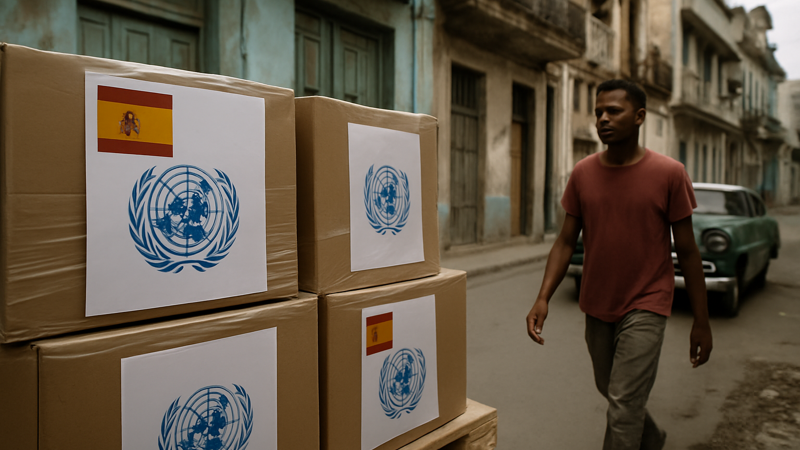
Spain announced it will provide humanitarian aid to Cuba through United Nations channels as the Caribbean island confronts its most severe energy crisis since the 1990s "Special Period," characterized by widespread blackouts, fuel shortages, and unprecedented aviation isolation affecting 11 million inhabitants.
The Spanish Foreign Ministry confirmed the commitment following a Madrid meeting between Spanish Foreign Minister José Manuel Albares and Cuban Foreign Minister Bruno Rodríguez, stating that "Spain will provide humanitarian aid to Cuba through the United Nations system in the form of food and essential health products." However, no timeline, volumes, or monetary value were specified for the assistance package.
Cuba's Mounting Crisis
Cuba's current predicament represents an escalation beyond the economic hardships of the 1990s "Special Period" that followed the Soviet Union's collapse. According to our comprehensive analysis of the crisis, the island nation faces multiple converging challenges that have created what European media characterizes as a "deliberately engineered humanitarian emergency."
The energy situation has reached critical levels, with 51% of Cuba's population—approximately 5.5 million people—experiencing scheduled blackouts during peak evening hours, according to state electricity company Unión Eléctrica (UNE). Oil reserves have dwindled to a critical 15-20 day supply, while Venezuelan crude shipments have been completely halted and Mexican deliveries suspended due to U.S. pressure.
Complete Aviation Isolation
Perhaps most dramatically, Cuba has achieved complete aviation isolation—the most comprehensive since the 1962 Cuban Missile Crisis. All nine major Cuban airports, including José Martí International Airport in Havana, have confirmed zero Jet A-1 fuel availability through March 11, 2026. This unprecedented situation has forced the suspension of all major international carrier operations.
Air Canada, WestJet, and Air Transat have suspended all Cuba flights, requiring emergency evacuation of approximately 21,000 stranded Canadian tourists—nearly half of Cuba's foreign visitor base. Russian carriers Rossiya Airlines and Nordwind have similarly ceased operations, evacuating 4,000 Russian tourists. The crisis affects 400 weekly flights and 70,000 scheduled seats, representing the most severe aviation disruption in modern Cuban history.
"This is the most comprehensive aviation blockade since 1962, creating unprecedented connectivity severance for 11 million inhabitants."
— Energy industry analyst quoted in international reporting
Origins of the Crisis
The current emergency stems from the Trump administration's January 30, 2026 executive order threatening 25% tariffs on countries supplying oil to Cuba. This "maximum pressure" campaign has successfully forced traditional energy suppliers to halt shipments despite humanitarian concerns.
Mexico's President Claudia Sheinbaum, while maintaining humanitarian aid through naval vessels carrying 814 tons of supplies, suspended oil shipments to avoid U.S. economic retaliation. Venezuelan crude supplies were completely terminated following the January 2026 political transition that removed Nicolás Maduro from power, with the new interim government prioritizing improved U.S. relations over Cuban energy security.
Cuba's domestic oil production has collapsed from 3 million to just 700,000 barrels daily, creating complete import dependence for aviation fuel and refined petroleum products. The island's Ñico López refinery in Havana suffered a major fire in February, further eliminating remaining domestic processing capabilities.
Humanitarian Impact
The crisis has created severe humanitarian challenges across multiple sectors. The government has implemented emergency measures including four-day work weeks for government employees, semi-virtual university classes, and the closure of 90% of gas stations. Hospitals have suspended non-emergency surgeries due to power outages threatening medical equipment and medicine storage.
The tourism industry, a crucial source of foreign currency, has experienced complete devastation. Major Spanish hotel chains including Meliá and Iberostar have closed their Varadero and northern coast facilities. Canada issued a "high degree of caution" travel advisory, effectively ending the winter tourism season and leaving thousands of tourism workers unemployed.
In eastern Cuba, 3.4 million people were affected by power outages after the failure of the Holguín electrical substation. Healthcare systems face unprecedented strain with medical staff unable to reach hospitals, while emergency services capability has been severely compromised.
International Response
Spain's humanitarian commitment represents part of a broader international response to Cuba's crisis. Mexico has deployed its largest humanitarian operation in years, with naval vessels Papaloapan and Isla Holbox delivering 814 tons of food and medical supplies while carefully avoiding oil deliveries that could trigger U.S. sanctions.
Russia has promised oil aid as humanitarian assistance, directly challenging the U.S. economic pressure campaign. China has demanded that Washington "immediately" cease its pressure on Cuba, while an international flotilla led by figures including former UK Labour leader Jeremy Corbyn has been announced to challenge what organizers term an economic "blockade."
However, the effectiveness of these initiatives remains questionable given the comprehensive nature of U.S. economic pressure and the technical challenges of circumventing sanctions while ensuring humanitarian deliveries reach Cuban civilians.
Regional Political Implications
The Cuban crisis has created unexpected political dynamics in the Caribbean. In Saint Vincent and the Grenadines, Opposition Leader Dr. Ralph Gonsalves has called on his government to provide urgent humanitarian assistance, advocating for shipments of flour and rice financed by the state. The Cuban ambassador to Saint Vincent and the Grenadines, Carlos Ernesto Rodríguez Etcheverry, has briefed regional leaders on the impact of the U.S. "blockade."
The situation tests the limits of regional solidarity against U.S. economic influence, with traditional allies of Cuba forced to balance ideological sympathy against economic realities. European officials have privately expressed concern about the collective punishment of civilian populations through economic coercion targeting essential services.
Historical Context and Precedent
Analysts note that the current crisis exceeds the severity of the 1990s "Special Period" because it results from deliberate U.S. policy rather than external economic collapse. Unlike the previous crisis, when Cuba maintained some international connectivity, the current situation has achieved complete aviation severance—a new dimension of economic warfare with significant humanitarian implications.
The crisis establishes concerning precedents for 21st-century economic coercion capabilities affecting entire civilian populations. The success of the U.S. approach in forcing compliance from regional allies demonstrates the gravitational pull of American economic influence, even over countries with ideological commitments to Cuban solidarity.
Looking Forward
Spain's humanitarian commitment, while welcome, highlights the limitations of traditional aid approaches when faced with systematic economic isolation. The lack of specific details regarding volumes, delivery timelines, and logistical arrangements reflects the complex challenges of providing meaningful assistance while navigating U.S. economic pressure.
The Cuban government has shifted its priorities to "defense and internal order," with no timeline provided for crisis resolution. President Miguel Díaz-Canel has called the situation "total asphyxiation" and appealed for dialogue with the United States, though Washington has shown no indication of modifying its approach.
International observers warn that the Cuban crisis serves as a testing ground for new forms of economic warfare that could be applied elsewhere. The humanitarian consequences—affecting medical evacuations, family connections, and essential supplies for 11 million people—raise fundamental questions about the limits of economic coercion as a diplomatic tool and the protection of civilian populations during international disputes.
As Spain joins other international actors in attempting to provide humanitarian relief, the Cuban crisis continues to serve as a stark example of how modern economic pressure campaigns can achieve comprehensive isolation while generating significant humanitarian consequences that extend far beyond the intended political targets.