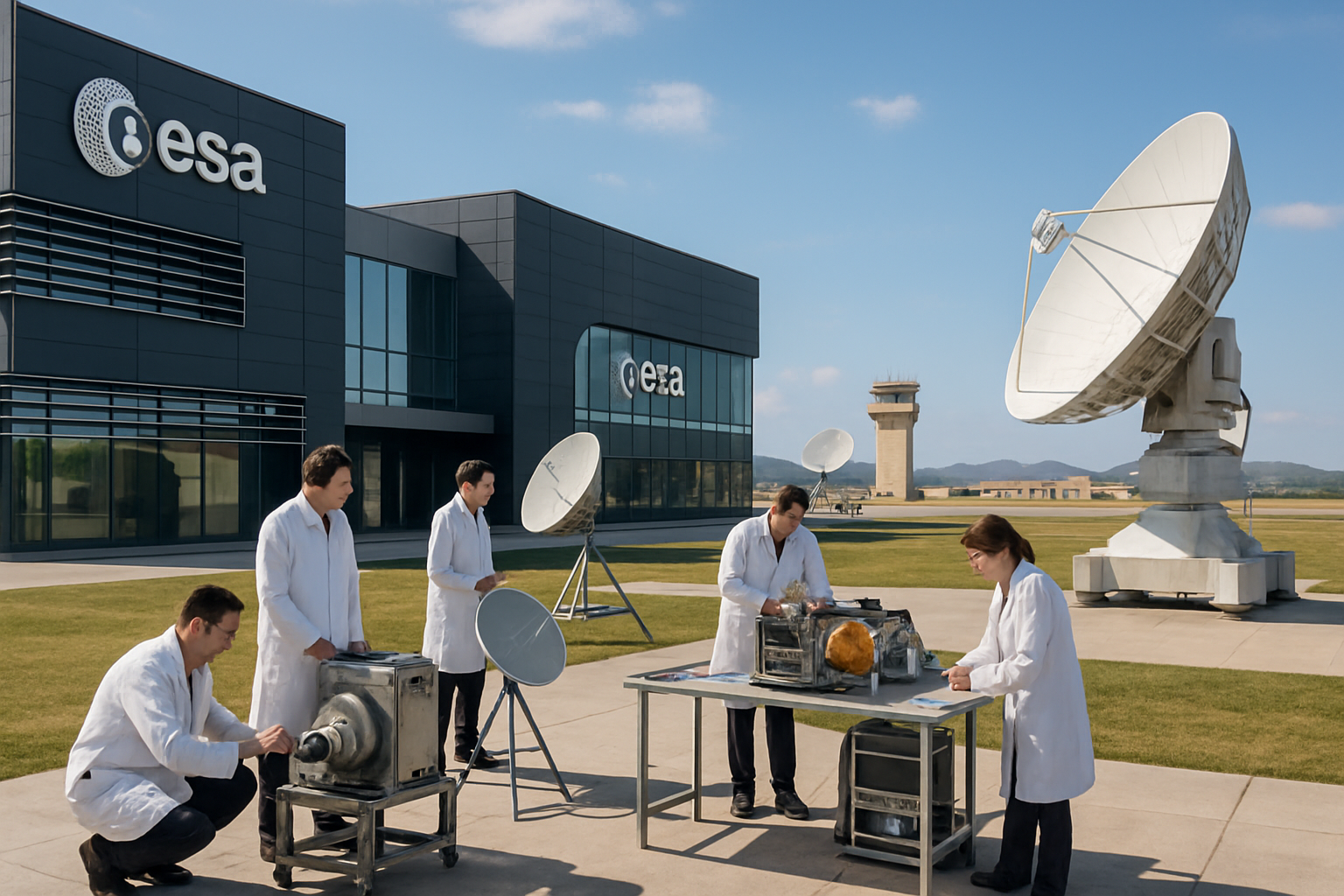
Spain has been selected by the Ministry of Science to host a new European Space Agency (ESA) business incubation center at San Javier Airport, marking a significant milestone in the country's aerospace development strategy and contributing to Europe's broader space economy expansion.
The decision to establish the facility at San Javier Airport represents a strategic choice that leverages existing aviation infrastructure while positioning Spain as a crucial player in the European space technology ecosystem. The selection of this Murcia-based location aligns with the ministry's comprehensive approach to regional development through high-tech aerospace initiatives.
Strategic Expansion of ESA Incubation Network
According to the source announcement, the Ministry of Science has simultaneously designated locations in Castilla-La Mancha and the Basque Country as additional ESA business incubation spaces, demonstrating a coordinated national strategy to distribute aerospace innovation capabilities across multiple Spanish regions.
This multi-regional approach reflects Spain's commitment to building a robust space technology infrastructure that can compete with other European aerospace hubs. The expansion comes at a critical time when space technology applications are experiencing unprecedented global growth and commercial viability.
European Space Economy Transformation
The establishment of these new incubation centers occurs during what industry experts describe as a "space economy golden age" transition. European nations are increasingly prioritizing technological sovereignty and independence in critical aerospace sectors, particularly as space-based infrastructure becomes essential rather than experimental.
Recent developments across Europe support this trend. Germany's Isar Aerospace has expanded operations with Swedish facilities testing 30 engines monthly, while other European initiatives focus on reducing dependence on non-European space capabilities. Spain's new ESA centers align with this broader European drive toward space independence and commercial competitiveness.
"The selection of San Javier and other Spanish locations demonstrates our commitment to fostering the next generation of European space entrepreneurs and innovators."
— Spanish Ministry of Science Representative
Technology Innovation and Regional Development
The San Javier facility will serve as a hub for aerospace startups and established companies seeking to develop cutting-edge space technologies. ESA incubation centers typically provide crucial support including funding opportunities, technical expertise, testing facilities, and market access for emerging space technology ventures.
These centers have historically played vital roles in launching successful space technology companies across Europe. The Spanish facilities are expected to focus on areas where the country has existing strengths, including satellite applications, space-based communications, and aerospace engineering solutions.
The regional economic impact is anticipated to be substantial, with aerospace incubation centers typically creating high-value employment opportunities, attracting international investment, and fostering technology transfer between academic institutions and commercial enterprises.
Global Context and Competition
Spain's aerospace expansion occurs within an intensely competitive international environment. The global space economy is experiencing transformation from government-dominated exploration to commercial infrastructure essential for modern civilization. Major developments include SpaceX's preparation for a potential trillion-dollar IPO in June 2026 and China's advancing Shenlong spacecraft program.
International cooperation continues through programs like the International Space Station, where recent missions have demonstrated the importance of sustained European participation in space activities. The Crew-12 mission, featuring French astronaut Sophie Adenot conducting critical research for future lunar and Mars exploration, exemplifies the type of advanced space medicine research that Spanish facilities could eventually support.
Infrastructure Challenges and Opportunities
The timing of Spain's aerospace expansion coincides with significant global infrastructure challenges, including a semiconductor shortage that has driven memory chip prices up sixfold. This crisis has actually accelerated innovation in space-based data centers and alternative computing architectures, creating new opportunities for space technology companies.
Spain's strategic positioning provides advantages for companies developing solutions to these infrastructure challenges. The country's geographic location, established aerospace capabilities, and growing renewable energy sector create favorable conditions for space technology development.
Innovation Ecosystem Development
The establishment of multiple ESA incubation centers across Spain reflects a sophisticated understanding of innovation ecosystem requirements. Successful aerospace development requires not just funding and facilities, but also access to specialized talent, research institutions, and established supply chains.
San Javier's selection leverages the existing aviation infrastructure while providing opportunities for companies to develop and test space technologies in operational environments. The facility's proximity to Mediterranean logistics networks and European transportation corridors enhances its strategic value for space technology commercialization.
The Castilla-La Mancha and Basque Country locations complement San Javier's capabilities by providing different regional advantages, including proximity to major research universities, manufacturing capabilities, and specialized industrial clusters.
Future Implications for European Space Leadership
Spain's aerospace development strategy positions the country to play an increasingly important role in European space leadership as the industry transitions toward commercial sustainability and strategic independence. The ESA incubation centers will contribute to developing the next generation of European space technologies and companies.
This development aligns with broader European initiatives to maintain competitiveness with American and Chinese space capabilities while developing unique European approaches to space commercialization and international cooperation.
The success of these incubation centers will be measured not only by the companies they launch but also by their contribution to Europe's overall space technology capabilities and strategic autonomy in critical aerospace applications.
As Spain establishes itself as a key player in European aerospace innovation, the San Javier facility and its companion centers represent a significant investment in the country's technological future and its role in the expanding global space economy.