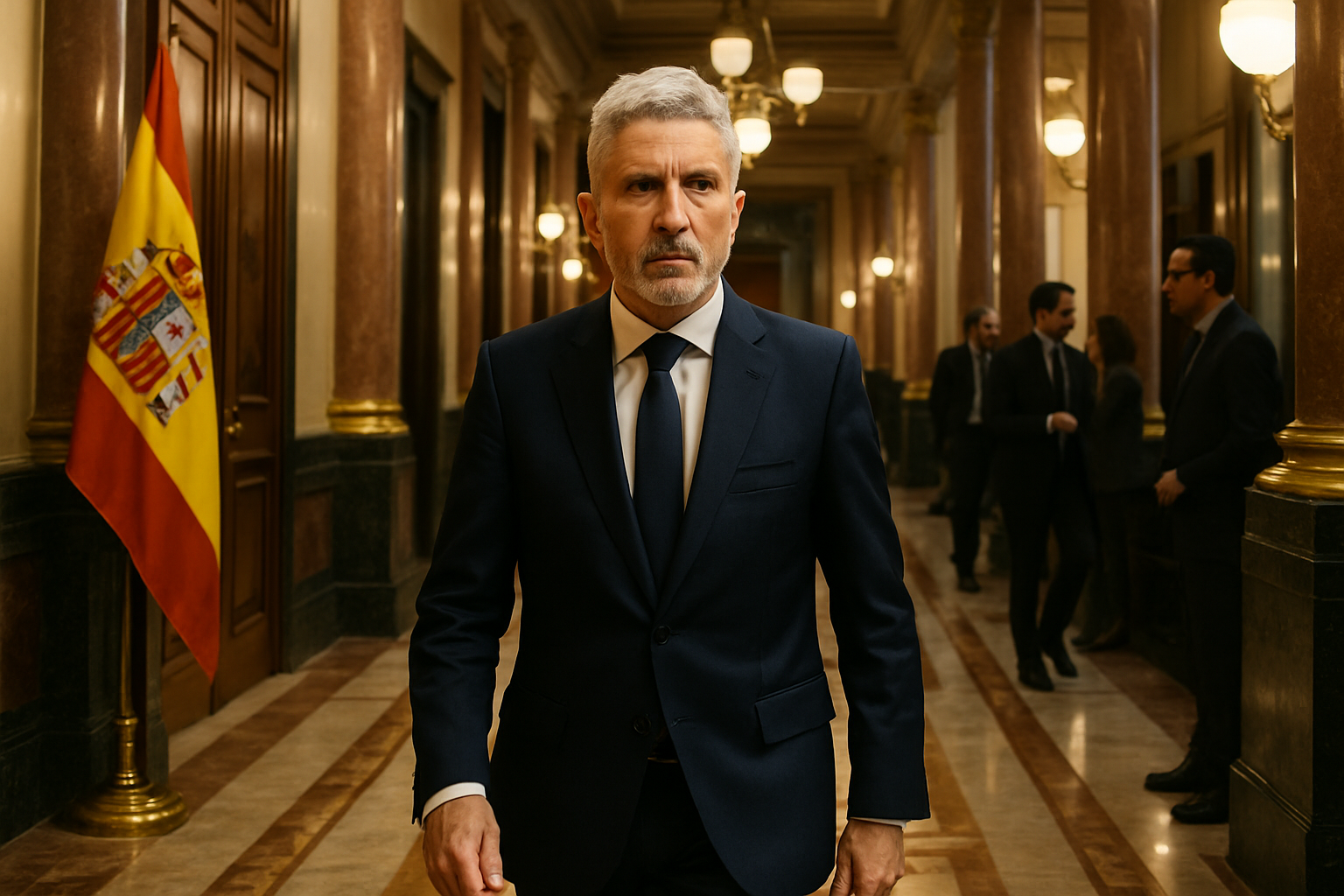
Spanish Interior Minister Fernando Grande-Marlaska faces the gravest crisis of his tenure as opposition parties demand his resignation following revelations about sexual assault allegations against the country's former top police official, with the controversy exposing deep tensions within Spain's law enforcement hierarchy.
The crisis erupted when José Ángel González Jiménez, the now-former Deputy Operational Director of the National Police, abruptly resigned late Tuesday after a court admitted a criminal complaint alleging sexual assault. The resignation came just hours before González was scheduled to appear before a judge, sending shockwaves through Spain's interior ministry and law enforcement community.
Minister Denies Prior Knowledge of Allegations
Speaking for the first time in Congress corridors on Wednesday, Marlaska vehemently denied any prior knowledge of the sexual assault complaint against González, expressing his "disappointment" with what he described as a trusted appointee who had betrayed that confidence.
"There was ignorance, I have not covered up anything. If the victim believes that I have failed her in any way, I will renounce and resign."
— Fernando Grande-Marlaska, Interior Minister
The minister's defense came amid fierce criticism from the opposition Popular Party (PP), which has launched an all-out offensive demanding his immediate resignation. During Wednesday's control session in Congress, PP deputies interrupted proceedings with sustained chants of "dimisión" (resignation) and rhythmic desk-banging that lasted nearly two minutes, forcing parliamentary officials to restore order.
Marlaska threatened legal action against anyone suggesting he covered up the sexual assault case, stating categorically: "I will not assume slanders of that type." His combative stance reflected the intense political pressure surrounding what has become one of the most serious scandals to hit Spain's interior ministry in recent years.
Opposition Intensifies Attack Strategy
The Popular Party has seized upon the controversy as ammunition against the Socialist government, using each parliamentary question to hammer home accusations of institutional failure and cover-up. The opposition's coordinated strategy became evident during the control session, where even routine government business was hijacked to focus on the police scandal.
PP representatives accused the government of "protecting" the former police chief and deliberately concealing the sexual assault allegations from public scrutiny. The opposition's aggressive approach drew applause from their parliamentary benches while Socialist deputies countered with their own show of support for the embattled minister.
The timing proves particularly damaging for the government, occurring during a period when Prime Minister Pedro Sánchez was traveling in India, leaving the administration vulnerable to sustained parliamentary assault without its primary defender present.
Institutional Ramifications and Police Restructuring
Beyond the immediate political fallout, the scandal has triggered significant changes within Spain's police hierarchy. Marlaska announced he had ordered a confidential investigation into another commissioner allegedly involved in coercing the complainant, reportedly offering her various positions within the police force in what sources describe as potential witness tampering.
The minister has also removed González's immediate deputy from operational duties, effectively dismantling the previous command structure and signaling a broader institutional housecleaning. These moves suggest the scandal's reach extends beyond a single individual to encompass broader issues of police culture and accountability mechanisms.
Political Calculations and Government Survival
The controversy arrives at a particularly sensitive moment for Marlaska's political survival. The minister faces the delicate balance of demonstrating accountability while avoiding admission of institutional failure that could strengthen opposition demands for his resignation.
Government sources indicate Marlaska's position depends heavily on maintaining support from assault victims and their advocates. His conditional resignation offer—pledging to step down if victims feel he has "failed" them—represents an unusual political gambit that places his future in the hands of those most directly affected by the scandal.
The Popular Party's sustained campaign reflects broader political calculations about undermining government credibility ahead of potential future electoral contests. Opposition leaders appear determined to extract maximum political damage from the crisis, regardless of the specific legal outcomes.
Broader Context of Spanish Political Tensions
This latest controversy occurs within Spain's increasingly polarized political landscape, where institutional scandals quickly become weapons in broader partisan warfare. The police leadership crisis echoes similar controversies that have plagued Spanish governments across party lines, highlighting persistent challenges in maintaining public confidence in state institutions.
The scandal also illuminates ongoing tensions between political oversight and police autonomy, with questions arising about the interior ministry's knowledge of and response to allegations against senior law enforcement officials. These institutional questions extend beyond immediate partisan considerations to fundamental issues of democratic accountability and police reform.
Legal and Institutional Investigations Continue
As legal proceedings against the former police chief advance through Spain's judicial system, the political dimensions of the scandal continue expanding. The criminal complaint's admission by the court ensures sustained media attention and parliamentary scrutiny over the coming weeks and months.
Marlaska's promise to investigate other officials potentially involved in the case suggests the scandal may widen beyond its current scope. The interior ministry faces the challenge of conducting credible internal investigations while maintaining operational effectiveness and public confidence.
The minister's threat to pursue defamation cases against critics adds another layer of legal complexity to what has already become one of the most consequential political crises of the current Spanish government's tenure.
Looking Ahead: Political Survival and Reform
The resolution of this crisis will likely determine not only Marlaska's political future but also broader questions about government accountability and police reform in Spain. The interior minister's conditional resignation pledge creates an unusual accountability mechanism that could set precedents for how Spanish officials respond to institutional scandals.
Opposition demands for resignation show no signs of abating, with PP leaders signaling they will use every parliamentary tool available to maintain pressure on the government. The sustained nature of their campaign suggests this controversy will remain a central political issue for the foreseeable future.
For Spain's broader political system, the scandal highlights the ongoing challenges of maintaining institutional credibility in an era of intense partisan polarization, where even law enforcement matters quickly become political battlegrounds with significant consequences for democratic governance and public trust.