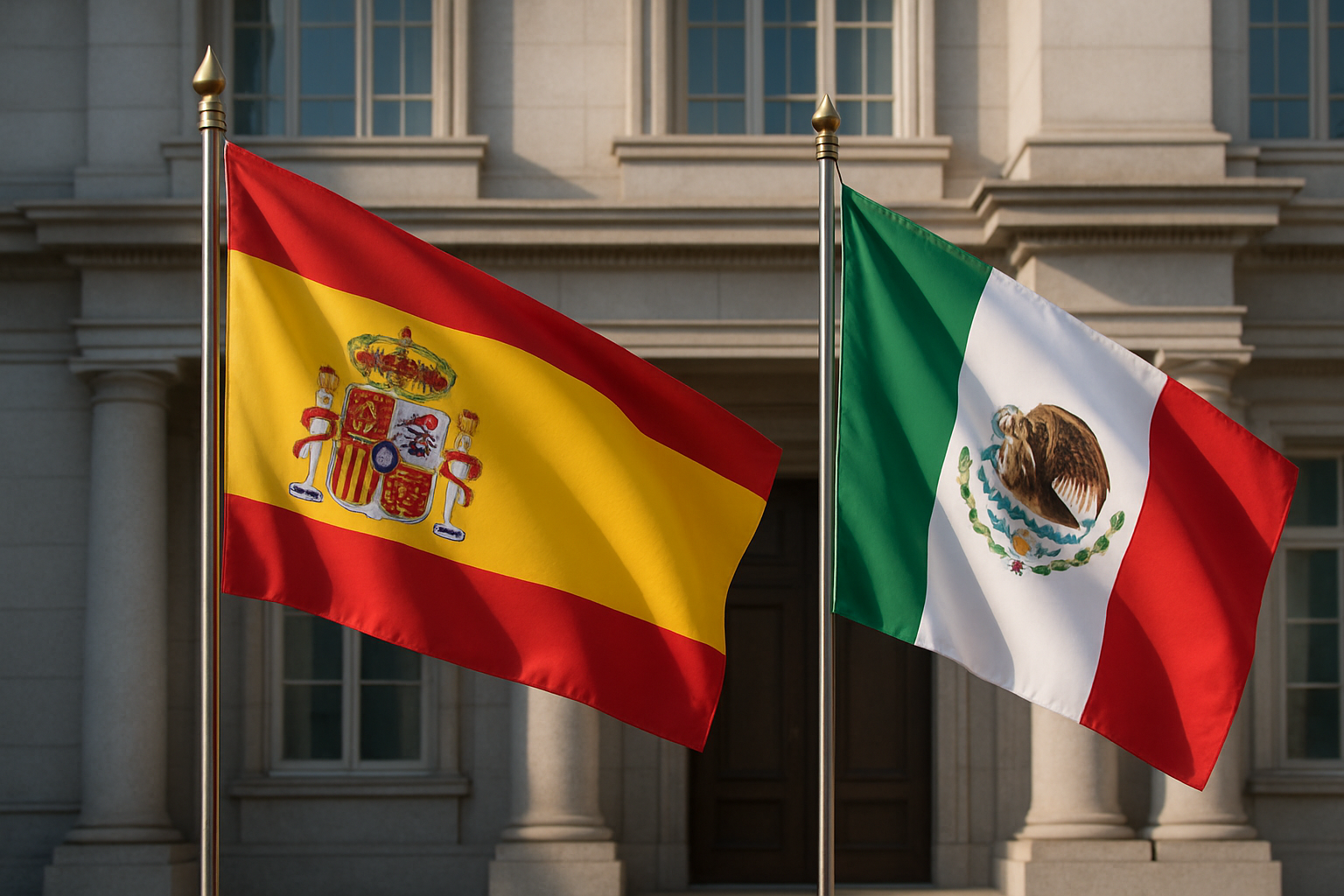
Spanish King Felipe VI made unprecedented acknowledgment of colonial-era abuses during Spain's conquest of the Americas, marking a historic shift in the Spanish Crown's approach to its colonial legacy and drawing positive response from Mexican President Claudia Sheinbaum.
The Spanish monarch's comments, delivered during a visit to an exhibition of indigenous Mexican women at a Madrid venue, represent the "greatest concession to date by the Royal House" regarding Spain's colonial past, according to diplomatic observers. King Felipe VI stated there were "many abuses" and "ethical controversies" during the Spanish colonization of America.
A Gesture of Reconciliation
President Sheinbaum welcomed the royal acknowledgment as a "gesture of rapprochement" between the two nations, marking a significant departure from previous diplomatic tensions that had strained Spain-Mexico relations for several years. Speaking during her morning press conference, Sheinbaum noted this was "unlike several years ago, where the letter sent by President [Andrés Manuel] López Obrador was not even acknowledged."
The Mexican president was referring to a 2019 letter from her predecessor demanding Spain apologize for colonial abuses. That request was categorically rejected by the Spanish government, creating a diplomatic rift that saw Spain boycott López Obrador's presidential inauguration in 2018.
"It's not everything we would have wanted, but it is a step toward reconciliation."
— President Claudia Sheinbaum
Breaking Royal Protocol
The King's comments were made in the presence of the Mexican Ambassador to Spain, making them particularly significant in diplomatic terms. For the Spanish monarchy, which has traditionally maintained strict neutrality on politically sensitive historical issues, the acknowledgment represents a notable departure from protocol.
However, the royal statement has generated mixed reactions within Spanish political circles. Popular Party leader Alberto Núñez Feijóo defended Spanish colonial legacy, expressing his "pride" in the "Spanish legacy" in America and dismissing contemporary examination of 15th-century events as "nonsense."
Political Reactions Across the Spectrum
The far-right Vox party delivered the harshest criticism, with their congressional spokesperson defending the Spanish Crown's role as "the greatest evangelizing and civilizing work in history." This response highlights the deep political divisions within Spain regarding how the country should address its colonial past.
In contrast, Spanish government spokesperson and Minister of Inclusion, Social Security and Migration Elma Saíz confirmed that the government was "informed" of the King's intended remarks and "subscribes to them one hundred percent." This coordination between the monarchy and government suggests the comments were carefully considered rather than spontaneous.
Historical Context and Diplomatic Significance
The Spanish conquest of the Americas, beginning with Christopher Columbus's voyages in 1492 and continuing through the 16th century, resulted in the subjugation of indigenous empires including the Aztecs and Incas. The period involved widespread violence, disease outbreaks that decimated native populations, and the imposition of Spanish colonial rule across vast territories.
Mexico gained independence from Spain in 1821, but questions about the colonial legacy have periodically resurfaced in bilateral relations. The issue gained particular prominence during López Obrador's presidency, when the Mexican leader consistently pressed for Spanish acknowledgment of historical wrongs.
A Diplomatic Reset
Sheinbaum's positive reception of the King's comments suggests Mexico is prepared to move forward with improved relations, despite noting that "more work needs to be done" in the reconciliation process. The Mexican president's pragmatic approach contrasts with her predecessor's more confrontational stance.
The timing of this diplomatic breakthrough comes as both nations face contemporary challenges requiring international cooperation, including climate change, migration, and economic recovery following global disruptions.
Looking Forward
While King Felipe VI's acknowledgment falls short of the formal apology sought by López Obrador, it represents the most significant recognition of colonial-era problems ever made by the Spanish Crown. The statement opens the door for continued dialogue between the two nations on historical reconciliation.
For Spain, the royal comments reflect growing European recognition of the need to address colonial legacies constructively. For Mexico, Sheinbaum's welcoming response suggests a new chapter in bilateral relations based on mutual respect rather than historical grievances.
The exchange between King Felipe VI and President Sheinbaum demonstrates how diplomatic progress can emerge through incremental steps rather than dramatic gestures, potentially serving as a model for other post-colonial relationships seeking to address historical wounds while building constructive partnerships for the future.