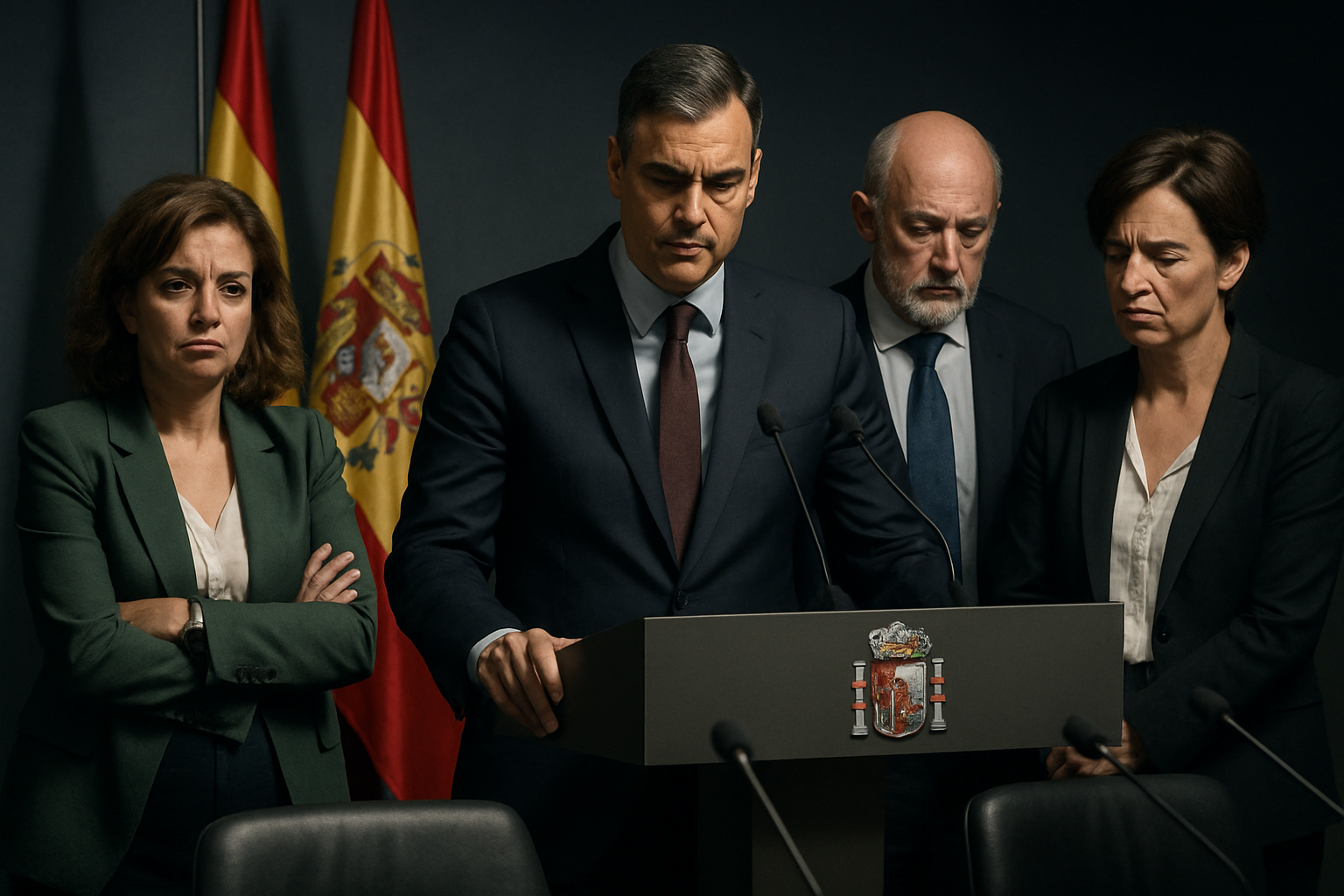
Spain's left-wing political landscape faces unprecedented upheaval following Deputy Prime Minister Yolanda Díaz's announcement Wednesday that she will not seek re-election as the coalition's candidate for the 2027 general elections, accelerating what observers describe as the most significant leadership crisis in modern Spanish progressive politics.
The resignation, while anticipated by political insiders, has thrust Spain's fragmented left-wing coalition into a succession battle with no clear frontrunner emerging. Díaz, who served as both Deputy Prime Minister and leader of the Sumar coalition, cited personal reflection and the need for renewal as reasons for her decision to step back from electoral leadership.
"I am very proud of what we have accomplished, but there is still much to be done," Díaz stated in her announcement. The decision comes after a series of political setbacks and internal tensions within the coalition that have undermined her position as the standard-bearer for Spain's left-wing alternative to the Socialist Party (PSOE).
A Leadership Crisis Years in the Making
Sources within Díaz's party described the announcement as "expected, but the problem comes now," highlighting the vacuum her departure creates in Spanish progressive politics. The resignation accelerates debates about leadership succession that have been simmering within the coalition for months.
Díaz's political trajectory represents one of the most unusual rises in modern Spanish politics. Unlike typical political leaders who emerge from activism or media prominence, she gained national recognition through her effectiveness as Labour Minister, earning acclaim for negotiating significant wage increases and worker protections during the pandemic recovery.
Her leadership style, characterized by what supporters called "the politics of joy," initially resonated with voters seeking an alternative to traditional political confrontation. However, the transition from ministerial success to electoral leadership proved more challenging than anticipated.
From Hope to Political Reality
The contrast between Díaz's early promise and current political difficulties reflects broader challenges facing Spain's left-wing parties. When she first emerged as a potential coalition leader, her approval ratings and media presence suggested she could unite the fragmented Spanish left under a single banner.
However, political observers note that her effectiveness as a negotiator in labour disputes did not easily translate to the complex dynamics of electoral politics and party management. The transition from "negotiating salaries to negotiating electoral lists" proved particularly difficult, according to political analysts.
"She has been the most unusual character in modern left-wing politics. Acclaimed not as an activist or television personality, but as a minister. A leader by designation and almost without wanting it."
— Political commentator, elDiario.es
The resignation comes at a particularly challenging time for Spain's governing coalition. Recent regional elections have demonstrated the continued strength of conservative and far-right parties, while the left-wing coalition has struggled to maintain unity and present a coherent alternative vision.
Coalition Dynamics and Future Prospects
The leadership vacuum created by Díaz's departure has immediate implications for the various parties within the coalition. Izquierda Unida, Más Madrid, Comunes, and Movimiento Sumar recently demonstrated their alliance at a political event, showcasing several potential leadership candidates but without establishing clear succession mechanisms.
Political sources indicate that the parties have yet to determine the process for selecting a new coalition leader, adding uncertainty to an already complex political landscape. The challenge extends beyond simple succession to fundamental questions about the coalition's strategic direction and policy priorities.
The resignation also affects the coalition's relationship with Prime Minister Pedro Sánchez's PSOE government. Díaz's role as Deputy Prime Minister provided crucial stability to the governing arrangement, and her departure could complicate coalition dynamics within the executive branch.
Broader Implications for Spanish Politics
Díaz's decision reflects broader patterns in European left-wing politics, where traditional coalition arrangements face pressure from changing voter preferences and internal organizational challenges. The Spanish case provides insights into how progressive parties adapt to contemporary political realities.
The leadership crisis occurs against the backdrop of Spain's complex political geography, where regional variations and nationalist parties create additional layers of complexity for any potential coalition leader. Success requires not only uniting Madrid-based parties but also building relationships with Catalonian, Basque, and other regional political movements.
Economic challenges also loom large for any successor. Recent achievements in minimum wage increases and worker protections, largely associated with Díaz's ministerial work, will need continued political leadership to maintain momentum. The new leader must balance progressive economic policies with broader electoral appeal.
International Context and Regional Implications
The Spanish left-wing leadership crisis coincides with broader political transformations across Europe, where traditional social democratic parties face challenges from both populist movements and changing demographic patterns. Spain's experience may provide a template for how established European left-wing parties navigate similar transitions.
The timing of the resignation, more than a year before the next scheduled general elections, provides the coalition with time for reorganization but also creates extended uncertainty. Political observers will monitor whether the coalition can use this period for strategic renewal or whether prolonged leadership uncertainty undermines electoral prospects.
Looking Ahead: Challenges and Opportunities
The search for Díaz's successor must address fundamental questions about the Spanish left's political identity and strategic direction. Potential candidates will need to demonstrate both policy expertise and electoral viability while managing the complex internal dynamics of a multi-party coalition.
Key challenges facing any new leader include maintaining government coalition stability, presenting a credible alternative to conservative parties, and addressing voter concerns about economic security and social progress. Success will require both political skill and the ability to inspire voter confidence in progressive governance.
The resignation also creates opportunities for political renewal and strategic repositioning. New leadership could potentially appeal to different voter segments or pursue alternative policy emphases that distinguish the coalition from both conservative opponents and socialist allies.
As Spain's left-wing politics enters this period of transition, the ultimate impact of Díaz's resignation will depend largely on how effectively the coalition manages the succession process and whether new leadership can successfully navigate the complex challenges facing contemporary progressive politics in Spain and across Europe.
The coming months will prove crucial in determining whether this leadership transition represents a temporary setback or a more fundamental realignment within Spain's political landscape, with implications extending well beyond the country's borders as European progressive movements monitor the outcome closely.