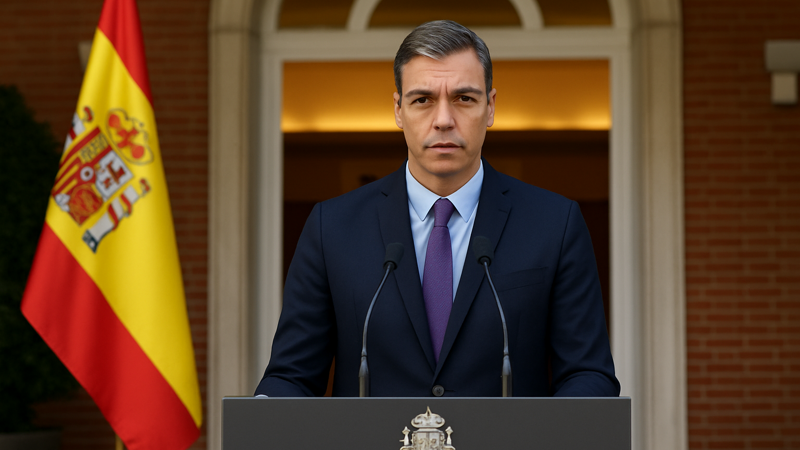
Spain's Labour Ministry and major trade unions finalized a 3.1% increase to the country's minimum wage on Monday, raising it to €1,221 gross per month across 14 annual payments, while President Pedro Sánchez delivered sharp criticism of employers who oppose the measure.
The agreement, sealed between Labour Minister Yolanda Díaz and representatives from the UGT and CC.OO trade unions, marked a significant political moment when President Sánchez made a rare appearance at the signing ceremony. This represented only the second time the Spanish leader had personally attended such an event, underscoring the heightened political importance of wage policy in the current economic climate.
The new minimum wage represents an increase from approximately €1,184 monthly in 2025, affecting hundreds of thousands of Spanish workers across multiple sectors. The decision comes amid broader economic pressures facing European economies and reflects ongoing tensions between labor advocates and business communities over compensation levels.
Presidential Confrontation with Business Leaders
Sánchez used the ceremony to launch a pointed attack on Spain's business confederation, known as the patronal, which has consistently opposed minimum wage increases. The President called on Spanish companies to voluntarily increase worker salaries beyond the mandated minimum, declaring "que paguen más" (they should pay more).
"The minister of work has thanked me for being on the right side of history," Sánchez stated, referencing Díaz's comments during the signing. The President's confrontational stance reflects broader political calculations as his government seeks to distinguish itself from opposition parties on economic policy.
Business organizations have argued that repeated minimum wage increases strain small and medium enterprises, particularly in sectors like hospitality and retail that employ large numbers of minimum wage workers. They contend that mandatory wage increases could lead to reduced hiring or increased automation in some industries.
Union Victory and Political Context
For Spanish trade unions, the agreement represents a significant victory in their ongoing campaign to improve worker purchasing power amid persistent inflation pressures. UGT and CC.OO leaders praised the government's commitment to regular wage adjustments that outpace basic cost-of-living increases.
The timing of the agreement carries particular political weight as European governments grapple with balancing worker demands for higher wages against business concerns about competitiveness. Spain's approach contrasts sharply with some neighboring countries that have adopted more cautious approaches to minimum wage policy.
Labour Minister Díaz, a prominent figure in Spain's left-wing coalition government, has made minimum wage increases a cornerstone of her tenure. Her ministry has systematically raised the minimum wage since the current government took office, arguing that previous levels were inadequate for basic living standards in major Spanish cities.
Economic Implications and Regional Variations
The €1,221 monthly minimum wage translates to approximately €87.21 per day for standard working arrangements, though the actual impact varies significantly across Spain's regions. In cities like Madrid and Barcelona, where housing costs consume large portions of worker incomes, the increase may provide only modest relief.
Economic analysts have offered mixed assessments of the wage increase's broader implications. Supporters argue that higher minimum wages stimulate consumer spending and reduce inequality, while critics warn about potential negative effects on employment levels, particularly for young and inexperienced workers.
The Spanish government has consistently defended its wage policy by pointing to employment statistics that show job creation continuing despite regular minimum wage increases. Officials argue this demonstrates that the Spanish economy can absorb higher labor costs without significant employment disruptions.
European Context and International Comparisons
Spain's minimum wage policy occurs within a broader European context where various countries are reassessing their approaches to worker compensation. The Spanish minimum wage now ranks among the higher levels in Southern Europe, though it remains below levels in countries like Germany and France when adjusted for local purchasing power.
The political dynamics surrounding Spain's wage policy also reflect broader tensions within European social democratic movements about how to address worker concerns while maintaining economic competitiveness. Sánchez's confrontational approach toward business interests represents one model for left-wing parties seeking to differentiate themselves from centrist alternatives.
International observers have noted that Spain's wage policy comes amid broader discussions about labor market reforms across Europe, with different countries adopting varying approaches to balancing worker protections with economic flexibility.
Implementation and Future Outlook
The new minimum wage takes effect immediately, with employers required to adjust payrolls to reflect the increased rates. The Labour Ministry has indicated it will monitor compliance and investigate reports of non-compliance, particularly among smaller employers who may be less familiar with regulatory requirements.
Trade union leaders have already signaled their intention to push for further increases in future years, arguing that the current level remains inadequate relative to living costs in major Spanish metropolitan areas. They point to housing costs, energy prices, and food inflation as factors requiring continued wage adjustments.
Business groups, meanwhile, have indicated they will continue to challenge the pace of minimum wage increases through their representative organizations and political lobbying efforts. They argue for more gradual approaches that consider regional economic variations and sector-specific challenges.
The political success of Spain's minimum wage strategy may influence similar debates in other European countries where left-wing parties seek to address voter concerns about economic inequality and living standards. The confrontational approach adopted by Sánchez could serve as a template for politicians seeking to mobilize working-class support while challenging business interests.