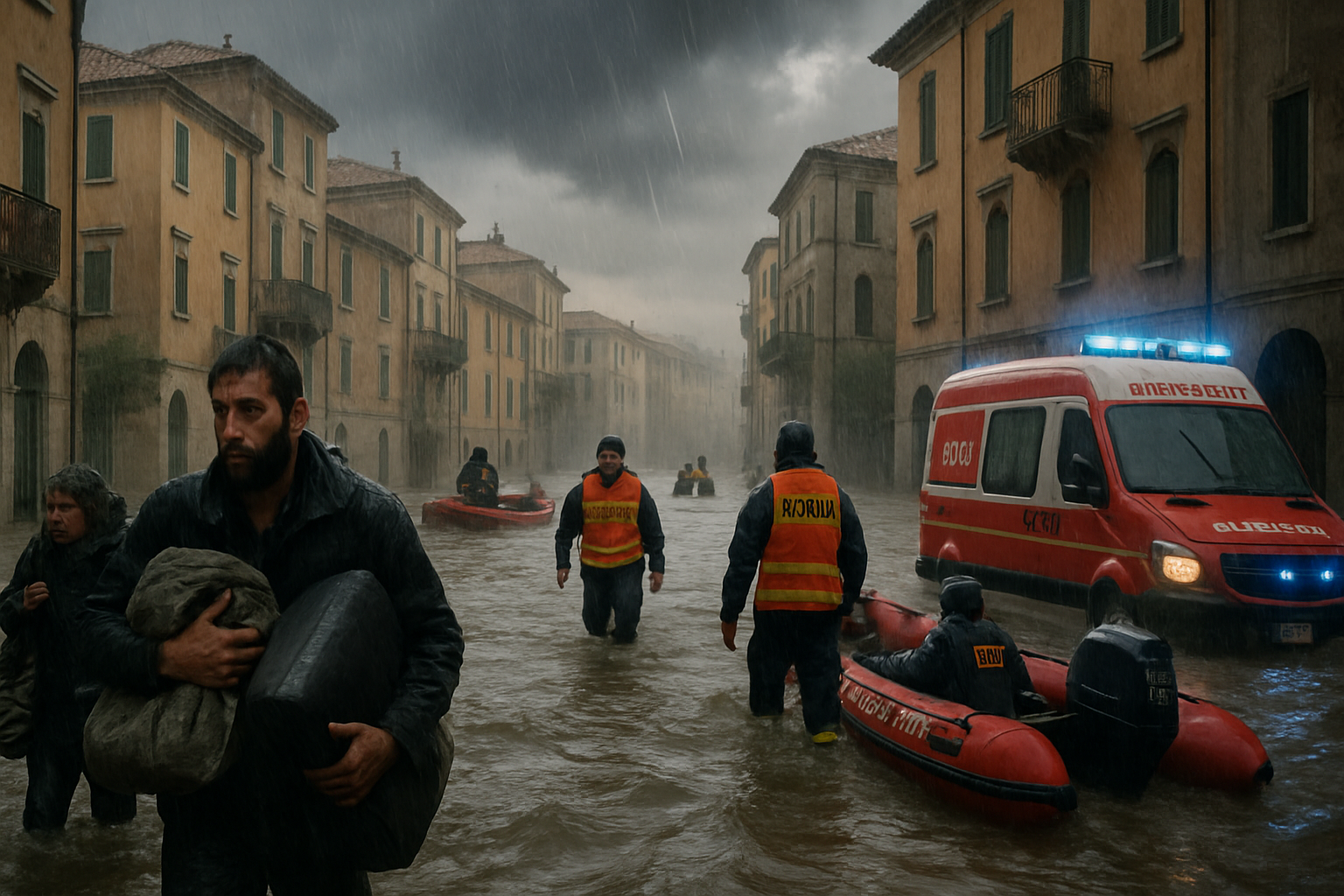
Storm Marta struck Spain and Portugal with devastating force on February 7, 2026, marking the third major Atlantic storm to pummel the Iberian Peninsula in just two weeks, bringing death tolls to 14 people and forcing authorities to deploy more than 26,500 rescuers in what has become the region's most severe weather emergency in recent memory.
The latest depression arrived with winds reaching 120 km/h and waves towering 13 meters, adding to the catastrophic damage already inflicted by Storms Kristin and Leonardo. Portuguese authorities have extended the national calamity status through February 15, with 1,975 military personnel and 30 naval vessels conducting the largest peacetime rescue operation in the country's history.
Escalating Death Toll and Emergency Response
The death toll from the succession of storms has reached 14, with the latest fatality being a firefighter from Campo Maior who died during patrol and surveillance operations on the EN 373 road. The circumstances surrounding his death remain under investigation, adding to the tragic human cost of the ongoing weather emergency.
Portugal's Civil Protection services have recorded over 1,800 weather-related incidents since February 1, overwhelming emergency response capabilities. In a single morning, authorities documented 256 separate incidents requiring immediate attention, forcing the evacuation of 75 people from Alenquer and 34 from two buildings in Beja.
"We have deployed all available resources to protect lives and provide assistance to affected communities."
— Portuguese Prime Minister Montenegro
Infrastructure Paralyzed Across the Peninsula
The relentless storms have brought transportation networks to a standstill across both countries. In Portugal, the critical Castanheira-Alverca railway line remains suspended, severely disrupting Lisbon commuter services. The Douro River has overflowed its banks in Porto and Vila Nova de Gaia, reaching critical levels not seen since 1997.
Spain continues to grapple with the aftermath of Storm Leonardo, which forced the evacuation of over 8,000 people from Andalusia provinces including Cádiz, Málaga, and Jaén. The town of Grazalema recorded an extraordinary 1,500 liters of rainfall per square meter, exceeding Madrid's entire annual precipitation in just 36 hours.
Power outages have affected 69,000 people across Portugal, with some localities in Pombal remaining without electricity for more than 10 days. The persistent blackouts prompted a 50-person demonstration on Friday night, highlighting growing frustration among affected communities.
Political Implications and Democratic Challenges
The severe weather has created an unprecedented intersection between natural disasters and democratic processes. Portugal's presidential election runoff, scheduled for February 8, is proceeding despite widespread infrastructure disruption. Three municipalities have postponed voting until next week due to the severity of conditions.
Electoral law prohibits national postponement of the presidential election, forcing authorities to navigate the complex challenge of maintaining democratic processes during a national emergency. This situation has sparked debate about the need for legal frameworks that can adapt to climate-related disruptions of democratic institutions.
Agricultural and Economic Devastation
The economic impact of the three-storm sequence is mounting rapidly. Spanish reservoirs have surged to 67.3% capacity, with 31 reservoirs reaching 100% capacity, while 169 roads remain closed in Cádiz province alone. The olive groves and citrus farms of Andalusia face devastating losses, with complete assessments pending weather stabilization.
Portugal's agricultural sector is similarly hard hit, with preliminary damage assessments suggesting billions of euros in losses across multiple sectors. The tourism industry, crucial to both economies, faces significant disruption as coastal areas and historic city centers bear the brunt of flooding.
Climate Context and Broader Pattern
The current crisis occurs within a disturbing global climate pattern. January 2026 was recorded as the hottest month in human history, marking 18 of the past 19 months exceeding 1.5°C above pre-industrial levels. This warming trend appears to be overriding natural climate variability, including La Niña cooling cycles that should provide temperature moderation.
The succession of Storms Kristin, Leonardo, and now Marta represents an unprecedented challenge to European emergency response systems. Climate scientists note the concerning frequency and intensity of these events, which are testing the continent's adaptation frameworks to their limits.
"This succession of storms is testing our emergency response capabilities and infrastructure resilience like never before. We must fundamentally rethink our climate adaptation strategies."
— European Emergency Response Coordinator
International Support and Coordination
The severity of the crisis has prompted international assistance, with Sweden and Denmark providing a €246 million emergency assistance package. The European Union has activated its Civil Protection Mechanism to coordinate cross-border support and resource sharing.
The crisis has demonstrated both the strengths and limitations of European emergency cooperation. While response mechanisms are functional, they are being stretched to capacity by the simultaneous nature of multiple extreme weather events across the continent.
Recovery Challenges Ahead
Recovery efforts are expected to take weeks to months, with comprehensive damage assessments pending weather stabilization. The Portuguese government has guaranteed "all resources" for reconstruction efforts, while Spanish authorities are conducting preliminary assessments of infrastructure damage.
The crisis provides an opportunity to "build back better" with enhanced flood resistance measures and climate-adapted infrastructure. However, the scale of destruction and the ongoing threat of additional weather systems present formidable challenges for reconstruction planning.
Lessons for Climate Adaptation
The Iberian Peninsula weather emergency serves as a stark reminder of the accelerating pace of climate change impacts. The ability of three major storms to cause such devastation in rapid succession highlights the need for fundamentally enhanced preparedness and adaptation strategies.
Emergency services, while professional and well-coordinated, have reached their operational limits. This crisis demonstrates that even well-prepared European nations require significant expansion of emergency response capabilities to address the new reality of more frequent and intense extreme weather events.
As Storm Marta moves through the region and additional Atlantic weather systems develop, authorities are maintaining high alert levels. The crisis represents not just a weather emergency, but a preview of the challenges that climate change will continue to present to European societies, economies, and democratic institutions in the years ahead.