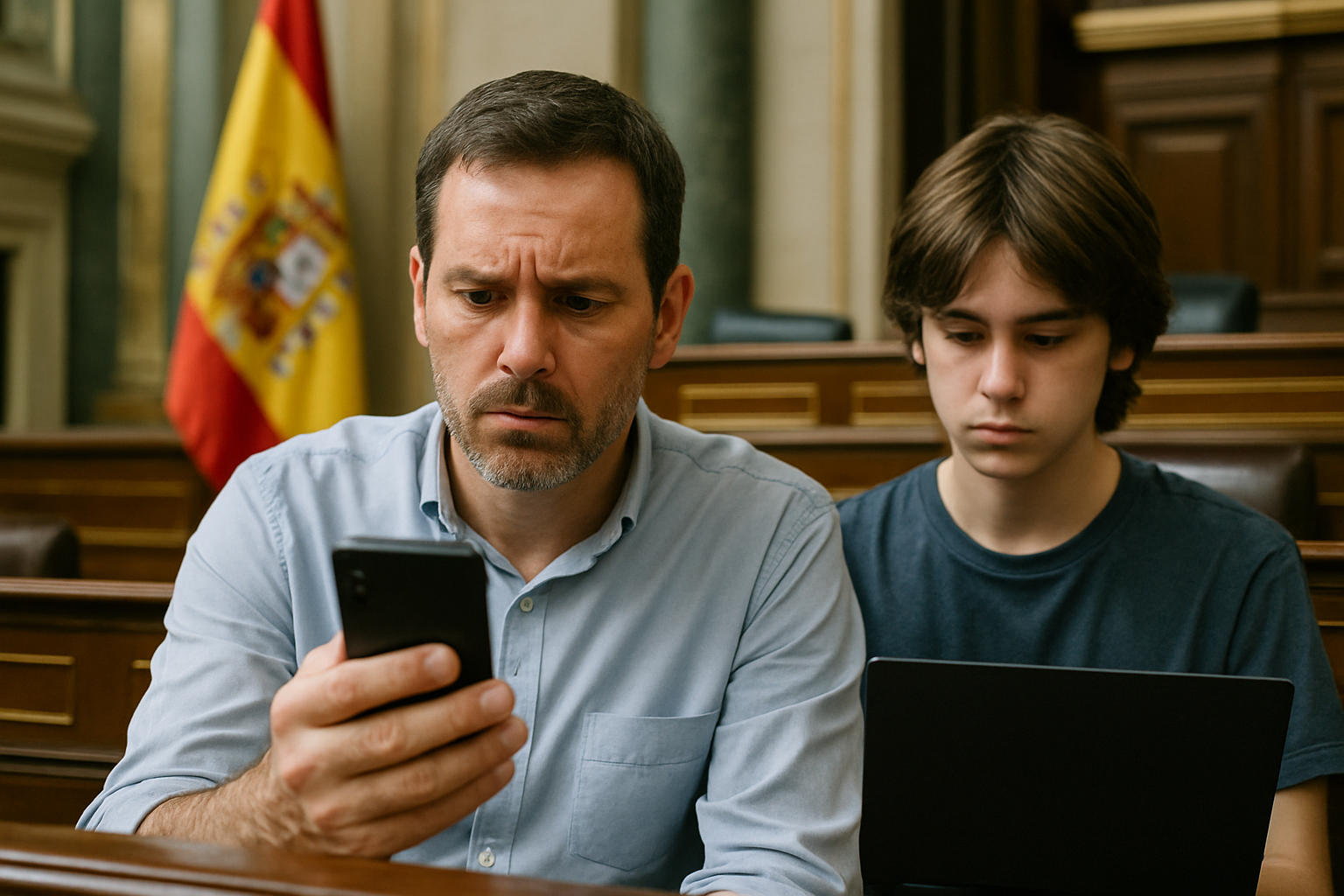
Spanish Prime Minister Pedro Sánchez announced a sweeping crackdown on social media platforms Tuesday, declaring that Spain will ban access to digital platforms for all minors under 16 years old as part of a comprehensive five-point plan to combat what he called the "digital Wild West."
Speaking at the World Governments Summit in Dubai, Sánchez unveiled unprecedented measures targeting major tech platforms, stating that "social media has become a failed state where laws are ignored and crimes are tolerated." The announcement represents one of Europe's most aggressive regulatory responses to growing concerns about children's digital safety and platform accountability.
Comprehensive Digital Protection Framework
The Spanish government's initiative extends far beyond simple age restrictions, encompassing a multi-faceted approach to digital platform regulation. According to sources from El País and multiple European media outlets, the five-point plan includes mandatory age verification systems, criminal penalties for algorithmic manipulation, and direct legal liability for platform executives.
"We will protect them from the digital Wild West," Sánchez declared, referencing the unregulated nature of current social media environments. The measures build upon Spain's existing digital protection legislation, specifically the law for protecting minors in digital environments that has been working through the Spanish Congress.
"Social media platforms have become a failed state where laws are ignored and crimes are tolerated. We must act decisively to protect our children."
— Pedro Sánchez, Spanish Prime Minister
Mandatory Age Verification and Platform Accountability
Central to Spain's approach is the requirement for digital platforms to implement effective age verification systems. Unlike previous voluntary initiatives, this legislation will make platforms legally responsible for ensuring users meet minimum age requirements. The measure directly addresses longstanding criticism that current age verification methods are inadequate and easily circumvented.
Romanian and Portuguese media coverage emphasizes that the Spanish initiative represents a significant escalation in European regulatory efforts. Portuguese broadcaster RTP noted that the announcement comes amid broader European Union discussions about strengthening the Digital Services Act and Digital Markets Act frameworks.
The legislation will also criminalize algorithmic manipulation practices, making Spain among the first countries to directly address concerns about how social media algorithms can harm young users through content promotion strategies designed to maximize engagement rather than user wellbeing.
Executive Liability Framework
Perhaps most significantly, the Spanish plan includes provisions holding platform executives personally liable for violations. Bulgarian media reports indicate that Spain will "change its laws to hold social media executives accountable for illegal and hate-filled content," with Sánchez stating that corporate leadership cannot hide behind corporate structures when platforms fail to protect users.
This approach mirrors recent enforcement actions across Europe, including the February 3, 2026 French cybercrime investigation that resulted in raids on X platform offices and formal summons for Elon Musk. The coordinated European response suggests a fundamental shift in how democratic governments approach big tech accountability.
Global Context and International Movement
Spain's announcement occurs within a broader international movement toward stricter social media regulation for minors. Multiple countries have implemented or are considering similar measures, with Australia leading early efforts through age verification pilot programs and several U.S. states proposing comparable legislation.
The timing of Sánchez's announcement at the World Governments Summit in Dubai highlights the international nature of digital governance challenges. Slovakia's Aktuality.sk described the Spanish initiative as part of Pedro Sánchez's "war declaration against the digital Wild West," emphasizing the military language used by Spanish officials to frame the regulatory battle.
European regulatory coordination has intensified following several high-profile incidents involving social media platforms and minor safety. The emergence of AI-only platforms like Moltbook in February 2026 has further complicated regulatory landscapes, as existing frameworks primarily address human-to-human communication rather than AI-to-AI interactions that might influence children indirectly.
Implementation Challenges and Industry Response
Technical implementation of comprehensive age verification systems presents significant challenges for both platforms and regulators. Current age verification methods rely primarily on user self-reporting, which has proven ineffective for preventing underage access. More robust verification systems raise privacy concerns and questions about data collection practices.
Industry observers note that platforms may face conflicts between Spanish requirements and regulations in other jurisdictions. The global nature of social media platforms means that country-specific age restrictions could require significant technical infrastructure changes or potentially lead to service limitations in specific markets.
The Spanish legislation's focus on algorithmic manipulation represents particularly complex enforcement challenges. Determining when algorithmic content promotion crosses the line into harmful manipulation requires technical expertise and ongoing monitoring that traditional regulatory frameworks struggle to provide.
Digital Rights and Privacy Concerns
Child advocacy groups have expressed mixed reactions to Spain's comprehensive approach. While supporting stronger protections for minors, some organizations worry that overly restrictive measures could limit young people's access to educational resources, support communities, and positive social connections available through digital platforms.
Privacy advocates have raised concerns about the data collection requirements inherent in robust age verification systems. Effective age verification might require platforms to collect and verify sensitive personal information, potentially creating new privacy risks for all users, not just minors.
The Spanish approach attempts to balance these concerns by focusing enforcement on platform behavior rather than user restrictions alone. By holding platforms accountable for algorithmic manipulation and content moderation failures, the legislation aims to improve the digital environment for all users while providing special protections for children.
Economic and Technological Implications
The Spanish initiative could significantly impact the digital economy, particularly for platforms that derive substantial revenue from younger demographics. Advertising models built on youth engagement may face fundamental challenges if platforms must verify ages and restrict access for under-16 users.
Technology companies may need to invest heavily in age verification infrastructure, content moderation systems, and algorithmic transparency tools to comply with Spanish requirements. These costs could disproportionately affect smaller platforms while potentially benefiting established companies with existing compliance resources.
The legislation's success could influence regulatory approaches across the European Union and globally. If Spain demonstrates effective enforcement mechanisms for digital platform regulation, similar approaches may spread to other jurisdictions, fundamentally changing how social media companies operate worldwide.
Timeline and Next Steps
Spanish officials have not provided specific implementation timelines for the new measures, though the legislation builds upon existing frameworks already moving through Spain's Congress. The announcement at the World Governments Summit suggests Spanish officials are seeking international coordination and support for their regulatory approach.
Legal experts anticipate significant court challenges from affected platforms, particularly regarding the executive liability provisions and algorithmic manipulation definitions. The Spanish government will need to develop detailed enforcement mechanisms and regulatory guidance to implement the comprehensive framework effectively.
As European governments continue grappling with social media regulation challenges, Spain's bold approach represents a significant test case for whether democratic societies can effectively govern global digital platforms while protecting both child safety and digital rights principles.