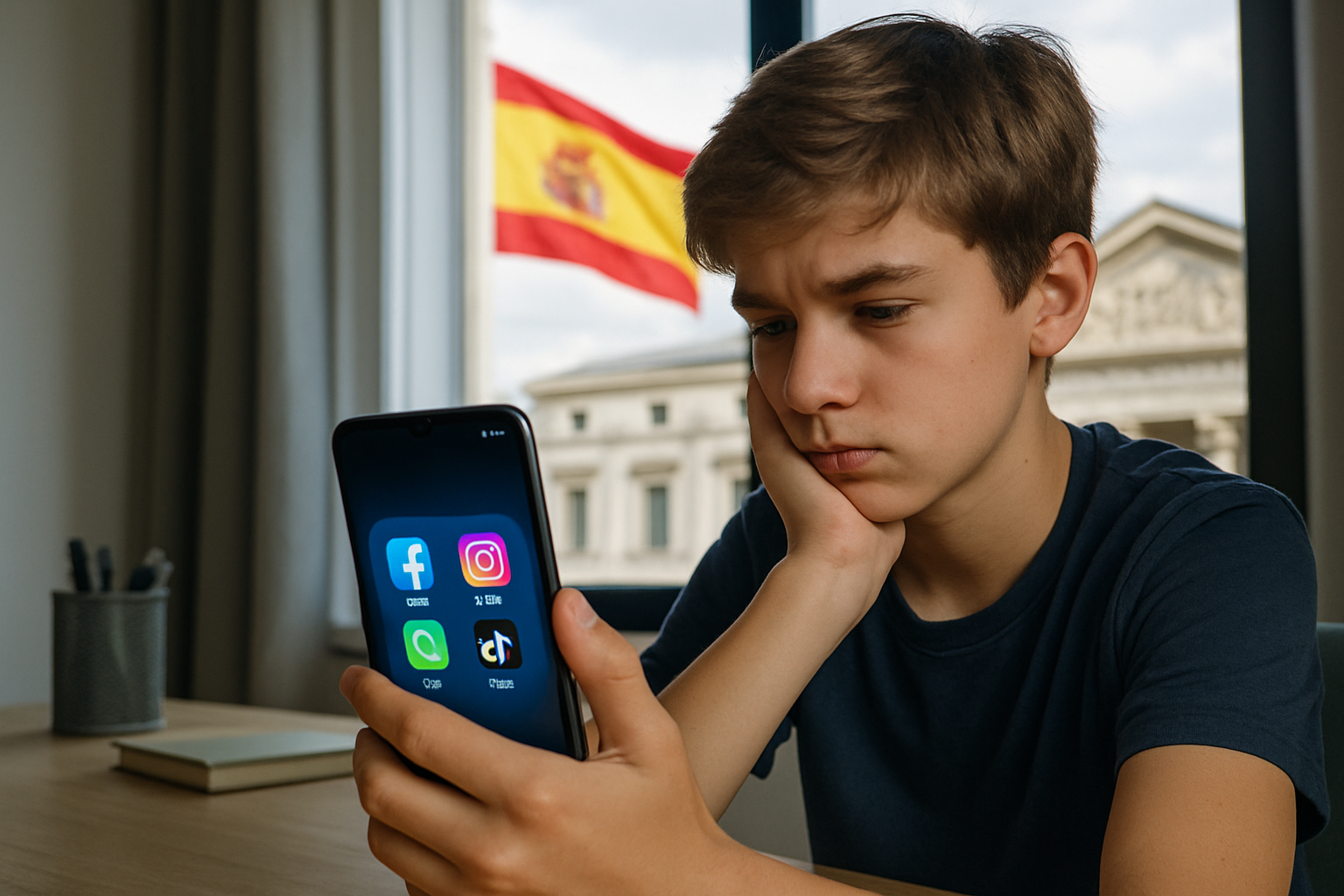
Spain will ban social media access for children under 16 as part of a comprehensive five-point digital protection package announced by Prime Minister Pedro Sánchez at the World Government Summit in Dubai, positioning the country as Europe's most aggressive regulator of digital platforms.
Speaking at the prestigious summit on Tuesday, Sánchez declared war against what he termed the "digital Wild West," unveiling measures that would make platform executives criminally liable for harmful content and require robust age verification systems across all social media networks operating in Spain.
"Our children are exposed to a space that they should never have navigated alone. A space of abuse, addiction, pornography and violence. We are not going to accept it. We are going to protect them against the digital Wild West," Sánchez stated during his summit address.
Following Australia's Pioneering Model
The Spanish initiative directly mirrors Australia's groundbreaking legislation, which has already removed over 4.7 million teenage accounts since its implementation in December 2025. However, questions remain about the long-term effectiveness of such bans, with Australian health impact data still inconclusive due to the brief implementation period.
According to Spanish media reports, more than 4.7 million accounts of adolescents under 16 have been eliminated by Australia's social media prohibition since it came into force. Despite these impressive numbers, experts caution that the impact on young people's mental health remains unproven given the limited timeframe.
Germany's public broadcaster Tagesschau noted the growing international trend, reporting that "more and more states are considering corresponding regulations" following Australia's precedent-setting approach.
Comprehensive Digital Platform Accountability
Spain's package extends far beyond simple age restrictions, introducing unprecedented corporate accountability measures that could reshape how tech companies operate globally. The five-point plan includes:
- Complete social media access prohibition for minors under 16
- Mandatory robust age verification systems for all platforms
- Criminal penalties for algorithmic manipulation targeting children
- Direct legal liability for platform executives
- Enhanced digital sovereignty protections
The Malaysian publication Malaysiakini emphasized the sovereignty aspect, quoting Sánchez's declaration that it was "time to defend our digital sovereignty from foreign interference," highlighting Spain's broader geopolitical motivations.
European Coordination and International Context
The announcement comes amid unprecedented European regulatory coordination against major tech platforms. France's cybercrime unit recently raided X's Paris offices and issued formal summons to Elon Musk, while multiple European jurisdictions are investigating algorithmic manipulation and content moderation failures.
Greece is reportedly "very close" to implementing its own social media ban for children under 15, according to government sources cited by Balkan media, suggesting Spain's announcement may trigger a domino effect across the European Union.
"This is a historic moment for European digital regulation. Spain is taking the lead in protecting our children from predatory platforms that have operated without accountability for too long."
— Digital rights advocate, speaking on condition of anonymity
Implementation Challenges and Technical Hurdles
The legislation's success will largely depend on effective age verification technology, an area where previous attempts have struggled. Current proposals include biometric verification, government-issued digital ID integration, and enhanced parental consent mechanisms.
Technical challenges include defining "algorithmic manipulation" in legally enforceable terms and establishing international cooperation frameworks for enforcement against global platforms. The legislation must also address privacy concerns surrounding age verification data collection and storage.
Industry observers note that Spain's approach goes beyond Australia's model by targeting platform executives directly with criminal liability—a significant escalation that could deter companies from operating in the European market if compliance costs become prohibitive.
Platform Response and Industry Impact
Major social media platforms have not yet publicly responded to Spain's announcement, but the legislation could force fundamental changes to how companies like Meta, TikTok, and X operate in European markets. The threat of executive criminal liability represents an unprecedented personal risk for corporate leadership.
Spanish news outlet El Diario noted that the plan builds upon existing Spanish legislation for protecting minors in digital environments currently being debated in Congress, suggesting the government has been preparing this comprehensive approach for months.
The timing coincides with increasing global scrutiny of social media's impact on youth mental health, with UN agencies recently warning about AI-powered threats to children including deepfakes, grooming, and cyberbullying.
Global Implications and Future Outlook
Spain's announcement positions the country as a potential model for EU-wide digital platform regulation, with implications extending far beyond European borders. If successful, the legislation could influence regulatory approaches in other major markets including the United States and Asia-Pacific regions.
The initiative faces complex constitutional questions regarding free expression rights, international jurisdiction issues for global platforms, and the practical challenges of enforcing age restrictions across diverse online environments.
Critics worry about potential negative impacts on digital literacy and legitimate educational uses of social media platforms, while supporters argue that protecting children from documented harms justifies temporary restrictions during critical developmental periods.
Legislative Timeline and Next Steps
While Sánchez did not specify an implementation timeline, the legislation is expected to move through Spain's Congress alongside existing digital protection measures already under consideration. The government appears committed to swift action, with officials suggesting the measures could take effect within 2026.
The success of Spain's ambitious plan will likely influence similar efforts across Europe and globally, making it one of the most closely watched digital policy initiatives of the decade. As other nations grapple with balancing child protection against digital rights concerns, Spain's comprehensive approach may provide a roadmap for effective regulation of increasingly powerful tech platforms.
The international community will be watching closely to see whether Spain can successfully implement its vision of taming the "digital Wild West" while maintaining the benefits of digital connectivity for its younger citizens.