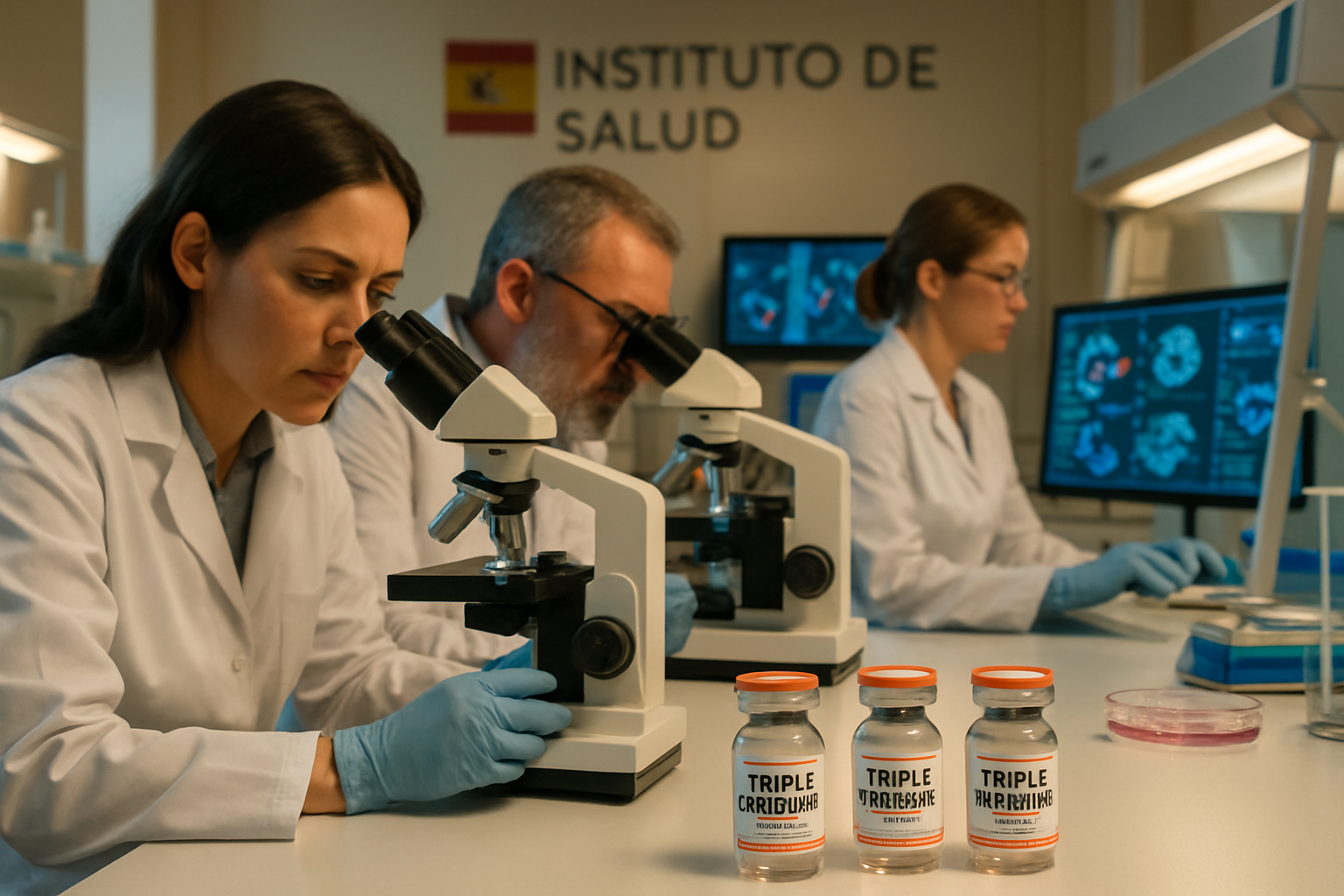
Spanish researchers have achieved a revolutionary breakthrough in the fight against pancreatic cancer, developing a triple-drug combination therapy that completely eliminates tumors in laboratory mice and offers unprecedented hope for treating one of medicine's most challenging malignancies.
The groundbreaking study, conducted at Spanish research institutions, represents a paradigm shift in pancreatic cancer treatment by simultaneously attacking three critical pathways that tumors use for growth and survival. Unlike traditional single-target approaches, this innovative therapy targets the growth pathway, signal receptors, and survival mechanisms simultaneously, preventing the development of treatment resistance that has plagued previous therapeutic attempts.
A New Multi-Front Attack Strategy
Pancreatic cancer has long been considered one of the most aggressive and deadly forms of cancer, with survival rates remaining stubbornly low despite decades of research. The Spanish team's approach marks a significant departure from conventional treatment strategies by recognizing that cancer cells adapt and develop resistance when attacked through a single pathway.
"Instead of attacking cancer from just one direction, this new therapy simultaneously strikes three critical routes that the tumor uses to grow and survive," explains the research team's findings. The therapy targets the growth pathway, receptor signals, and survival shield mechanisms that cancer cells employ to evade destruction.
This multi-pronged approach builds on previous research documented in medical literature, including work by researchers who have been exploring combination therapies as a solution to treatment resistance. The Spanish breakthrough represents the culmination of years of investigation into how pancreatic tumors develop resilience against conventional treatments.
From Laboratory Success to Clinical Promise
The Spanish experiment has demonstrated complete tumor elimination in laboratory mice, a remarkable achievement that has captured international attention within the oncological community. However, researchers emphasize that human clinical trials remain years away, requiring extensive safety and efficacy testing before the therapy can be offered to patients.
Dr. Piro Paparisto, a medical expert who recently discussed these developments, highlighted the significance of the research while emphasizing the ongoing nature of scientific investigation. The breakthrough has sparked considerable public interest, with research centers reporting being overwhelmed by patient inquiries following the announcement.
This public response reflects the desperate need for effective pancreatic cancer treatments. The disease currently affects hundreds of thousands of people worldwide, with limited treatment options and poor prognosis rates. The Spanish discovery offers the first genuine hope for a transformative approach to this devastating illness.
Global Context of Cancer Innovation
The Spanish breakthrough emerges during a remarkable period of cancer research innovation worldwide. Recent developments have included Australia's pioneering mRNA brain cancer vaccine trials, Finland's introduction of same-day laser brain tumor treatments, and Sweden's implementation of AI-assisted breast cancer detection systems.
This global acceleration in cancer research reflects both increased international cooperation and significant technological advances. The World Health Organization's research has confirmed that 38-40% of cancers are preventable through lifestyle changes, while simultaneously, breakthrough treatments like the Spanish triple-drug therapy offer hope for those already diagnosed.
The timing of this discovery is particularly significant given the recent focus on pancreatic cancer research. Medical institutions across Europe, Asia, and North America have been collaborating to understand this disease's unique challenges and develop more effective therapeutic approaches.
Understanding Pancreatic Cancer's Deadly Nature
Pancreatic cancer's reputation as one of the most formidable cancers stems from several factors that make it particularly challenging to treat. The disease often develops silently, with symptoms appearing only in advanced stages when treatment options become limited. Additionally, pancreatic tumors are notoriously resistant to conventional chemotherapy and radiation treatments.
The cancer's location deep within the abdomen makes surgical intervention complex and often impossible. Even when surgery is possible, the disease frequently returns, highlighting the need for more effective systemic treatments like the one being developed in Spain.
Current treatment protocols typically involve combinations of chemotherapy drugs, but response rates remain disappointingly low. The five-year survival rate for pancreatic cancer continues to lag significantly behind other major cancer types, making innovative approaches like the Spanish triple-drug therapy critically important for patient outcomes.
The Science Behind Triple-Drug Resistance Prevention
The revolutionary aspect of the Spanish approach lies in its ability to prevent resistance development, a major factor in pancreatic cancer treatment failures. Cancer cells are remarkably adaptable, often finding alternative pathways for growth and survival when one route is blocked by treatment.
By simultaneously targeting multiple essential pathways, the triple-drug combination creates what researchers describe as a comprehensive blockade that makes it nearly impossible for cancer cells to adapt and survive. This represents a fundamental shift in oncological thinking, moving from sequential treatment approaches to coordinated multi-pathway intervention.
The research builds on decades of understanding about cancer cell biology and resistance mechanisms. Previous studies have shown that targeting single pathways often leads to compensatory activation of alternative survival routes, ultimately resulting in treatment failure and disease progression.
International Implications and Future Development
The success of the Spanish research has implications far beyond pancreatic cancer treatment. The multi-drug resistance prevention approach could potentially be adapted for other difficult-to-treat cancers, opening new avenues for oncological research worldwide.
International medical institutions are already expressing interest in collaborating on further development of this approach. The research represents the type of breakthrough that often emerges from concentrated scientific effort and international cooperation in addressing humanity's most challenging medical problems.
The development timeline for bringing this therapy to clinical practice will require careful planning and substantial investment. Researchers estimate that comprehensive clinical trials could take five to seven years, involving multiple phases of testing to ensure both safety and efficacy in human patients.
Economic and Healthcare System Impact
If successful in human trials, the triple-drug therapy could have profound economic implications for healthcare systems worldwide. Pancreatic cancer currently imposes enormous costs on medical systems through expensive treatments that often provide limited benefit and extended palliative care requirements.
More effective treatments could reduce long-term healthcare costs while dramatically improving patient outcomes and quality of life. The potential for early intervention with effective therapy could transform pancreatic cancer from a death sentence to a manageable condition.
Healthcare infrastructure will need to prepare for the eventual implementation of such advanced therapies, including training medical personnel and establishing protocols for patient selection and monitoring during treatment.
Patient Advocacy and Public Response
The announcement of the Spanish breakthrough has generated significant response from patient advocacy groups worldwide. Organizations representing pancreatic cancer patients and families have expressed cautious optimism while emphasizing the importance of continued research funding and support.
Patient advocates stress the need for realistic expectations regarding timelines, while also celebrating the genuine progress represented by the Spanish research. The discovery provides hope for patients and families facing this devastating diagnosis, offering something concrete to anticipate in the fight against the disease.
Research centers have reported being overwhelmed with inquiries from patients and families seeking information about potential access to experimental treatments. This response highlights both the desperate need for effective pancreatic cancer therapies and the public's understanding of the significance of the Spanish discovery.
The Road to Clinical Application
The path from laboratory success to clinical application represents a complex journey requiring multiple phases of rigorous testing. Initial human trials will focus primarily on safety, gradually expanding to evaluate effectiveness compared to current standard treatments.
Regulatory agencies worldwide will need to review extensive data demonstrating both the therapy's safety profile and its effectiveness in human patients. This process, while time-consuming, ensures that promising laboratory discoveries translate into safe and effective treatments for patients.
The Spanish research team and international collaborators are already beginning the preliminary work necessary for future clinical trials. This includes refining the drug combination protocols, establishing manufacturing standards, and developing patient selection criteria for optimal therapeutic outcomes.
As the scientific community continues to build on this breakthrough, the triple-drug approach represents a beacon of hope for the millions of people worldwide who will face pancreatic cancer diagnoses in the coming years. While human applications remain years away, the Spanish discovery marks a genuine turning point in humanity's fight against one of its most formidable medical adversaries.