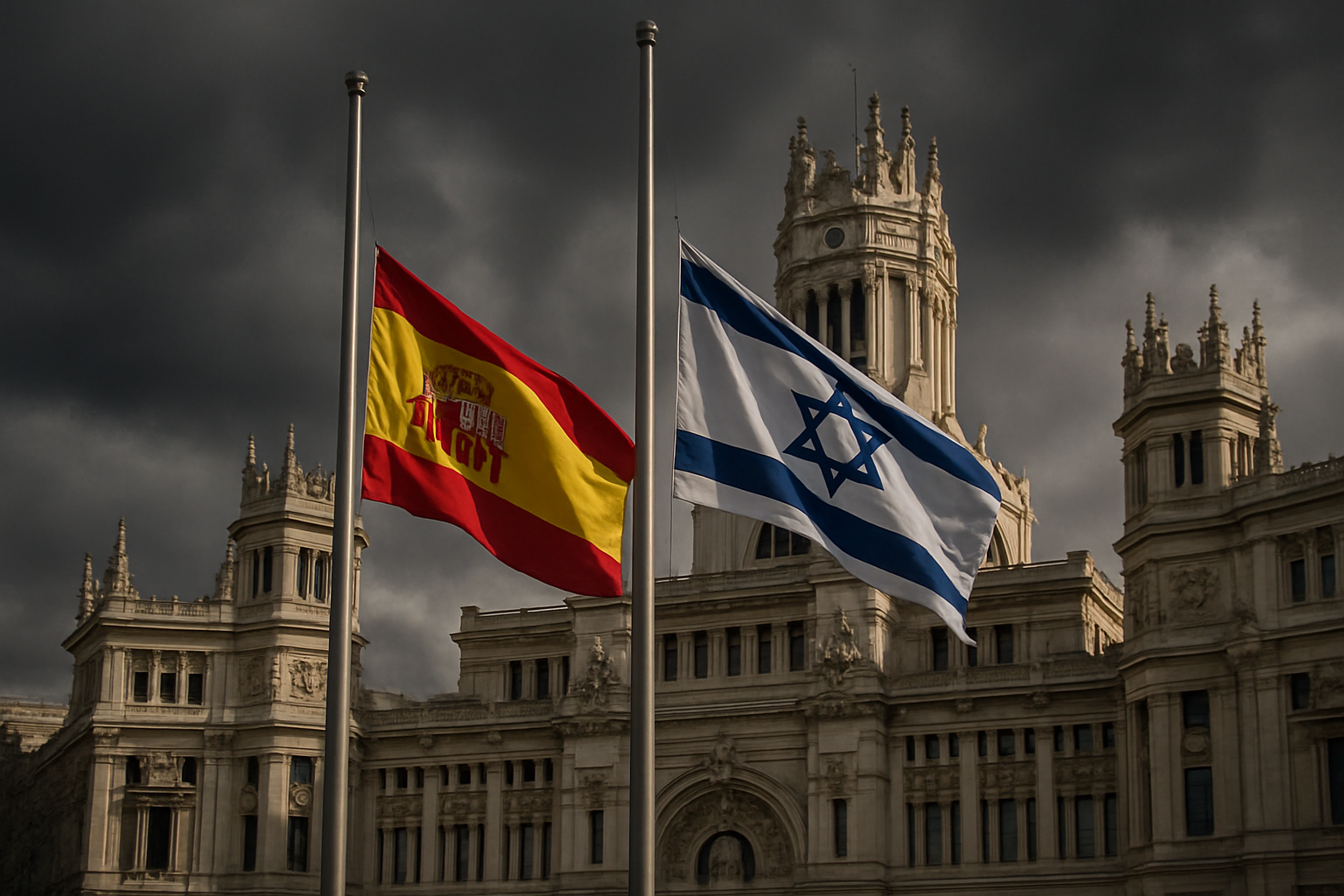
Spain has permanently withdrawn its ambassador to Israel, marking a historic low in bilateral relations as the diplomatic rift between Madrid and Jerusalem deepens over the ongoing Middle East crisis and fundamental disagreements on regional policy.
The Spanish Foreign Ministry announced Wednesday that the ambassador's position has been officially terminated, with the Tel Aviv embassy to be led by a chargé d'affaires for the foreseeable future. This unprecedented move represents the most severe diplomatic action taken by Spain against Israel in decades, signaling a complete breakdown in high-level diplomatic engagement between the two nations.
Reciprocal Diplomatic Crisis
The withdrawal comes amid revelations that Israel's own ambassador to Spain has not been present in Madrid since 2024, creating what Italian diplomatic sources describe as "reciprocal" absence of formal diplomatic representation at the highest level. This extraordinary situation reflects the depth of the crisis that has been building between the two countries over the past year.
Hamas, the Palestinian militant organization, immediately welcomed Spain's decision, calling it "a continuation of the honorable positions of the Spanish government and people in rejecting what is happening in the Gaza Strip." The Palestinian response underscores how Spain's diplomatic actions are being interpreted within the broader context of the Middle East conflict.
"This step represents a principled stance by Spain in standing with international law and Palestinian rights."
— Hamas Statement, March 11, 2026
Historical Context of Deteriorating Relations
The current crisis represents the culmination of mounting tensions that have accelerated dramatically since early 2026. Spain has been among the most vocal European critics of Israeli military operations in Gaza and the West Bank, with Spanish Prime Minister Pedro Sánchez previously condemning what he termed "breaches of international law."
The relationship reached a critical juncture in February 2026 when Spain joined 85 UN member states in condemning Israeli West Bank expansion policies. Finance Minister Bezalel Smotrich's declaration that Israeli policies would "continue to kill the idea of a Palestinian state" particularly outraged Spanish officials, who viewed it as a direct contradiction of Madrid's longstanding support for a two-state solution.
Yemen's Sanaa government has also praised Spain's decision, with the Foreign Ministry commending what it called "Spain's solidarity with the Islamic Republic of Iran" and its stance against what Sanaa termed "US-Israeli aggression." This response highlights how Spain's diplomatic moves are being viewed through the lens of broader regional alignments.
European Diplomatic Implications
Spain's withdrawal reflects broader European frustration with Israeli policies, as evidenced by the unprecedented coalition of over 400 EU diplomats who have demanded increased pressure on Israeli authorities. The European Left Coalition's petition against EU-Israel partnerships has exceeded 400,000 signatures, demonstrating growing grassroots opposition to current relationships.
The decision comes at a particularly sensitive time, as Europe grapples with multiple Middle Eastern crises simultaneously. The ongoing Iran-US nuclear crisis, which collapsed into military confrontation in March 2026, has created additional strain on European diplomatic resources and tested traditional alliance structures.
Regional and International Reactions
The ambassador withdrawal has drawn mixed reactions from across the Middle East. While Palestinian groups and Iran's allies have praised the move, traditional US allies in the region have remained largely silent, reflecting their own complex positioning amid the broader regional crisis.
The timing of Spain's announcement is particularly significant, coming just days after the most dangerous international crisis since the Cold War escalated in the Persian Gulf. With oil prices surging past $80 per barrel and global aviation in chaos due to widespread airspace closures, European nations are reassessing their diplomatic priorities and regional relationships.
"We cannot maintain normal diplomatic relations while witnessing systematic violations of international law and human rights."
— Spanish Foreign Ministry Statement, March 11, 2026
Impact on Middle East Peace Efforts
The Spanish withdrawal represents a significant blow to international peace initiatives, including the Trump administration's Board of Peace project, which had secured over $5 billion in Gaza reconstruction pledges from 27 nations. With European support wavering and diplomatic channels closing, the prospects for comprehensive peace negotiations have dimmed considerably.
The situation is further complicated by the complete breakdown of US-Iran nuclear negotiations, which had achieved "broad agreement on guiding principles" before collapsing into the largest Middle East military operation since 2003. This broader regional instability has created an environment where bilateral diplomatic disputes become magnified and harder to resolve.
Economic and Strategic Consequences
Beyond the symbolic importance, Spain's diplomatic withdrawal has practical implications for bilateral trade, security cooperation, and cultural exchanges. The absence of high-level diplomatic channels complicates coordination on counterterrorism efforts, trade disputes, and European Union policies toward the Middle East.
The move also reflects Spain's strategic realignment as European nations increasingly assert diplomatic independence from traditional US-led approaches to Middle East policy. This trend has accelerated amid criticism of American military actions in the region and growing European calls for multilateral crisis management.
Looking Forward: Uncertain Diplomatic Future
With both countries now operating without ambassadorial-level representation, the path to diplomatic reconciliation appears increasingly difficult. The institutionalization of this diplomatic rift through formal ambassador withdrawal suggests that normalization may require fundamental policy changes from both sides.
International diplomatic experts warn that the Spanish-Israeli rupture could serve as a template for other European nations considering similar moves. As the Middle East crisis continues to escalate, with global aviation paralyzed and energy markets in turmoil, the pressure on European governments to take definitive diplomatic stances is intensifying.
The permanent withdrawal of Spain's ambassador marks not just a bilateral diplomatic crisis, but a symptom of the broader breakdown in international cooperation that has characterized the most dangerous period in global politics since the end of the Cold War. As regional conflicts multiply and traditional diplomatic frameworks collapse, the Spanish-Israeli rift exemplifies the challenges facing international relations in an increasingly polarized world.