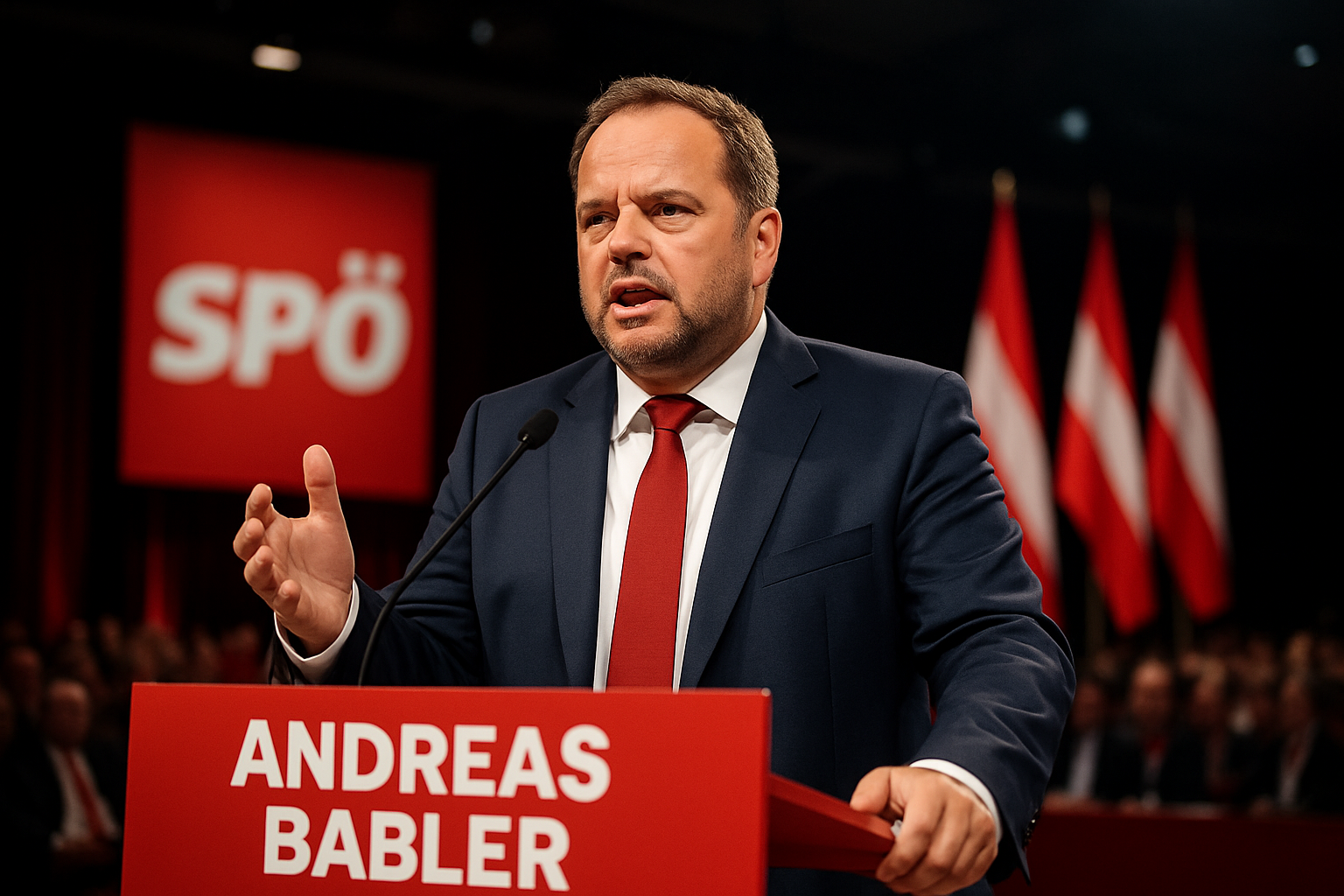
Austria's Social Democratic Party (SPÖ) leader Andreas Babler achieved a decisive re-election victory at the federal party congress on Saturday, securing 81.51% support from delegates in a result that visibly relieved the embattled leader and strengthened his position as Austria's main opposition voice.
The commanding victory at the SPÖ federal congress provides Babler with a robust mandate to continue his leadership of Austria's traditional workers' party at a critical juncture in the nation's political evolution. Speaking after the vote, Babler expressed gratitude for the trust placed in him, declaring his "full focus on the fight against inflation and for good healthcare provision" would remain his government priorities.
Political Context and Party Unity
Babler's re-election comes at a pivotal moment in Austrian politics, as the SPÖ positions itself as a credible alternative to the current governing arrangements. The strong showing of 81.51% - significantly higher than many observers anticipated - demonstrates substantial party unity behind Babler's leadership approach, which has emphasized social justice, workers' rights, and opposition to rising living costs.
The congress saw Babler deliver what observers described as both combative rhetoric against political opponents and moments of self-reflection. His speech targeted inflation, controversial political figure Herbert Kickl, and what he characterized as the dangers of algorithmic influences on young people - themes that resonated strongly with the party faithful gathered in Vienna.
"This result shows that our party stands united behind a clear vision for Austria's future - one that puts working families and social justice at the center of political decision-making."
— Andreas Babler, SPÖ Federal Chairman
Strategic Positioning for Federal Politics
The overwhelming mandate positions Babler to pursue more aggressive opposition strategies against the current federal government while preparing the SPÖ for potential coalition negotiations following future federal elections. Party insiders suggest the strong result eliminates any immediate leadership challenges and provides stability for long-term strategic planning.
Vienna's Social Democratic leadership, including prominent figures who have sometimes maintained distance from federal party positions, offered congratulations to Babler's victory. The unified response from the powerful Vienna SPÖ organization signals important party cohesion that had been questioned in previous months.
Babler's leadership has been characterized by attempts to reconnect with traditional working-class voters while addressing contemporary challenges including climate change, digitalization, and European integration. His re-election speech emphasized themes of "order instead of division for Austria," positioning the SPÖ as a stabilizing force amid broader European political turbulence.
Policy Priorities and Legislative Agenda
The party congress also saw overwhelming approval of key policy proposals that will form the backbone of SPÖ's approach to federal politics. These "guiding motions" received substantial majority support and include comprehensive approaches to economic policy, social security, and Austrian neutrality in international affairs.
Party spokesperson Eva-Maria Herr emphasized the SPÖ's commitment to "order instead of division," while security policy expert Wolfgang Manninger indicated the party aims to "reclaim the concept of security in positive terms" from far-right political forces. This strategic messaging appears designed to counter narratives from the Freedom Party (FPÖ) while maintaining Social Democratic values.
European and International Implications
Babler's decisive victory occurs within broader European political realignments, where social democratic parties across the continent face challenges from both populist right-wing movements and changing voter expectations. The Austrian SPÖ's ability to maintain internal unity and present credible alternatives represents a significant development for European center-left politics.
The party's approach to European integration, Austrian neutrality, and international cooperation will likely feature prominently in future federal electoral campaigns. Babler's leadership team has indicated support for continued European Union membership while maintaining Austria's traditional neutrality - a position that requires careful balancing amid ongoing geopolitical tensions.
Recent European political developments, including democratic transitions in other EU member states and ongoing discussions about European sovereignty, provide context for Austria's internal political evolution. The SPÖ's stability under Babler's leadership contrasts with political uncertainty experienced in neighboring countries.
Challenges and Opposition Response
Despite the strong congress result, Babler faces significant challenges in translating party unity into electoral success. Austria's complex political landscape includes a governing coalition that has maintained relative stability, while opposition parties across the spectrum compete for voter attention amid economic pressures and social changes.
The Freedom Party under Herbert Kickl has positioned itself as the primary alternative to current governing arrangements, creating a three-way competition for political dominance. Babler's strategy appears focused on presenting the SPÖ as the responsible opposition choice, capable of government participation while maintaining progressive principles.
Economic challenges, including inflation concerns that dominated recent electoral discussions across Europe, provide opportunities for opposition parties to critique government performance. Babler's emphasis on cost-of-living issues and healthcare provision directly addresses voter concerns identified in recent polling.
Path Forward
The decisive re-election result provides Babler with political capital to pursue strategic initiatives that could reshape Austrian politics. Party observers suggest the mandate enables more assertive opposition tactics while positioning the SPÖ for potential coalition participation following future federal elections.
Babler's leadership team faces the challenge of maintaining party unity while developing policy positions that appeal to diverse Austrian constituencies. The balance between traditional Social Democratic principles and contemporary political realities will likely define the party's approach in coming months.
With European political trends showing increasing volatility and voter expectations for responsive governance, the SPÖ's internal stability under Babler's leadership provides a foundation for strategic political planning. The party's ability to present coherent alternatives on key issues may prove decisive in Austria's evolving political landscape.
As Austria continues to navigate complex domestic and international challenges, Babler's strengthened position as SPÖ leader ensures the party will remain a significant voice in national political debates. The overwhelming congress support demonstrates that Austria's Social Democrats have consolidated behind a leadership approach that combines traditional values with contemporary political realities.