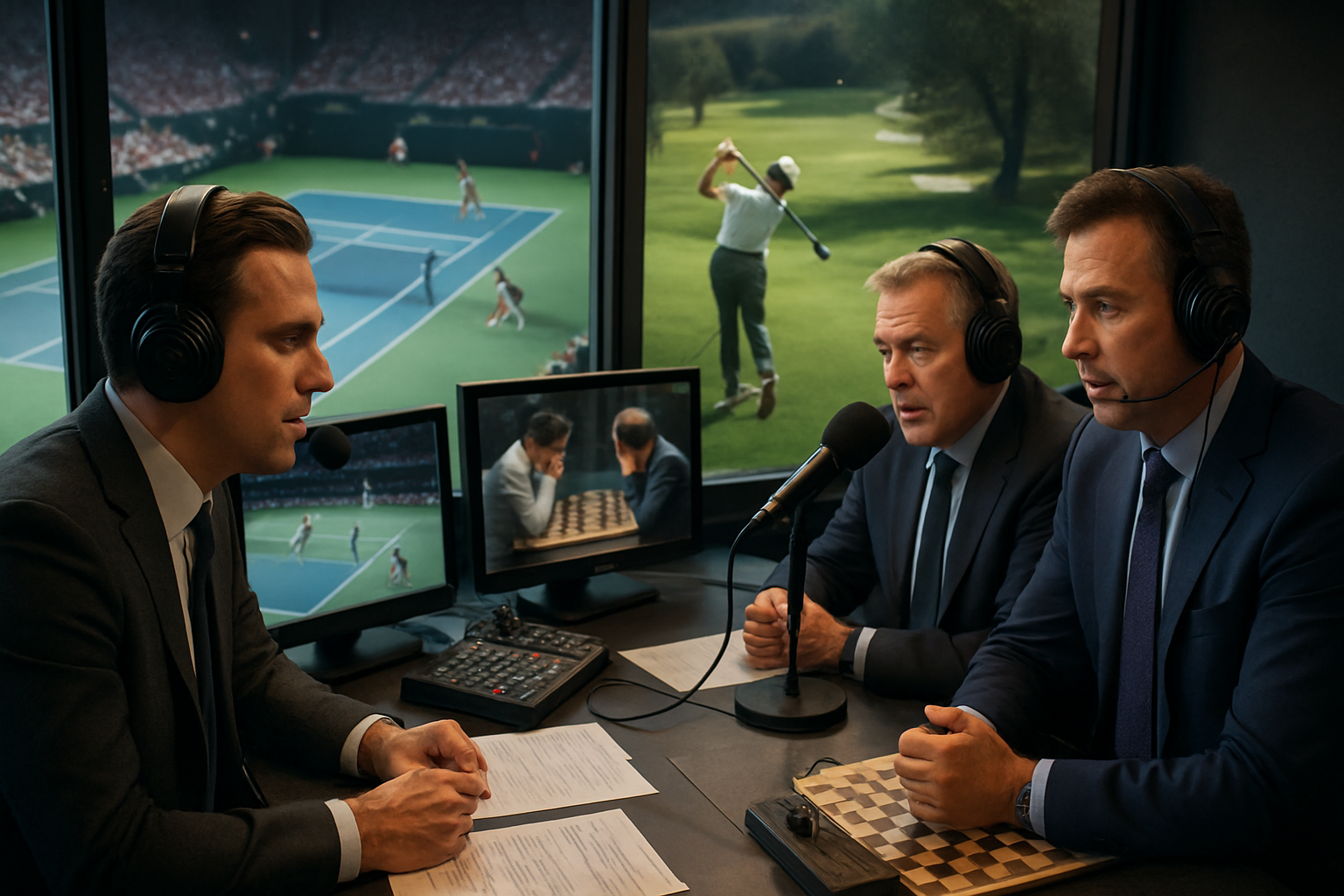
Sports commentary this week reveals a fascinating tapestry of athletic achievement, innovative coaching methods, and the complex intersection of sports with geopolitics across multiple disciplines and continents.
Tennis Innovation: Judy Murray's Revolutionary Approach
Scottish tennis coach Judy Murray has developed a groundbreaking concept that is gaining worldwide recognition for transforming how young girls engage with sports. Her revolutionary approach focuses on play over drill, utilizing surprisingly simple yet effective methods that prioritize enjoyment and natural athletic development.
Murray's methodology represents a significant departure from traditional tennis coaching, which often emphasizes repetitive technical drills. Instead, her system encourages creative play, allowing young athletes to develop their skills organically through game-based learning. This approach has proven particularly effective in attracting and retaining young female participants in tennis programs.
"The key is making sport fun and accessible, not intimidating through endless repetition"
— Judy Murray, Tennis Coach and Innovator
The global tennis community has taken notice of Murray's success rates, with coaching programs worldwide beginning to adopt similar methodologies. This shift toward play-based learning aligns with broader trends in sports development that prioritize long-term athlete development over immediate technical perfection.
Golf's Major Championship Drama
The world of professional golf witnessed significant disappointments at the Masters Tournament, with two prominent players experiencing vastly different fortunes at Augusta National. The championship highlighted both the unpredictable nature of major championship golf and the mental pressures facing elite athletes.
McIlroy's Historic Collapse
Rory McIlroy suffered one of the most dramatic collapses in Masters history, surrendering a commanding lead that had positioned him for potential back-to-back victories. After building what many considered an insurmountable advantage through the first two rounds, McIlroy encountered severe difficulties during Saturday's third round.
The Northern Irishman's struggles became particularly evident at the notorious Amen Corner, where his game unraveled spectacularly. His round included an unusual play from the Georgia pines on the 17th hole, symbolizing how far his championship aspirations had strayed from the fairway.
McIlroy's collapse transforms what appeared to be a potential runaway victory into one of the most competitive final rounds in recent Masters history. The dramatic turn of events serves as a reminder of Augusta National's ability to humble even the most accomplished players.
Åberg's Swedish Disappointment
Swedish golfer Ludvig Åberg experienced his own form of Masters disappointment, despite showing incremental improvement throughout the tournament. Following a third-round score of 69, Åberg expressed frustration with his overall performance, stating his disappointment with his showing at Augusta.
Åberg's comments reflect the high standards elite golfers set for themselves at major championships. While his 69 represented solid play by most measures, it fell short of the exceptional performance required to contend for a green jacket.
"Better and better day by day. But not good enough. Overall, I am disappointed"
— Ludvig Åberg, Professional Golfer
The Swedish player's experience highlights the mental challenges facing international golfers competing at Augusta, where the pressure of major championship golf can magnify even minor disappointments.
Chess and Geopolitics: The Cyprus Controversy
The world of chess found itself embroiled in controversy surrounding the Candidates Tournament in Cyprus, where questions about tournament organization and funding have raised significant democratic and ethical concerns within the chess community.
A closer examination of the tournament held in Pegeia, Cyprus, revealed troubling connections that have sparked debates about the influence of wealth and politics in international chess competitions. The situation has drawn attention from chess officials and political observers alike, who are questioning the appropriate boundaries between sporting events and geopolitical considerations.
The controversy centers around concerns about tournament financing and the potential influence of external political factors on what should be a purely competitive chess event. These issues have prompted calls for greater transparency in how major chess tournaments are organized and funded.
The Candidates Tournament traditionally serves as the pathway to challenging for the World Championship, making any questions about its integrity particularly significant for the global chess community. The Cyprus situation has highlighted the need for clearer guidelines about tournament governance in an increasingly complex international political environment.
Broader Implications for Sports Commentary
These diverse stories from tennis, golf, and chess illustrate several important trends in contemporary sports commentary and analysis. The emphasis on innovative coaching methods, the psychological pressures of elite competition, and the intersection of sports with broader social and political issues all represent significant themes in modern athletic discourse.
Coaching Evolution
Murray's success with play-based tennis instruction reflects a broader evolution in sports coaching philosophy. Traditional approaches emphasizing repetition and technical perfection are increasingly being supplemented or replaced by methods that prioritize athlete enjoyment and natural development.
This shift has implications beyond tennis, as coaches across various sports recognize the importance of maintaining young athletes' intrinsic motivation while developing their technical skills. The success of such approaches suggests that sports development may be more effective when it aligns with natural learning processes.
Mental Aspects of Elite Competition
The Masters Tournament stories underscore the critical importance of mental strength in elite sports competition. Both McIlroy's collapse and Åberg's disappointment demonstrate how psychological factors can dramatically influence performance outcomes, regardless of technical ability.
These examples highlight the need for comprehensive mental training as part of elite athlete development. The pressure of major championships can amplify both strengths and weaknesses, making psychological preparation as important as physical and technical training.
Sports Governance Challenges
The chess controversy in Cyprus reflects broader challenges facing international sports organizations in navigating an increasingly complex global political landscape. Questions about tournament funding, organizational transparency, and the influence of external political factors are becoming more prominent across various sports.
These issues require sports governing bodies to develop clearer policies about acceptable sources of funding and organizational partnerships, ensuring that competitive integrity remains the primary focus of international sporting events.
Future Implications
The developments across these three sports suggest several important trends for future sports commentary and analysis. The success of innovative coaching methods, the ongoing importance of mental training, and the need for transparent sports governance all represent areas requiring continued attention from sports journalists and analysts.
As sports continue to evolve in response to changing social, technological, and political contexts, commentary must adapt to address these multifaceted challenges. The intersection of athletic performance with broader social issues ensures that sports journalism will remain a dynamic and important field for understanding contemporary culture and society.
These stories remind us that sports serve as both entertainment and a reflection of broader human experiences, encompassing innovation, disappointment, controversy, and the constant pursuit of excellence in various forms.