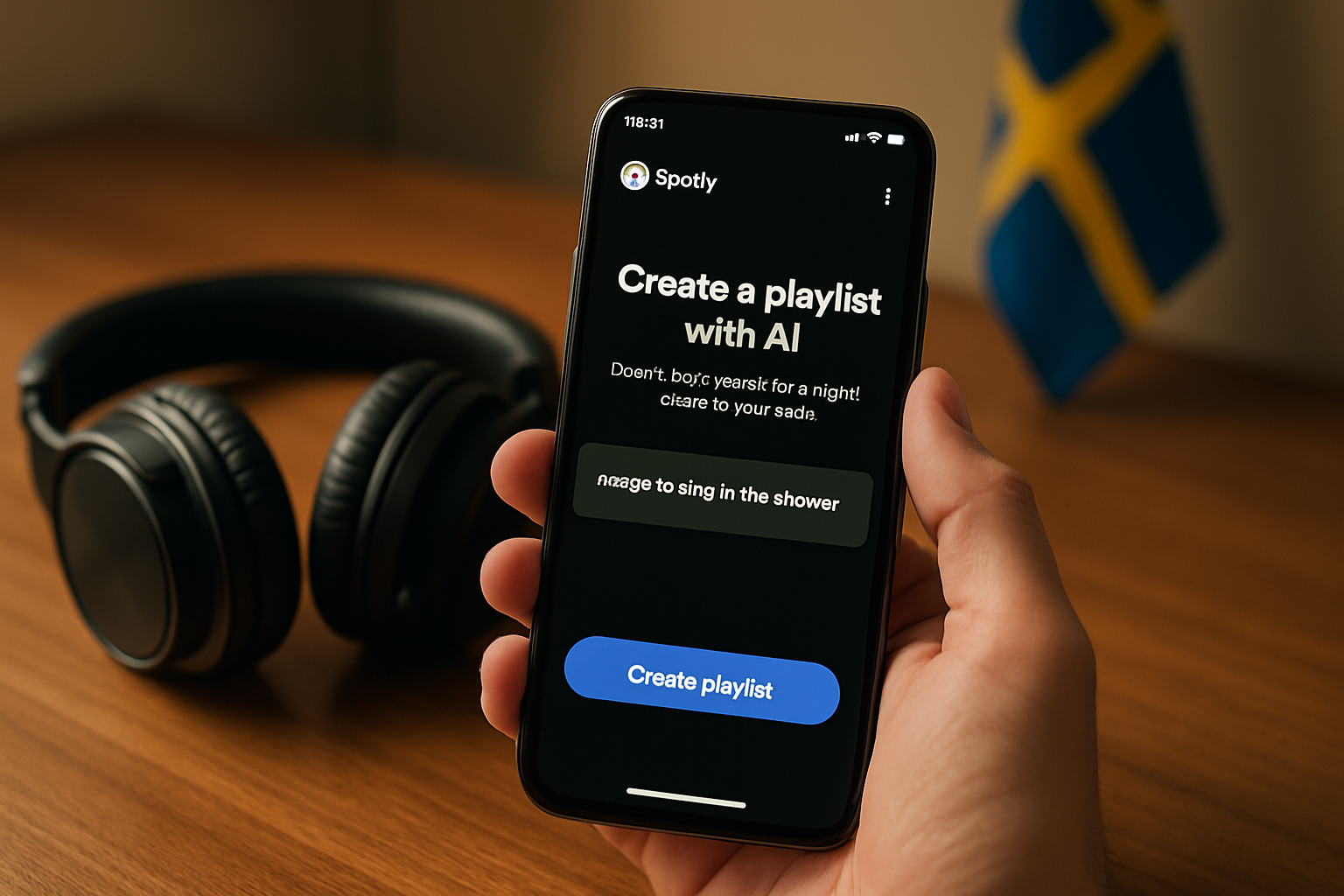
Spotify has launched an innovative AI-powered playlist generation feature that allows users to create custom music collections through simple text prompts, representing a major advancement in personalized music curation technology.
The Swedish streaming giant's new artificial intelligence service enables subscribers to generate playlists by describing their desired musical experience in natural language. Users can now request complex, specific collections such as "mood-boosting indie pop to get ready for a night out with friends, including songs that have recently been featured in popular competition and reality shows," and the AI system will instantly curate an appropriate playlist.
How the AI Playlist Feature Works
The new functionality transforms the traditional playlist creation process by accepting both simple and sophisticated prompts from users. According to Swedish media reports, the system can handle requests ranging from straightforward genre preferences to intricate specifications involving duration, mood progression, and cultural references.
Examples of supported prompts include creating "a playlist that is two and a half hours long and starts with chillout and ends with jazzy house music," demonstrating the AI's ability to understand temporal structure and genre transitions. This level of sophistication marks a significant evolution from basic algorithmic recommendations to true conversational music curation.
Global Rollout and Market Impact
The feature is expanding internationally, with Swedish sources confirming that the AI-based playlist generation will soon be available in Sweden following successful testing in other markets. This represents Spotify's strategic investment in artificial intelligence as a differentiating factor in the increasingly competitive music streaming landscape.
The timing of this launch aligns with broader industry trends toward AI integration in entertainment platforms. As the music streaming market matures with over 500 million global users across major platforms, companies are seeking innovative ways to enhance user engagement and retention through personalized experiences.
Technical Innovation in Music Curation
Spotify's AI playlist generator represents a convergence of several advanced technologies including natural language processing, music analysis algorithms, and machine learning models trained on vast datasets of user preferences and musical characteristics. The system can analyze contextual cues, emotional undertones, and specific requirements to create coherent musical experiences.
This development occurs within what industry observers are calling the "2026 Educational Technology Renaissance," where AI tools are being thoughtfully integrated across various sectors to enhance rather than replace human creativity and decision-making.
Industry Context and Competition
The launch comes during a period of intense innovation in AI-powered content creation. Recent developments across the technology sector have shown AI systems achieving unprecedented sophistication in creative tasks, with some studies indicating AI now surpassing average human creativity in certain applications.
However, Spotify's approach emphasizes collaboration between AI capabilities and human musical taste, positioning the technology as an enhancement tool rather than a replacement for personal curation. This human-centered approach reflects successful implementation strategies observed in other sectors, where AI serves to amplify rather than supplant human expertise.
User Experience and Accessibility
The new feature democratizes advanced playlist creation by making sophisticated music curation accessible to all users, regardless of their musical knowledge or time availability. Previously, creating nuanced playlists required significant time investment and deep musical understanding. Now, users can achieve professional-quality curation through conversational interaction.
Early user feedback suggests the system excels at understanding complex emotional and situational contexts, creating playlists that feel personally relevant and contextually appropriate. This represents a significant advancement over traditional recommendation algorithms that primarily relied on listening history and demographic data.
Implications for Artists and Music Discovery
For musicians and record labels, AI-generated playlists present both opportunities and challenges. The technology could potentially increase music discovery by exposing songs to new audiences through algorithmic serendipity. However, questions remain about how AI curation might influence which artists receive prominence and how musical diversity is maintained.
Industry experts note that transparent algorithmic approaches will be crucial for maintaining trust between platforms, artists, and listeners. Spotify's implementation appears designed to complement existing discovery mechanisms rather than replace human-curated editorial content.
Future Development and Expansion
The AI playlist feature represents the initial phase of Spotify's broader artificial intelligence strategy. Industry analysts anticipate future developments could include real-time playlist adaptation based on user context, integration with smart home devices for ambient music curation, and enhanced social sharing capabilities.
As the feature rolls out globally, user adoption patterns and feedback will likely inform further refinements and additional AI-powered music discovery tools. The success of this implementation could influence similar developments across the streaming industry.
Global Technology Context
This launch occurs amid significant global developments in AI technology, including infrastructure challenges with semiconductor shortages affecting technology deployment and regulatory discussions about AI governance and transparency. Despite these broader industry challenges, consumer-facing AI applications like Spotify's playlist generator continue advancing rapidly.
The development reflects a broader trend toward practical AI applications that solve real user problems while maintaining intuitive interfaces and preserving human agency in creative decisions.
Spotify's AI-generated playlist feature represents a watershed moment in music streaming technology, demonstrating how artificial intelligence can enhance creative experiences when implemented thoughtfully. As the feature becomes available to Swedish users and expands globally, it will likely set new standards for personalized music curation and influence the future direction of streaming platform innovation.