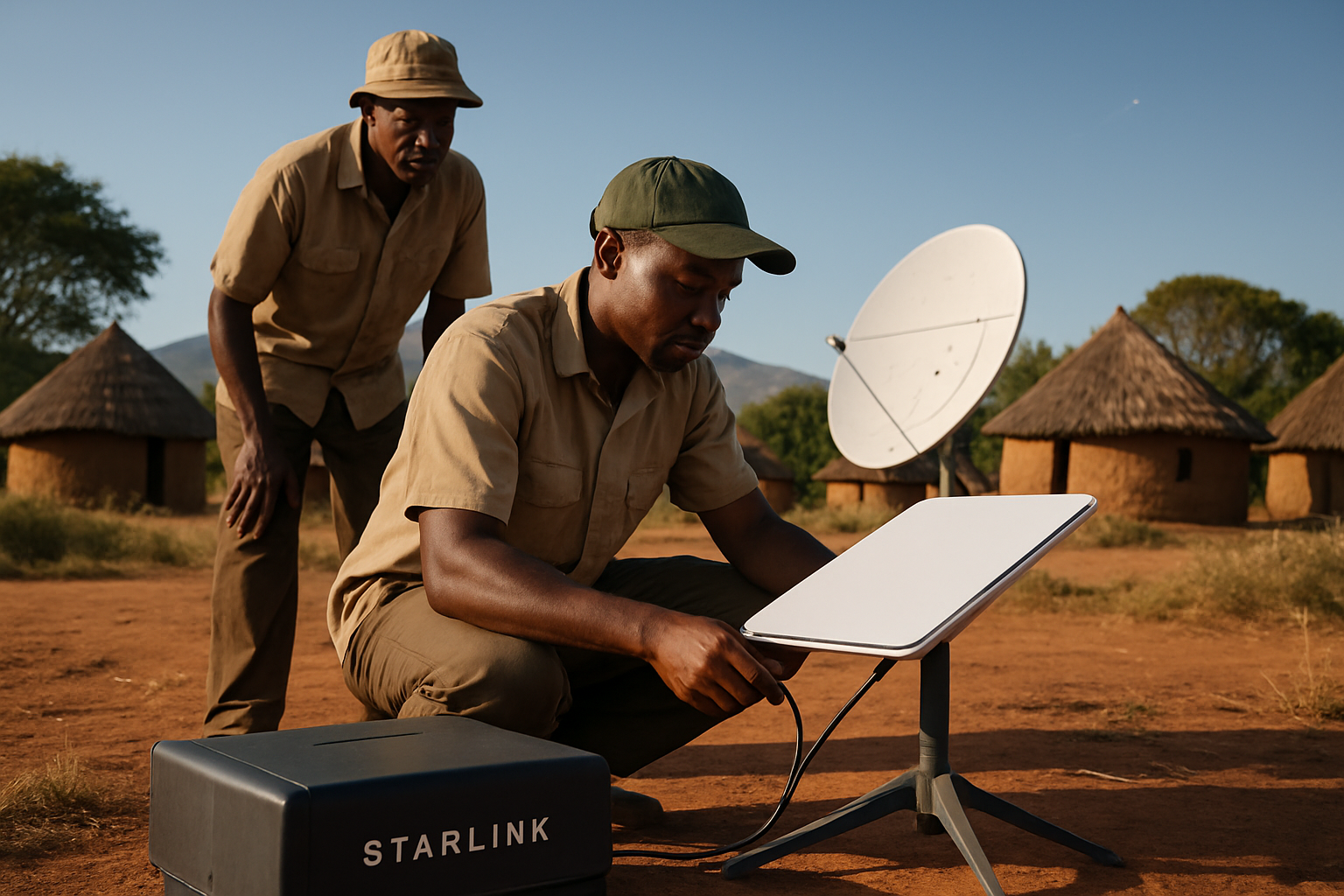
Starlink, Elon Musk's revolutionary satellite internet service, officially became available in Central Africa on March 16, 2026, marking a historic milestone in the region's digital transformation and expanding global satellite internet access to one of the world's most underserved areas.
The launch followed a groundbreaking agreement signed in Bangui on December 18, 2025, opening the door to this long-awaited deployment in a region where millions of people have lived without reliable internet connectivity. The service represents a critical step forward in bridging the digital divide that has long isolated Central African communities from the global digital economy.
Breaking Digital Barriers
Central Africa has historically faced significant challenges in internet infrastructure development, with mountainous terrain, dense forests, and vast distances making traditional fiber optic and cellular tower installations economically challenging. Starlink's satellite-based approach bypasses these geographical obstacles entirely, providing high-speed internet directly from space to users equipped with the company's signature dish terminals.
The timing of this expansion comes during what industry experts call the "space economy golden age" - a period marked by unprecedented growth in commercial space activities and satellite-based services. SpaceX, Musk's aerospace company that operates the Starlink constellation, is preparing for a potential June 2026 IPO with valuations exceeding $1 trillion, reflecting the growing importance of space-based infrastructure.
Strategic Context and Global Expansion
This Central African launch occurs within a broader context of Starlink's global expansion strategy. The service has demonstrated its strategic importance beyond commercial applications, notably when SpaceX successfully blocked unauthorized Russian military use of Starlink terminals in Ukraine, showcasing the geopolitical significance of satellite internet control.
"This is more than just bringing internet to Central Africa - it's about connecting entire communities to educational opportunities, healthcare services, and economic possibilities that were previously out of reach."
— Regional Technology Analyst
The expansion builds on Starlink's proven track record in other regions, where the service has provided reliable connectivity in areas where traditional internet infrastructure was insufficient or non-existent. The satellite constellation, consisting of thousands of low-Earth orbit satellites, offers several advantages over traditional internet delivery methods, including lower latency and the ability to serve remote locations without requiring extensive ground-based infrastructure.
Economic and Social Impact
The availability of high-speed internet in Central Africa is expected to have far-reaching economic and social implications. Small businesses will gain access to global markets, students can access online educational resources, and healthcare providers can utilize telemedicine capabilities to serve remote communities.
The deployment comes at a crucial time when digital connectivity has become essential for economic development and social progress. The COVID-19 pandemic demonstrated the critical importance of reliable internet access for work, education, and healthcare delivery, highlighting the disadvantages faced by regions without adequate connectivity.
Agricultural communities, which form a significant portion of Central Africa's population, may particularly benefit from access to weather data, market pricing information, and agricultural best practices available through internet connectivity. This could lead to improved crop yields and better market access for rural farmers.
Technical Infrastructure and Implementation
The Starlink system operates through a constellation of satellites in low-Earth orbit, communicating with user terminals on the ground. Users require a satellite dish and modem, which can be installed relatively quickly compared to traditional internet infrastructure that might require months or years of construction.
The service's satellite-based nature makes it particularly suitable for Central Africa's challenging geography. Unlike fiber optic cables that must be physically laid across difficult terrain, or cellular towers that require extensive ground-based infrastructure, Starlink's satellites provide coverage from space, making connectivity possible in previously unreachable areas.
Broader Space Economy Context
Starlink's Central African expansion reflects the broader transformation occurring in the space economy. The industry is transitioning from experimental ventures to essential infrastructure that supports modern civilization. Recent developments include SpaceX's strategic pivot from Mars colonization to lunar city development, the upcoming $1.25 trillion SpaceX-xAI merger, and growing international cooperation in space technology.
The global semiconductor crisis, with memory prices increasing sixfold, has highlighted the importance of space-based solutions and alternative computing infrastructures. Space-based data centers are being developed as potential solutions to terrestrial infrastructure constraints, offering unlimited expansion possibilities and continuous solar power.
Challenges and Considerations
Despite its potential benefits, the Starlink expansion faces several challenges. Cost remains a significant factor for many potential users in Central Africa, where economic conditions may make satellite internet subscriptions challenging for individuals and small businesses. The service will need to balance affordability with sustainability to achieve widespread adoption.
Environmental concerns about space debris and atmospheric pollution from rocket launches have also been raised by scientists. Austrian research has documented rocket debris causing tenfold increases in atmospheric lithium concentrations, highlighting the need for sustainable space development practices.
Additionally, regulatory frameworks for satellite internet services vary across Central African countries, and ensuring compliance with local telecommunications laws and regulations will be crucial for successful implementation.
Regional Integration and Future Prospects
The Starlink deployment in Central Africa aligns with broader regional integration efforts, including the African Continental Free Trade Area (AfCFTA) and various infrastructure development projects. Improved internet connectivity could facilitate cross-border commerce, regional cooperation, and integration with global markets.
The expansion also positions Central Africa to participate more fully in the digital economy, potentially attracting technology investments, enabling remote work opportunities, and supporting the development of local tech ecosystems. Educational institutions could partner with international organizations to provide online learning opportunities, while healthcare systems could implement telemedicine programs to serve remote populations.
Looking Ahead
As Starlink establishes its presence in Central Africa, the long-term success of the initiative will depend on several factors: affordability and accessibility for local populations, regulatory cooperation from regional governments, technical reliability in challenging environmental conditions, and the development of local support infrastructure.
The expansion represents a significant step forward in global internet connectivity, potentially serving as a model for how satellite-based internet services can address digital divides in other underserved regions worldwide. As the space economy continues its transformation from experimental to essential infrastructure, Central Africa's integration into this global network marks an important milestone in the region's technological development.
The success of this deployment could pave the way for further expansion across the African continent, ultimately contributing to the goal of universal internet access and helping to ensure that technological advancement benefits all regions of the world, regardless of their geographical challenges or existing infrastructure limitations.