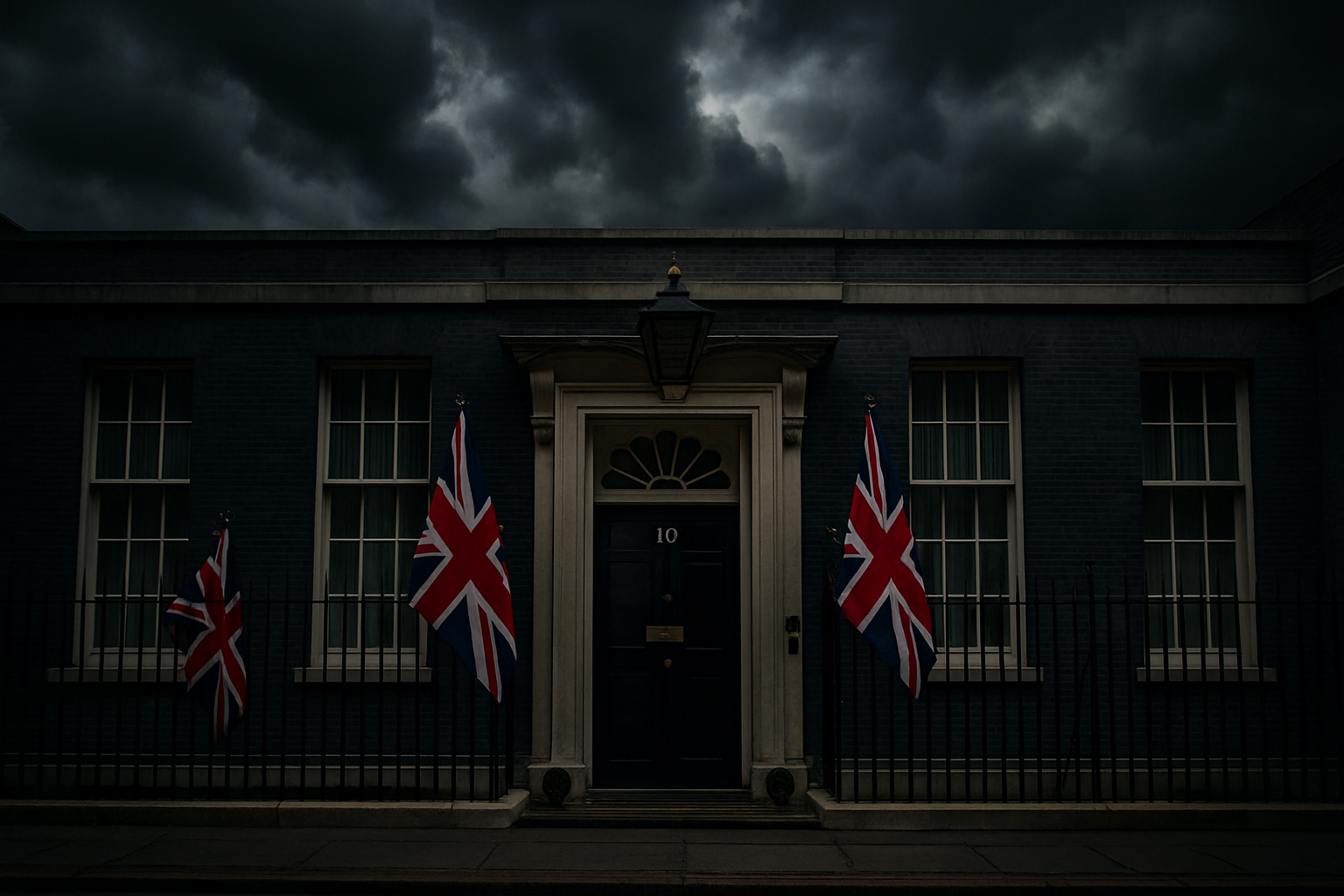
UK Prime Minister Sir Keir Starmer is fighting to save his premiership after his closest aide and chief of staff Morgan McSweeney resigned on Sunday, taking "full responsibility" for advising the controversial appointment of Peter Mandelson as US ambassador despite the peer's well-documented ties to convicted sex offender Jeffrey Epstein.
The resignation comes as mounting pressure from both opposition MPs and his own Labour Party threatens to destabilize Starmer's government, with critics questioning his judgment and calling for his resignation. McSweeney's departure represents the most significant political casualty yet in the global fallout from the latest Epstein document releases that have rocked governments across multiple continents.
The McSweeney Resignation
Morgan McSweeney, the Cork-born strategist credited with orchestrating Labour's electoral comeback, announced his resignation in a statement calling it "the only honourable course" after days of intense scrutiny. The 44-year-old aide had been under increasing pressure since it emerged he was the driving force behind Mandelson's appointment to the prestigious Washington role.
"I take full responsibility for my advice to the Prime Minister regarding Lord Mandelson's appointment," McSweeney said in his resignation statement. "While I did not oversee the vetting process, I believed strongly that his diplomatic experience and international relationships would serve Britain's interests in Washington."
The resignation leaves Starmer dangerously exposed, having lost what allies describe as his most trusted political adviser. McSweeney had been instrumental in Labour's strategy since their 2024 election victory and was considered the architect of Starmer's political positioning.
The Mandelson Controversy
The crisis centers on Lord Peter Mandelson's appointment as UK ambassador to the United States, which was announced in December 2024 despite widespread knowledge of his connections to Jeffrey Epstein. The appointment drew immediate criticism when it emerged that Mandelson's relationship with the convicted sex offender was already in the public domain at the time of his selection.
Documents released as part of the ongoing Epstein files reveal extensive communication between Mandelson and Epstein, including emails with subject lines such as "Where r u? I miss you." The latest revelations show Mandelson may have leaked sensitive government information to Epstein during the 2008 financial crisis while serving as Business Secretary under Gordon Brown.
Metropolitan Police have since executed search warrants at Mandelson's properties in Camden and Wiltshire, seizing boxes of materials related to allegations of misconduct in public office. The investigation focuses on claims that Mandelson shared confidential government documents with Epstein during one of Britain's most serious economic crises in decades.
Parliamentary Pressure Mounts
The Parliamentary Intelligence and Security Committee, led by Lord Beamish, has demanded "maximum transparency" and warned it will publish documents "even if embarrassing to No 10." The committee's intervention signals the seriousness of the intelligence community's concerns about potential security breaches.
Former Prime Minister Gordon Brown has gone further, describing Mandelson's alleged actions as "economic crime" and a "betrayal" of public trust. Brown's intervention is particularly significant given his historical alliance with both Starmer and Mandelson within the Labour movement.
Cabinet ministers are now demanding that Mandelson return his $75,000 severance package and agree to testify before the US Congress about his Epstein connections. The calls represent an unprecedented challenge to a former cabinet minister's integrity and raise serious questions about the government's vetting procedures.
"This is a crisis of judgment that goes to the heart of this government's credibility. The Prime Minister was either incompetent in his vetting or deliberately ignored serious warning signs."
— Senior Conservative MP
Labour Party Divisions
The crisis has exposed deep divisions within the Labour Party, with several MPs privately expressing concerns about Starmer's leadership. Sources within the parliamentary Labour Party describe growing anger over the Prime Minister's handling of the appointment and subsequent crisis management.
Denis MacShane, former Minister of State for Europe under Tony Blair, told France 24 that Starmer is "definitely in the toaster," suggesting his position as party leader could be under threat. The comments reflect broader concerns among Labour veterans about the party's direction under Starmer's leadership.
Some Labour MPs have questioned whether Starmer was adequately briefed about Mandelson's background or chose to ignore intelligence warnings. The uncertainty has created a toxic atmosphere within the party, with allies of the Prime Minister struggling to mount an effective defense.
International Embarrassment
The scandal has damaged Britain's international standing at a crucial moment in its post-Brexit relations with the United States. The appointment was seen as a key diplomatic initiative to strengthen ties with the incoming Trump administration, but has instead become a source of transatlantic embarrassment.
US congressional leaders have indicated they expect British officials, including potentially Mandelson himself, to testify about the appointment process and any security implications. The prospect of a serving British ambassador being questioned by American lawmakers represents an unprecedented diplomatic humiliation.
The Epstein Files Context
The latest Epstein document releases, totaling over 3 million pages, have created political crises across multiple countries. Crown Princess Mette-Marit of Norway is facing potential criminal investigation after being mentioned over 1,000 times in the documents, while French officials and Baltic state leaders are also under scrutiny.
The global nature of the scandal has amplified pressure on the British government, with international media focusing on the UK's response as a test case for democratic accountability. The revelation that Epstein maintained extensive contact with political figures across Europe has raised questions about the extent of his influence network.
Deputy Attorney General Todd Blanche in the United States has confirmed that no new federal prosecutions are planned despite describing the material as "disturbing." This has intensified focus on how individual countries handle their own citizens' involvement with the Epstein network.
Constitutional Questions
The crisis raises fundamental questions about Britain's constitutional safeguards and the adequacy of vetting procedures for senior diplomatic appointments. Opposition leaders are demanding a full review of how such appointments are made and what security checks are conducted.
Constitutional experts suggest the affair could lead to significant reforms in how governments handle sensitive appointments, particularly those involving individuals with controversial backgrounds. The precedent could affect future diplomatic and judicial appointments across the democratic world.
Media and Public Response
British media coverage has been intense, with newspapers across the political spectrum questioning the government's competence. The scandal has dominated headlines for days, overshadowing other government initiatives and creating a narrative of crisis that threatens to define Starmer's premiership.
Public opinion polling conducted since the scandal broke shows declining confidence in the Prime Minister's judgment, with particular concern among Labour voters about the party's direction. The erosion of trust represents a significant challenge for a government elected on promises of integrity and competence.
Looking Ahead
With McSweeney's departure, Starmer faces the challenge of rebuilding his inner circle while managing an ongoing political crisis. The Prime Minister's allies hope that the resignation will draw a line under the affair, but opposition pressure continues to mount for further accountability.
The investigation into Mandelson's conduct continues, with the Metropolitan Police examination likely to produce further revelations in coming weeks. Any additional evidence of improper conduct could reignite the crisis and place further pressure on Starmer's position.
The affair has also highlighted the ongoing global reckoning with the Epstein scandal, demonstrating how past associations continue to threaten political careers years after the financier's death. For Starmer, the challenge now is whether he can restore confidence in his judgment and leadership before further damaging revelations emerge.
"The resignation of Morgan McSweeney may have removed one source of pressure, but it has left the Prime Minister more isolated than ever. The fundamental questions about his judgment remain unanswered."
— Senior Political Analyst
As pressure continues to build from multiple directions, Starmer's political survival may depend on his ability to demonstrate decisive leadership and restore public trust in his government's integrity. The coming weeks will test whether the Prime Minister can weather the storm or become another casualty of the Epstein files' continuing political fallout.