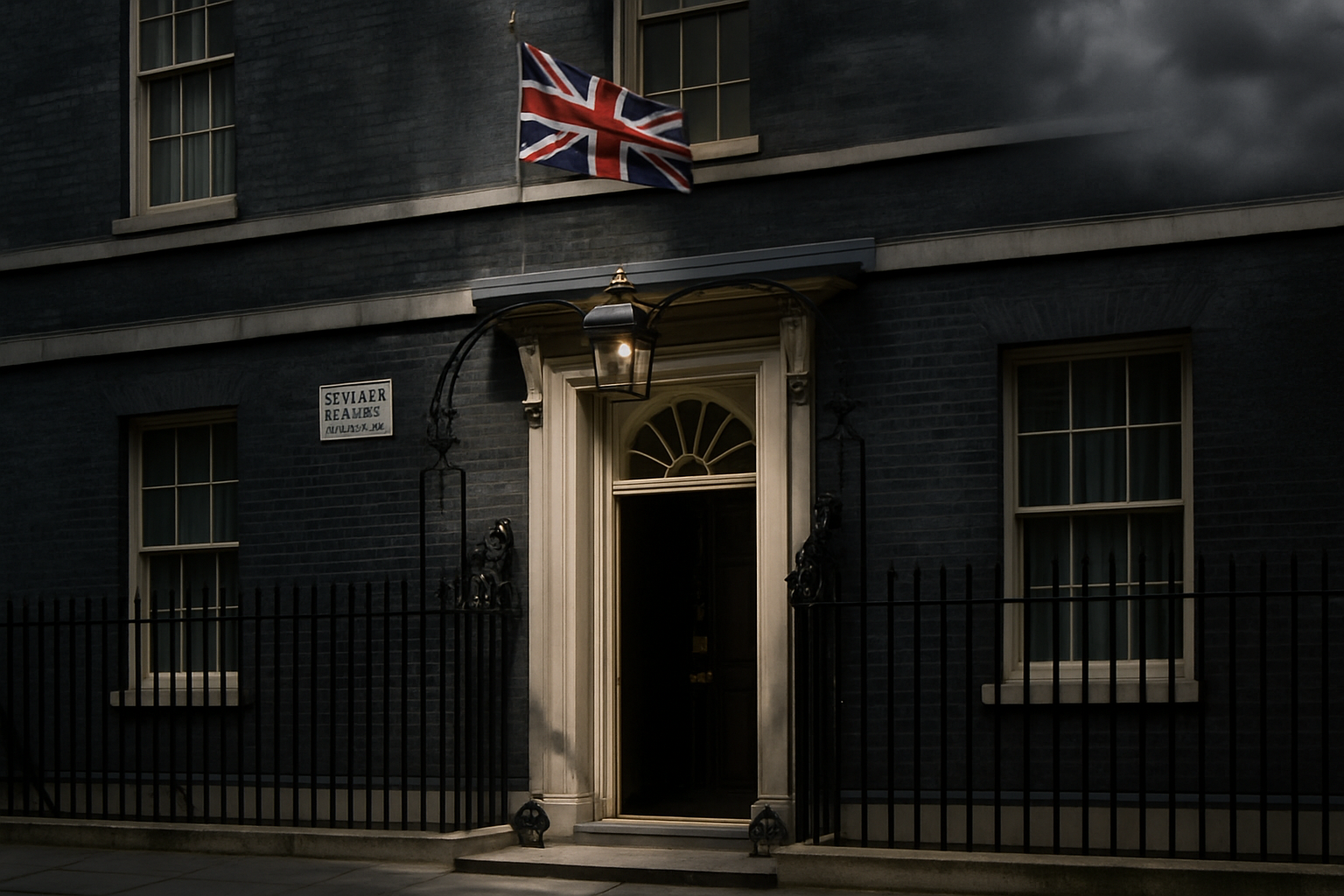
Prime Minister Keir Starmer faces the gravest crisis of his 18-month tenure as his chief of staff Morgan McSweeney resigned Sunday, taking "full responsibility" for recommending Peter Mandelson's appointment as UK ambassador to the United States despite Mandelson's documented ties to convicted sex offender Jeffrey Epstein.
The departure of McSweeney, 48, represents a devastating blow to Starmer's administration and leaves the Prime Minister without his most trusted adviser who orchestrated Labour's landslide victory in the 2024 general election. The resignation comes as mounting pressure from within the Labour Party and opposition forces threatens Starmer's political survival.
In a statement Sunday evening following a phone call with the Prime Minister, McSweeney described his resignation as "the only honourable course" to shield Starmer from growing political pressure. "After careful reflection, I have decided to resign from the government. I advised the prime minister to make that appointment and I take full responsibility for that advice," McSweeney said.
The Epstein Connection Crisis
The crisis stems from Starmer's controversial decision in 2024 to appoint Peter Mandelson as ambassador to Washington, despite emerging evidence of Mandelson's extensive relationship with Jeffrey Epstein, the disgraced financier who died in 2019 while facing sex trafficking charges. Recent document releases have revealed the full extent of Mandelson's connections to Epstein, including what investigators describe as "intimate messages" and regular contact spanning years.
Metropolitan Police have searched Mandelson's properties in Camden and Wiltshire as part of an investigation into alleged misconduct in public office, focusing on claims he leaked government information to Epstein during the 2008 financial crisis when Mandelson served as Business Secretary. The investigation represents the gravest UK political crisis arising from Epstein connections to date.
Former Prime Minister Gordon Brown has described Mandelson's alleged actions as "economic crime" and "betrayal," while demanding Mandelson return his £75,000 severance package and testify before the US Congress. The Parliamentary Intelligence and Security Committee has announced it will publish documents related to the case "even if embarrassing to No 10," signaling maximum transparency in their investigation.
International Diplomatic Fallout
The Mandelson appointment, initially intended to strengthen US-UK relations under the Trump administration, has instead become a source of transatlantic humiliation. What began as a strategic diplomatic posting has evolved into a constitutional crisis testing the UK's appointment processes and raising fundamental questions about vetting procedures for senior diplomatic positions.
The scandal has reverberated beyond British shores, forming part of a broader international political crisis affecting officials across multiple continents. Norwegian Crown Princess Mette-Marit, mentioned over 1,000 times in Epstein documents, faces potential criminal investigation, while French officials and Baltic state leaders have similarly come under scrutiny following the latest document releases.
"The decision to advise sending Mandelson to the US despite his links to convicted sex offender Jeffrey Epstein was wrong"
— Morgan McSweeney, Former Chief of Staff
Labour Party in Turmoil
McSweeney's resignation has exposed deep divisions within the Labour Party, with growing anger among MPs over Starmer's judgment in the appointment. Sources describe a "toxic atmosphere" within the parliamentary party as calls for accountability intensify from both backbenchers and senior figures.
Denis MacShane, former Europe minister, told reporters that Starmer was "definitely in the toaster," reflecting the sentiment among Labour MPs who feel betrayed by the Prime Minister's handling of the crisis. The situation represents an unprecedented challenge to Starmer's authority within his own party, coming at a time when polls show him as hugely unpopular with voters.
The crisis has also highlighted institutional failures in the appointment process. Opposition parties are demanding a comprehensive review of vetting procedures for diplomatic and judicial appointments, potentially leading to significant constitutional reforms affecting how future senior positions are filled.
Global Context of Epstein Revelations
The UK crisis forms part of the largest international political scandal arising from Jeffrey Epstein connections in recent memory. The latest US Department of Justice document release, comprising over 3 million pages, has triggered investigations and resignations across multiple countries, testing democratic institutions' ability to hold powerful figures accountable across borders.
Deputy Attorney General Todd Blanche has confirmed that no new federal prosecutions are planned despite what he described as "disturbing" material in the documents. However, the political fallout continues to spread internationally, with enhanced European law enforcement cooperation emerging to address what investigators describe as unprecedented elite criminal network exposure.
The crisis has forced governments worldwide to confront fundamental questions about institutional integrity, the balance between individual support and organizational credibility, and the effectiveness of international justice cooperation in cases involving transnational elite networks.
Constitutional Implications
The McSweeney resignation raises serious questions about democratic accountability and the concentration of advisory power in modern government. His departure leaves Starmer isolated at a critical moment, having lost the strategist credited with transforming Labour from electoral defeat to government within a single parliament.
Constitutional experts note that the crisis tests whether democratic institutions can demonstrate that no one is above the law, regardless of political connections, financial resources, or international standing. The handling of this affair may set precedents for how constitutional democracies respond to transnational criminal networks in the future.
The ongoing Metropolitan Police investigation promises additional revelations that could further destabilize the government. Allies of Starmer hope McSweeney's resignation will draw a line under the affair, but political observers suggest the Prime Minister's survival depends on his ability to restore public trust amid ongoing investigations.
Path Forward
As Starmer grapples with the aftermath of McSweeney's departure, the Prime Minister faces mounting pressure to demonstrate decisive leadership in addressing the institutional failures that enabled the Mandelson appointment. The crisis has already prompted calls for enhanced transparency in government appointments and strengthened vetting procedures for sensitive positions.
The international dimension of the scandal means resolution will likely require sustained cooperation with foreign governments and law enforcement agencies. The UK's response to this crisis will be closely watched by allied nations facing similar challenges in addressing elite criminal networks that operate across borders.
The resignation of his most trusted adviser represents a watershed moment for Starmer's premiership. Whether he can navigate this crisis while implementing necessary reforms to prevent similar incidents will determine not only his political survival but also the UK's reputation for institutional integrity on the international stage.