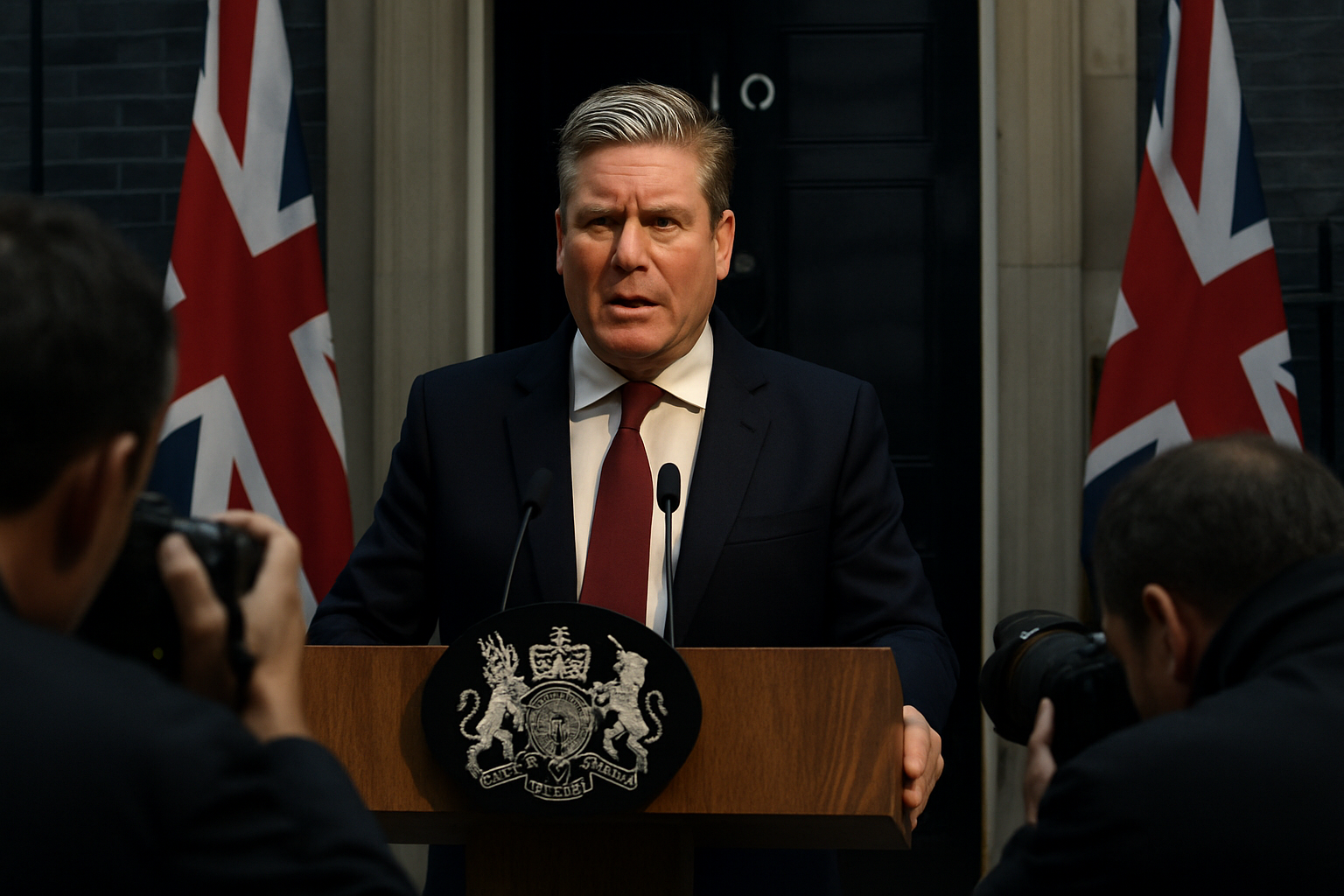
Prime Minister Keir Starmer declared on Tuesday that he will "never walk away" from his mandate to change Britain, defiantly brushing off unprecedented challenges to his authority as the Labour Party leader faced his gravest political crisis since taking office.
The embattled Prime Minister's resolute stance came as pressure mounted from within his own party, with Scottish Labour leader Anas Sarwar delivering an extraordinary public call for Starmer's resignation – a breach of party unity not seen in modern British politics. The crisis has been fueled by the continuing fallout from the Jeffrey Epstein files and Starmer's controversial appointment of Peter Mandelson as ambassador to Washington.
Unprecedented Party Rebellion
Speaking at a community centre in southern England, Starmer sought to project strength amid what sources describe as a "toxic atmosphere" within the parliamentary Labour Party. "I will never walk away from the mandate I was given to change this country," he declared, urging his party to focus on fighting the "real enemy" – the populist Reform UK party – rather than engaging in internal battles.
The Prime Minister's defiance came just one day after suffering the most significant challenge to his authority when Sarwar, the leader of Scottish Labour, publicly urged him to quit. This unprecedented breach of party discipline signals the depth of internal dissent within Labour ranks, with multiple sources describing Starmer as "clinging on by his teeth."
Adding to the Prime Minister's woes, Health Secretary Wes Streeting – despite publicly backing Starmer – is reportedly being positioned by allies to launch a leadership challenge within weeks, according to sources close to The Guardian. These allies expect Streeting to move after the May local elections to pre-empt a potential challenge from Deputy Prime Minister Angela Rayner.
The Mandelson Crisis Deepens
The crisis stems from Starmer's decision to appoint Peter Mandelson as ambassador to the United States, despite the Labour veteran's documented ties to convicted sex offender Jeffrey Epstein. Metropolitan Police have conducted searches at Mandelson's properties in Camden and Wiltshire as part of an investigation into allegations of misconduct in public office, specifically claims that he leaked government information to Epstein during the 2008 financial crisis when he served as Business Secretary.
Former Prime Minister Gordon Brown has escalated the controversy by calling Mandelson's actions "economic crime" and a "betrayal," demanding that he return his £75,000 severance package and testify before the US Congress. The Parliamentary Intelligence and Security Committee has demanded "maximum transparency," stating they will publish documents "even if embarrassing to No 10."
The crisis has been compounded by a series of resignations from Starmer's inner circle. Most significantly, his chief of staff Morgan McSweeney resigned on Sunday, taking "full responsibility" for advising the Mandelson appointment. McSweeney described his departure as "the only honourable course" in an attempt to shield the Prime Minister from growing pressure, but his exit leaves Starmer without his most trusted strategist who orchestrated Labour's electoral comeback.
Cascading Scandals Hit Inner Circle
The damage to Starmer's administration has extended beyond the Mandelson affair. Matthew Doyle, the Prime Minister's former longstanding communications chief who was made a peer in December, has been suspended from the Labour whip after it emerged that he had campaigned on behalf of Sean Morton, a former Labour councillor convicted in 2018 of possessing indecent images of children.
The Cabinet Office has issued warnings to ministers not to follow Streeting's example of releasing private WhatsApp exchanges with Mandelson, as investigators continue their work. The Metropolitan Police and other agencies are urging caution amid their ongoing investigation linked to the Epstein document revelations.
Further complicating matters for Starmer are revelations about potential conflicts of interest involving Mandelson's lobbying firm, Global Counsel. The company, which Mandelson co-founded and part-owned, worked for major US tech companies including OpenAI and Palantir before both firms signed significant deals with the UK government to deploy AI in Britain's justice, security, and education systems.
International Implications and Diplomatic Embarrassment
The Mandelson appointment, originally intended to strengthen UK-US relations, has instead become a source of transatlantic embarrassment. The scandal has raised serious questions about the UK government's vetting procedures for diplomatic appointments and threatens to overshadow Britain's efforts to build closer ties with the Trump administration.
International media coverage has been particularly damaging, with German publications describing Starmer as having "no credit left" with the British public and French analysts characterizing the situation as a "political rollercoaster" that reflects broader dissatisfaction with his leadership.
The Broader Epstein Files Fallout
The current crisis forms part of a much larger international scandal stemming from the release of over 3 million pages of Jeffrey Epstein-related documents by the US Department of Justice. The files have created political turmoil across multiple countries, affecting officials in Norway, France, and the Baltic states, with investigations ongoing into what law enforcement officials describe as "the largest international elite criminal network exposure in recent memory."
The global nature of the scandal has intensified scrutiny of Starmer's judgment in appointing Mandelson, particularly given the Prime Minister's admission that he was "lied to" about the extent of Mandelson's Epstein connections. Critics argue that this admission undermines his position and raises questions about his administration's competence in handling sensitive appointments.
Parliamentary Pressure and Opposition Attacks
Opposition parties have seized on the crisis, with calls for a vote of no confidence in Starmer's government gaining momentum. The situation has been further complicated by demands from parliamentary committees for complete transparency regarding the Mandelson appointment and all related communications.
The Intelligence and Security Committee's promise to publish documents regardless of potential embarrassment to Downing Street has created additional pressure, as has the prospect of further damaging revelations emerging from the ongoing Metropolitan Police investigation.
Fighting for Political Survival
Despite the mounting challenges, Starmer has adopted a high-stakes strategy of refusing to consider resignation while attempting to restore confidence within his party and among the British public. His Tuesday appearance was designed to demonstrate that his political career is far from over, even as he faces what many observers consider the most serious crisis of his 19 months in office.
The Prime Minister's survival now depends on his ability to convince both his parliamentary party and the public that he can effectively lead during this unprecedented crisis. The coming days and weeks will be crucial in determining whether he can weather the storm or whether Britain faces another change of leadership at Downing Street.
Democratic Accountability Under Test
The crisis represents a fundamental test of Britain's democratic institutions and their capacity for accountability when powerful figures are implicated in international scandals. The situation poses questions about diplomatic appointment procedures, the role of the security services in vetting, and the balance between party loyalty and public accountability.
As investigations continue and more revelations potentially emerge, Starmer's declaration that he will "never walk away" faces its ultimate test. The resolution of this crisis will likely have lasting implications for British politics and could set important precedents for how democratic institutions handle accountability challenges in an era of global interconnectedness and international criminal networks.
With the Metropolitan Police investigation ongoing and more potentially damaging documents yet to be released, Starmer's fight for political survival continues against the backdrop of one of the most serious political crises in recent British history.