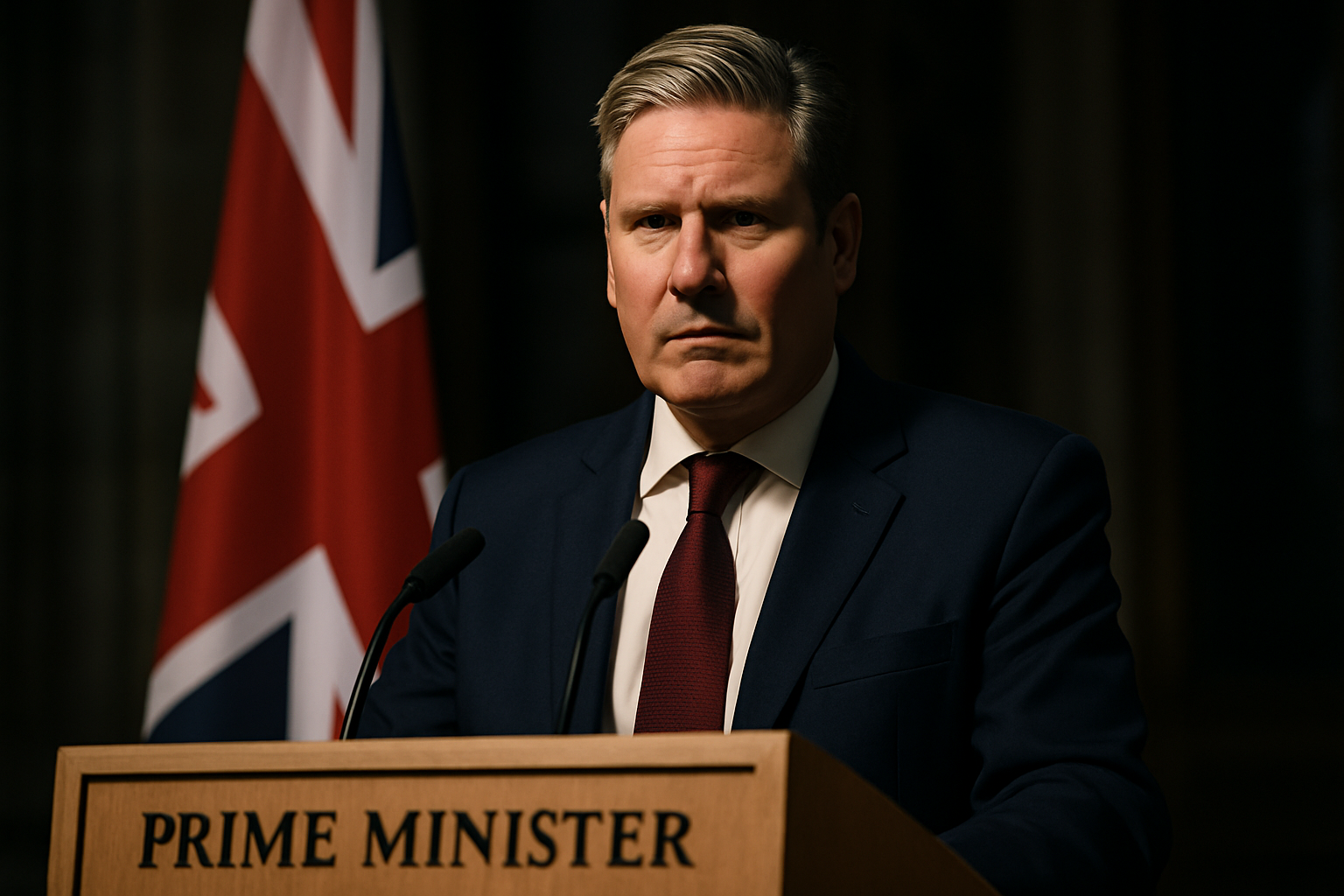
British Prime Minister Keir Starmer defiantly declared Monday that he is "not prepared to walk away" from office, despite facing the gravest political crisis of his premiership over his handling of the Jeffrey Epstein document revelations and mounting calls for his resignation.
The Prime Minister's defiant stance came as pressure intensified from within his own Labour Party following a series of devastating revelations linking his administration to the Epstein scandal through the controversial appointment of Peter Mandelson as US Ambassador.
Scottish Labour Leader Breaks Ranks
In an unprecedented breach of party unity, Scottish Labour leader Anas Sarwar publicly urged Starmer to step down Monday, marking the first time a senior party figure has called for the Prime Minister's resignation since the scandal erupted.
Sarwar's intervention represents a seismic shift in Labour Party dynamics, with sources describing a "toxic atmosphere" within the parliamentary party. The public challenge from Scotland signals the depth of internal dissent over Starmer's leadership during what many consider the most serious political crisis facing Britain in recent memory.
The Mandelson Controversy
The crisis centers on Starmer's appointment of Peter Mandelson as Britain's ambassador to Washington, despite extensive documentation in newly released Epstein files showing Mandelson's connections to the convicted sex offender. The appointment has led to a cascade of resignations and investigations that threaten to bring down the government.
Morgan McSweeney, Starmer's most trusted adviser and chief of staff, resigned Sunday taking "full responsibility" for recommending Mandelson's appointment. McSweeney's departure, described as the "only honourable course," leaves the Prime Minister without his most influential strategist who orchestrated Labour's return to power.
Metropolitan Police have conducted searches at Mandelson's properties in Camden and Wiltshire as part of their investigation into allegations of misconduct in public office. The searches, which yielded boxes of materials, relate to claims that Mandelson leaked government information to Epstein during the 2008 financial crisis while serving as Business Secretary.
Parliamentary Pressure Mounts
The Parliamentary Intelligence and Security Committee has demanded "maximum transparency" and announced it will publish documents related to the Epstein affair "even if embarrassing to No 10." Lord Beamish, a committee member, emphasized the need for full disclosure regardless of political consequences.
Former Prime Minister Gordon Brown has escalated the pressure by calling Mandelson's alleged actions "economic crime" and "betrayal," demanding that the former minister return his $75,000 severance payment and testify before the US Congress.
Cabinet ministers are reportedly split on Starmer's leadership, with some privately questioning whether he can survive the crisis. The atmosphere within Westminster has been described as febrile, with opposition parties sensing blood in the water.
International Ramifications
The crisis has profound implications for UK-US relations, with the Mandelson appointment originally intended to strengthen transatlantic ties now becoming a source of diplomatic embarrassment. The scandal coincides with broader international fallout from the Epstein document releases affecting officials across Europe and beyond.
Irish government sources have indicated that despite any potential leadership change in Britain, the vastly improved UK-Ireland relations developed under Starmer's tenure would likely survive any political transition.
German media coverage has been extensive, with outlets describing Starmer's predicament as a "political rollercoaster" that encompasses not only the Epstein connections but reflects broader dissatisfaction with his leadership.
Succession Speculation
Romanian media reports suggest that potential successors to Starmer are already being discussed within Westminster circles, with Deputy Prime Minister Angela Rayner and Health Secretary Wes Streeting mentioned as possible candidates should Starmer's position become untenable.
The Economist has published analysis asking "Who could succeed Sir Keir Starmer as British Prime Minister?" - a question that would have been unthinkable just weeks ago but now dominates political discourse in London.
Fighting for Political Survival
Starmer's declaration that he will not resign represents a high-stakes gamble for a Prime Minister who took office just 19 months ago with a commanding parliamentary majority. His survival depends on maintaining the loyalty of Labour MPs who are increasingly expressing private doubts about his leadership.
The Prime Minister has publicly apologized for being "lied to" by Mandelson about his Epstein connections, but critics argue this admission of poor judgment only undermines his position further.
As Tuesday's newspapers dominated coverage of Starmer's fight for survival, political observers noted that while the Prime Minister has weathered Monday's immediate crisis, his fate remains far from certain as new revelations continue to emerge.
Historical Context
The Epstein scandal represents the largest international elite criminal network exposure in recent memory, affecting officials across multiple continents. The crisis tests democratic institutions' ability to hold powerful figures accountable across borders and has already led to resignations and investigations spanning from Norway's royal family to French government ministers.
For Britain, the scandal poses fundamental questions about the vetting procedures for diplomatic appointments and the intersection of power, privilege, and criminal behavior at the highest levels of government.
The Road Ahead
Starmer's immediate challenge is restoring trust within his own party while managing the ongoing Metropolitan Police investigation that could produce additional damaging revelations. The Prime Minister's ability to govern effectively has been severely compromised, with opposition parties calling for a vote of no confidence.
The crisis represents a critical test of British democratic institutions and their capacity for accountability. As investigations continue and more details emerge, Starmer's political survival may depend not just on party loyalty but on his ability to convince the British public that he can provide the leadership required during this unprecedented crisis.
With the Scottish Labour leader's resignation call marking a new phase in the crisis, the coming days will be crucial in determining whether Starmer can maintain his grip on power or whether Britain faces the prospect of yet another change in leadership at 10 Downing Street.