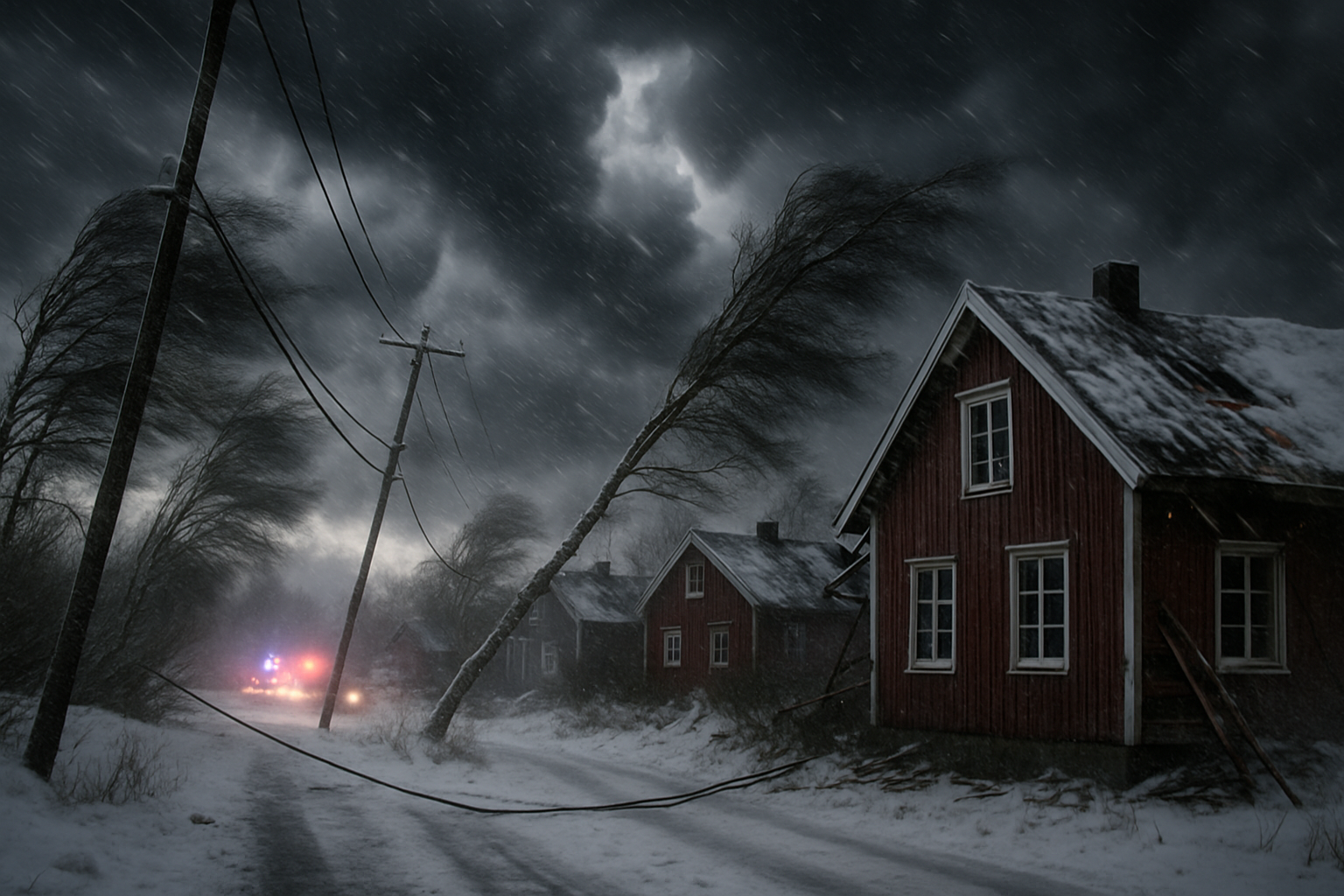
Storm Dave, the fourth named storm of 2026, has unleashed devastating hurricane-force winds across Scandinavia, leaving over 30,000 homes without power in Sweden and causing fatal accidents throughout Norway during what was meant to be a peaceful Easter weekend.
The powerful weather system, with winds reaching up to 93 mph, has brought chaos to the Nordic region as emergency services struggle to cope with widespread damage and dangerous conditions. Swedish broadcaster SVT reports that strong winds continue to hamper repair efforts, while the Swedish Transport Administration describes the traffic situation as "very stressful."
Sweden Bears the Brunt
Sweden has experienced the worst of Storm Dave's fury, with more than 30,000 homes in the southern and western regions left without electricity. The storm has toppled hundreds of trees, blocking roads across the country and creating treacherous travel conditions.
Victoria Åkesson of Alingsås experienced the storm's destructive power firsthand when a tree crashed onto her vehicle. "There were glass splinters everywhere," she recounted, describing how her Easter weekend turned into a nightmare. Her experience mirrors that of countless others across the region who found themselves facing unexpected danger.
In a particularly dramatic incident in Smålandsstenar, Susan Dansund and her partner Robert watched helplessly as Storm Dave ripped the roof from their home. "It was only after a second that I thought 'hell, now the whole thing is flying,'" Dansund said, describing the moment she realized the severity of the situation.
Norway Faces Emergency Response Challenges
Norway has not been spared from the storm's wrath, with approximately 8,000 households in the southern regions losing power. The Norwegian meteorological service issued urgent warnings for dangerous wind conditions, while authorities strongly advised residents to avoid parks and wooded areas due to the extreme risk of falling trees.
The storm has also contributed to tragic accidents across the country. Three people were airlifted to hospital following a head-on collision on Highway 15 in Skjåk, Innlandet county. In the Lofoten archipelago, two people died when their fishing vessel capsized near Napp during Thursday evening's severe weather conditions.
"Authorities warn against travel in eastern regions as extreme storm system affects multiple areas with dangerous conditions persisting."
— Norwegian Meteorological Service
Iceland Overwhelmed by Conditions
Iceland has been particularly hard hit, with meteorological services issuing an unprecedented 14 separate weather warnings covering the entire country for the first time in recent memory. Strong southwesterly winds exceeding 26 meters per second have been accompanied by heavy snow showers, creating hazardous conditions across the nation.
Route 1, Iceland's main highway, has been closed at Holtavörðuheiði due to avalanche conditions, effectively isolating communities and stranding travelers. The comprehensive alert system reflects the scale of North Atlantic atmospheric disruption affecting the region.
Regional Transportation Networks Paralyzed
The storm has caused significant disruption to transportation across the Nordic region. In Denmark, 11-meter waves have forced the cancellation of ferry services to Norway, while the Storebælt Bridge has implemented vehicle restrictions due to extreme winds.
Aviation services have been severely impacted, with numerous flight cancellations and delays reported across Scandinavian airports. Railway services have also faced major disruptions, with several lines suspended due to fallen trees and dangerous wind conditions.
Emergency Services Under Strain
Emergency services across the region are operating at or beyond capacity limits as they respond to the multiple challenges posed by Storm Dave. Traditional mutual aid mechanisms are being tested as multiple countries face concurrent rather than sequential disasters.
The storm represents the latest in a series of severe weather events that have tested Nordic emergency response capabilities. Earlier incidents this year, including avalanche emergencies and severe winter conditions, have already stretched resources thin.
Climate Context and Future Implications
Storm Dave occurs during the 23rd consecutive month that global temperatures have exceeded 1.5°C above pre-industrial levels, marking the longest sustained warming period in recorded history. This unprecedented climate context has enabled more frequent and intense storm systems to develop.
Dr. Sarah Chen from the European Centre for Medium-Range Weather Forecasts describes the current situation as representing a "paradigm shift" in European climate patterns. The sustained warming has disrupted traditional atmospheric circulation patterns, including polar vortex behavior, enabling both temperature records and devastating regional extremes.
Looking Forward
As communities across Scandinavia begin the difficult process of recovery, the focus is shifting to building more resilient infrastructure capable of withstanding increasingly severe weather events. The concept of "building back better" has evolved from an optional enhancement to an essential survival strategy.
Meteorologists warn that additional Atlantic systems are developing, suggesting that the current pattern of extreme weather may persist for weeks. This potential establishment of a "new normal" of increased storm frequency and intensity presents significant challenges for traditional emergency response frameworks.
The international community is closely monitoring these developments, as the simultaneous nature of modern weather disasters requires unprecedented levels of coordination between emergency services, governments, and international aid organizations.