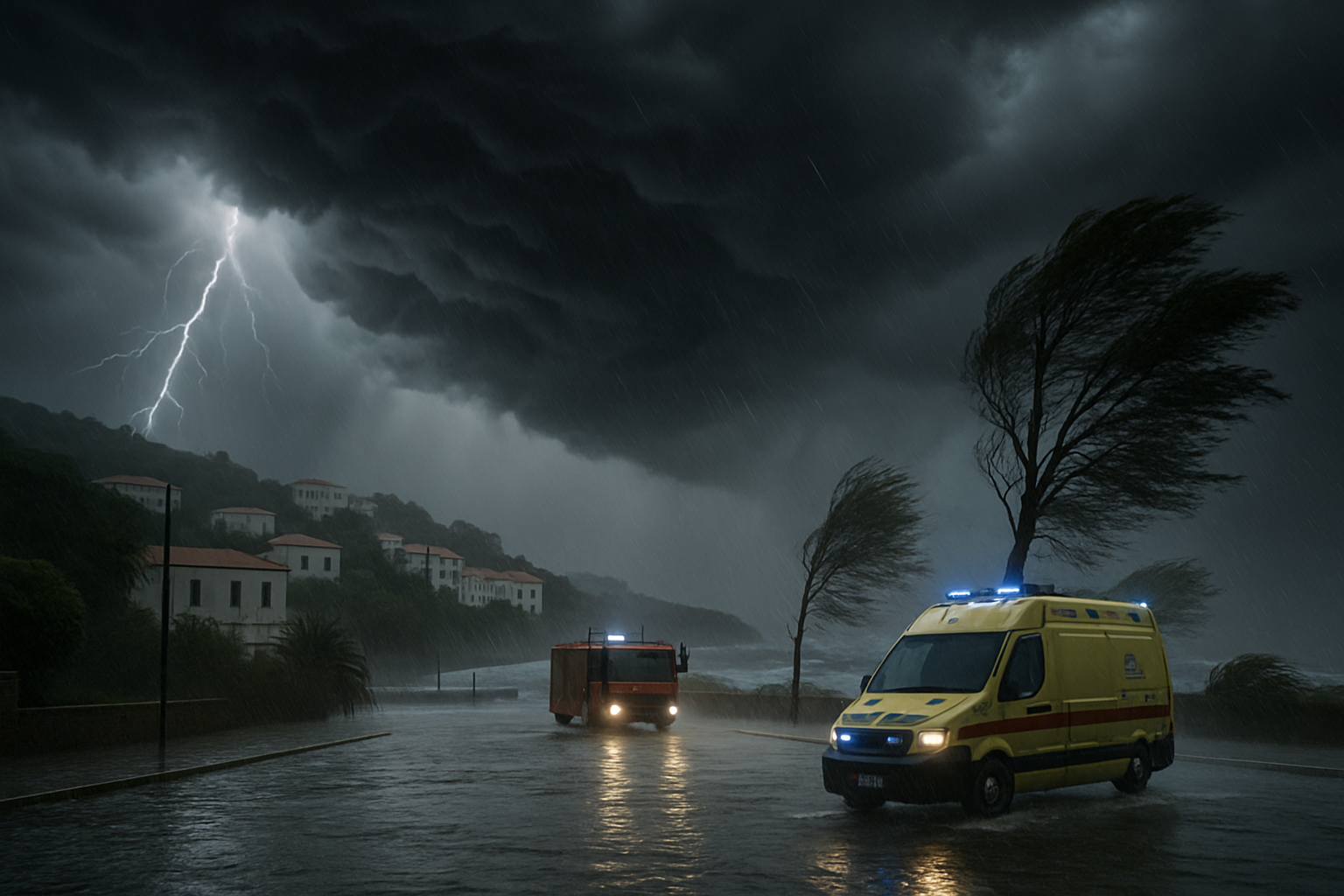
Storm Erminio unleashed its fury across the Mediterranean on April 1st, 2026, triggering widespread emergency responses as Greece faces catastrophic power outages affecting hundreds of thousands while Italy grapples with severe flooding along the Adriatic coast that has disrupted critical transportation infrastructure.
The powerful weather system has plunged large sections of Attica, including parts of Athens, into darkness, with Greek authorities reporting major blackouts across ten regions. Emergency crews are working around the clock to restore electricity to affected areas, though officials warn that full restoration may take several days due to the extensive damage to power infrastructure.
Greece Bears the Brunt of Erminio's Assault
Greek emergency services activated comprehensive emergency protocols as Storm Erminio delivered intense thunderstorms and heavy mountain snowfall across the country. The Hellenic National Meteorological Service issued urgent bulletins warning of dangerous conditions that have already caused extensive infrastructure damage throughout the nation.
Rhodes has been placed under heightened emergency status, with authorities activating the emergency alert system 112 due to severe weather conditions expected to intensify in the coming hours. Local authorities are urging residents to limit non-essential travel and remain indoors as the storm system continues its destructive path.
"The intensity and scope of Storm Erminio represents one of the most challenging weather emergencies we've faced this year,"
— Emergency Response Official, Greek Civil Protection
The storm has created what meteorologists describe as an "otherworldly landscape" across Crete, where extreme weather conditions have forced widespread disruptions to daily life. Many areas have been placed under red alert status for flooding risks, with emergency services on standby for potential evacuations.
Italy's Adriatic Coast Under Siege
On Italy's Adriatic coast, the situation has reached critical levels as the Osento River burst its banks, causing severe flooding that has completely inundated railway infrastructure. The flooding has severed both railway lines on the crucial Pescara-Foggia route, effectively cutting Italy's transportation network in half along the Adriatic corridor.
The coastal town of Termoli has experienced significant flooding, with emergency services coordinating large-scale response operations. Local authorities report that the river overflow has created dangerous conditions throughout the region, with floodwaters reaching levels not seen in recent memory.
Rail services between Italy's north and south along the Adriatic coast remain completely suspended, stranding thousands of passengers and disrupting freight operations crucial to the national economy. Transportation officials indicate that restoration of service will require extensive infrastructure repairs once floodwaters recede.
Unprecedented April Weather Patterns
Storm Erminio represents a continuation of the extreme weather conditions that have plagued the Mediterranean region throughout 2026. The current emergency occurs during what scientists have identified as the 22nd consecutive month of global temperatures exceeding 1.5°C above pre-industrial levels – the longest sustained period of extreme warming in recorded human history.
Meteorological experts note that the intensity and timing of Storm Erminio are highly unusual for April conditions in the Mediterranean basin. The storm system demonstrates the increasing unpredictability of weather patterns that have characterized the region's climate throughout 2026.
Emergency Response and Infrastructure Challenges
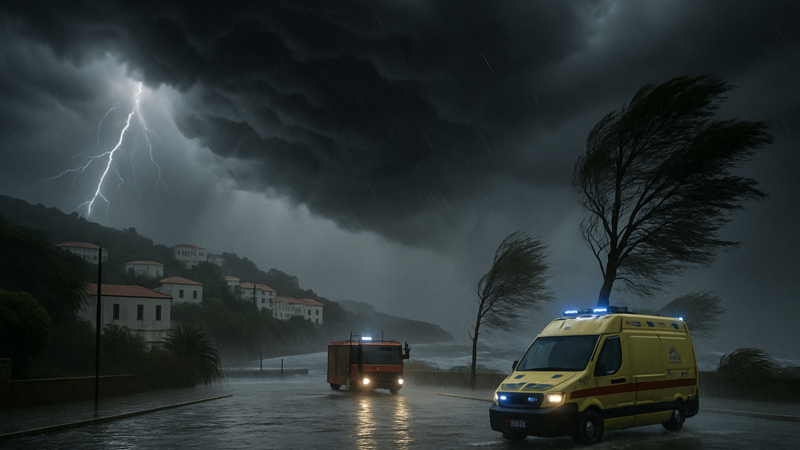
The simultaneous emergencies in Greece and Italy have stretched regional emergency response capabilities, highlighting the challenges faced when multiple countries experience severe weather events concurrently. Traditional mutual aid mechanisms, designed for sequential rather than simultaneous disasters, are being tested by the scope and timing of current conditions.
Greek emergency services report unprecedented call volumes as residents across multiple regions seek assistance with power outages, property damage, and safety concerns. The widespread nature of the blackouts has complicated communication and coordination efforts, though authorities emphasize that critical services remain operational.
In Italy, emergency response teams are focusing on evacuation procedures in flood-affected areas while working to assess the full extent of damage to transportation infrastructure. The flooding of the Pescara-Foggia railway line represents one of the most significant transportation disruptions the country has faced in recent years.
Economic and Social Impact
The economic implications of Storm Erminio's passage are becoming increasingly apparent as businesses and industries grapple with power outages and transportation disruptions. In Greece, widespread electricity outages have forced the closure of numerous commercial establishments and disrupted manufacturing operations across the affected regions.
Italy's agricultural sector, particularly in the Adriatic coastal regions, faces significant challenges as flooding threatens crops during a critical growing period. The suspension of railway services has also created substantial logistical challenges for businesses dependent on efficient freight transportation between northern and southern Italy.
Tourism, a vital economic sector for both countries, has experienced immediate impacts as travelers face cancellations and disruptions to planned visits. Hotels and tourist facilities in affected areas are managing challenges related to power outages and access difficulties.
Climate Context and Future Implications
Storm Erminio occurs within the broader context of 2026's exceptional climate conditions. January 2026 remains the hottest month ever recorded, and current global warming trends continue to override natural cooling mechanisms, creating what scientists term a "climate volatility paradox" where sustained global warming enables both temperature extremes and severe regional weather events.
Environmental experts warn that current conditions may represent a preview of routine weather patterns expected in the 2030s without significant climate adaptation investments. The frequency and intensity of storms like Erminio are testing infrastructure systems designed for historical rather than current climate conditions.
"We're witnessing weather patterns that exceed the design parameters of our infrastructure systems. This requires fundamental reassessment of our preparedness strategies."
— Mediterranean Climate Research Institute
Recovery and Restoration Efforts
Recovery efforts are already underway in both countries, though officials warn that full restoration may require weeks rather than days. Greek utility companies have mobilized additional crews and equipment to address the extensive power grid damage, with priority given to restoring electricity to hospitals, schools, and other critical facilities.
Italian transportation authorities are conducting detailed assessments of railway infrastructure damage along the flooded Pescara-Foggia line. The restoration timeline will depend largely on floodwater recession and the extent of damage to tracks, signaling systems, and related infrastructure.
Both governments are emphasizing the importance of "building back better" – reconstructing damaged infrastructure with enhanced resilience to withstand future extreme weather events. This approach reflects growing recognition that traditional reconstruction methods may be inadequate for the climate realities of the 2020s and beyond.
International Cooperation and Support
The scale of Storm Erminio's impact has prompted discussions about enhanced international cooperation mechanisms for managing simultaneous weather emergencies. The European Union's Civil Protection Mechanism remains on standby to provide assistance if requested by either Greece or Italy.
Previous extreme weather events in 2026 have demonstrated both the value and the limitations of existing mutual aid frameworks when multiple countries face crises simultaneously. The current situation may provide additional impetus for developing more robust international response capabilities for compound climate disasters.
Regional meteorological services are maintaining close coordination to track Storm Erminio's progression and provide early warning for any additional severe weather systems approaching the Mediterranean basin. Advanced forecasting capabilities have proven essential for managing the complex challenges posed by rapidly evolving weather conditions.
Looking Forward: Adaptation and Resilience
As Storm Erminio continues its destructive path, both Greece and Italy are confronting fundamental questions about climate adaptation and infrastructure resilience. The current emergency represents more than a temporary crisis – it demonstrates the urgent need for transformative approaches to weather preparedness in an era of increasing climate volatility.
The simultaneous nature of the Greek power crisis and Italian flooding highlights how extreme weather events can create cascading effects that challenge traditional emergency response frameworks. These compound disasters require enhanced preparation, more resilient infrastructure, and improved international coordination mechanisms.
Recovery from Storm Erminio will provide opportunities to implement climate-resilient reconstruction practices, though the timeline and financial resources required represent significant challenges for both nations. The choices made during the recovery period may prove decisive for long-term climate adaptation strategies throughout the Mediterranean region.
As additional weather systems continue to develop across the Atlantic and Mediterranean, authorities remain on high alert for potential future emergencies. The experience gained from managing Storm Erminio's impacts will inform preparations for what may become increasingly frequent extreme weather challenges in the years ahead.