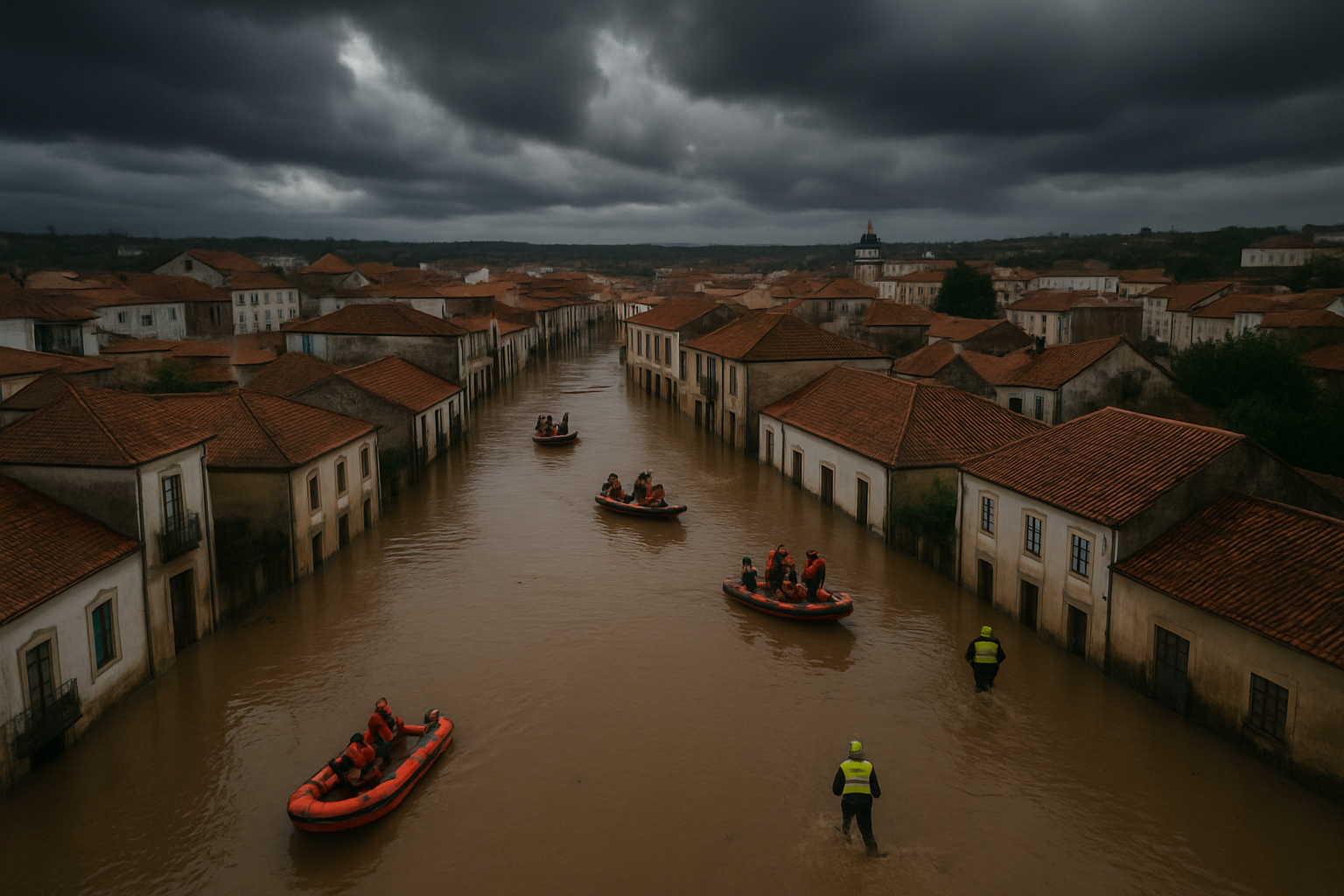
Storm Leonardo has unleashed catastrophic flooding across Portugal and Spain, claiming at least one life and forcing thousands from their homes as torrential rainfall of up to 40 centimeters in 24 hours batters the already waterlogged Iberian Peninsula.
The severe Atlantic storm system has brought widespread devastation to both countries, with Portuguese Civil Protection activating red alerts for the Tagus River basin after water levels doubled due to dam discharges. At least one person has been confirmed dead in Portugal, while thousands more have been evacuated from flood-prone areas across both nations.
Portugal Bears the Brunt of Leonardo's Fury
In Portugal, the storm has triggered a comprehensive emergency response involving 1,975 military personnel and 30 naval vessels. Portuguese authorities have reported over 1,800 weather-related incidents as rivers burst their banks and urban areas face severe flooding.
The town of Óbidos has been particularly hard hit, with ten people evacuated from flooded homes after all local rivers and streams overflowed following dam discharges. The flooding has interdicted several roads and inundated hectares of agricultural land, according to local municipal authorities.
In Coruche, municipal officials have warned residents of the possibility that protective walls could be breached, urging the population to remove belongings from riverside areas and avoid remaining near the Sorraia River. The warning comes as water levels continue to rise throughout the region.
"This is the first time I've seen a situation with this scale of destruction," said Albino Félix, a resident of Ponte de Rol in Torres Vedras whose home was partially flooded.
— Albino Félix, Flood Victim
The flooding has caused significant infrastructure damage across Portugal. In Portalegre, debris and stones from the Serra de São Mamede damaged dozens of vehicles and affected the main entrance to the local hospital. Meanwhile, a landslide in Cinfães displaced two people and completely blocked Municipal Road 1025.
Spain Implements Emergency Measures
Spanish authorities have lifted the highest-level storm alert in Andalusia, though the region experienced rainfall of up to 600 liters per square meter. Wind and storm warnings remain in place across 13 Spanish regions as the country continues to deal with Leonardo's aftermath.
In a historic move, Seville closed the flood gates of the Triana Defense Wall for only the second time in the city's history to protect the neighborhood from potential Guadalquivir River flooding. The preventive closure was ordered due to an "eventual rise" in river levels, though officials emphasized that significant safety margins remain.
Educational disruptions have been widespread, with the Andalusian government causing confusion by changing the list of municipalities with suspended classes four times between 8 PM Wednesday and past midnight Thursday. The last-minute changes affected parents and school administrators across the region.
Cross-Border Emergency Response
The crisis has demonstrated the transnational nature of severe weather events, with both countries coordinating their emergency responses. Portugal's Consul-General for Portuguese Communities has appealed to Portuguese emigrants with properties in affected regions to travel to their homes to assess damage and begin reconstruction processes.
The extreme weather has also prompted supportive measures between regions, with the municipality of Guarda sending a technical support team to assist flood victims in Marinha Grande, demonstrating inter-municipal solidarity during the crisis.
Part of Broader European Weather Pattern
Storm Leonardo represents the latest in a series of severe weather systems to strike the Iberian Peninsula this winter. The storm follows the devastating impact of Storm Kristin just weeks earlier, which killed five people in Portugal and caused widespread infrastructure damage.
The current emergency occurs as part of a broader pattern of extreme weather affecting the Northern Hemisphere, which has already resulted in over 110 deaths in North America from severe winter conditions. This pattern continues despite January 2026 being recorded as the hottest month in global history, highlighting the increasing volatility of climate systems.
Infrastructure Under Pressure
Transportation networks across both countries have been severely disrupted. Rail services have been suspended on key routes, while numerous highways remain closed due to flooding and debris. In Portugal, the railway line between Castanheira do Ribatejo and Alverca has been disrupted due to flooding, highlighting the vulnerability of transportation infrastructure to extreme weather events.
The flooding has placed enormous strain on emergency services, with rescue operations ongoing across multiple regions. Portuguese authorities have established coordination centers to manage the crisis, while Spanish emergency services continue to monitor river levels and weather conditions.
Agricultural and Economic Impact
The severe flooding has caused significant damage to agricultural areas, with hectares of farmland submerged across both countries. In Óbidos, agricultural fields have been completely inundated, threatening local food production and farmer livelihoods.
The tourism sector, already vulnerable during the winter months, faces additional challenges from the infrastructure damage and ongoing weather warnings. Many cultural events and activities have been suspended, with some municipalities canceling programming through mid-February.
Climate Change Implications
The severity and frequency of storms affecting the Iberian Peninsula have raised concerns among climate scientists about changing weather patterns in Southern Europe. The region has experienced a series of extreme weather events in recent months, testing the resilience of infrastructure and emergency response systems.
The contrast between record-breaking global temperatures and severe regional flooding demonstrates the complex ways climate change manifests across different geographic areas and time scales.
Recovery and Preparedness
As Storm Leonardo moves eastward, both Portuguese and Spanish authorities are focusing on recovery efforts and damage assessment. The immediate priorities include ensuring the safety of evacuated residents, restoring essential services, and beginning the process of infrastructure repair.
The crisis has highlighted the importance of cross-border cooperation in managing transnational weather emergencies and the need for continued investment in flood defenses and early warning systems.
Emergency services remain on high alert as meteorologists continue to monitor weather conditions across the region, with authorities urging residents to remain vigilant and follow official guidance as recovery efforts begin.