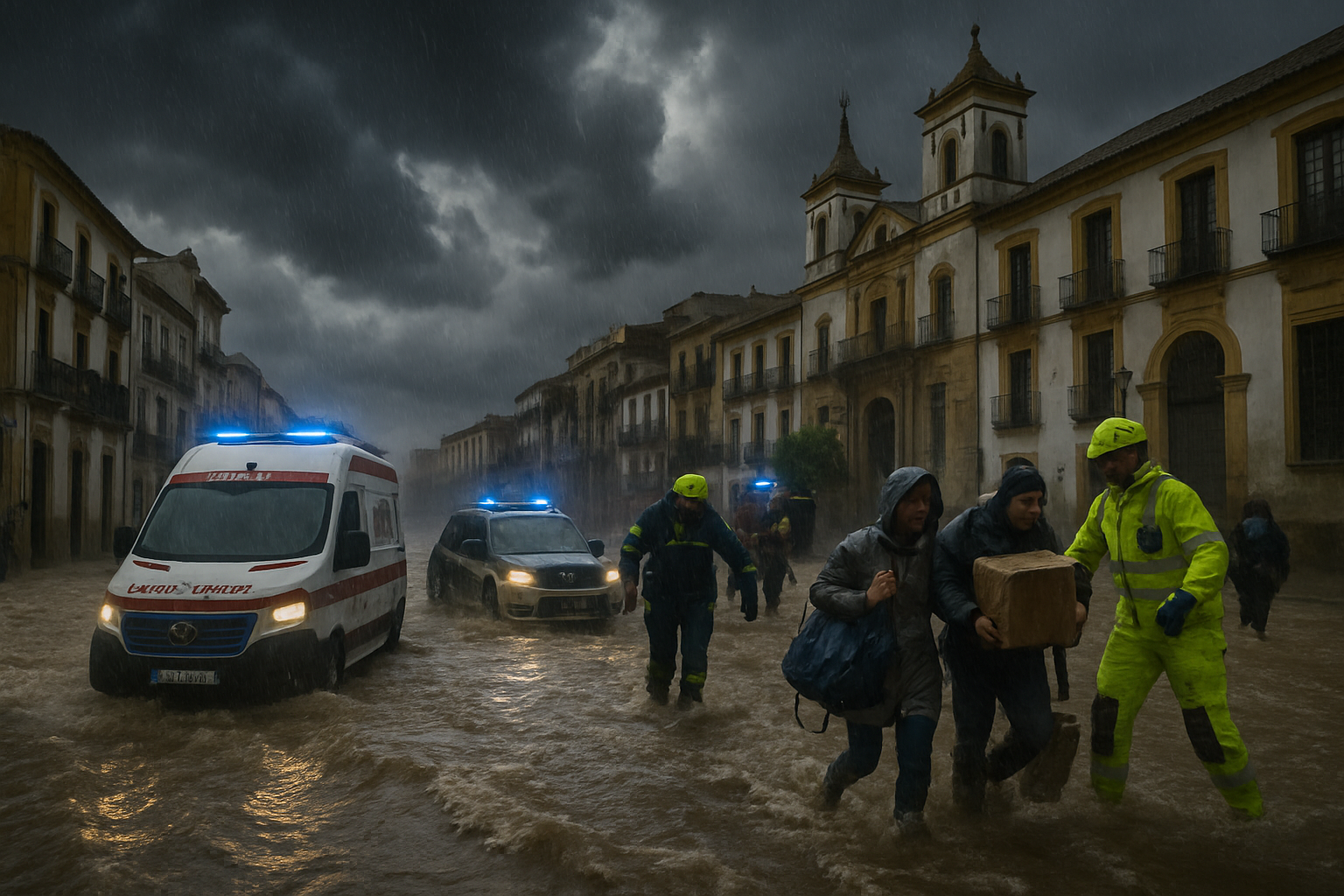
Storm Leonardo unleashed devastating floods across southern Spain on February 4, 2026, forcing the evacuation of more than 3,500 people and leaving one woman missing after she fell into a swollen river in Málaga province.
The powerful Atlantic storm system delivered what meteorologists described as "extraordinarily persistent" rainfall across Andalusia, triggering Spain's weather service AEMET to issue red alerts for "extraordinary danger" in multiple provinces. The storm has caused widespread flooding, infrastructure damage, and transportation chaos just one week after the deadly Storm Kristin claimed six lives across the Iberian Peninsula.
Widespread Evacuations and Emergency Response
Emergency services evacuated over 3,500 residents from high-risk areas in the provinces of Cádiz, Málaga, and Jaén as rivers reached critical flood levels. The Andalusian government suspended classes in most schools across the region, with only Almería province maintaining normal educational activities on Thursday.
The most dramatic incident occurred in Sayalonga, Málaga, where a woman disappeared after falling into the Turvilla River while walking dogs with a friend. The Guardia Civil has deployed extensive search teams to scour seven kilometers of the river's course in hopes of locating the missing person.
"We are experiencing an extremely difficult situation with persistent rainfall falling on already saturated soils," said an AEMET spokesperson.
— Spanish Meteorological Service
Record-Breaking Rainfall and River Levels
The town of Grazalema, historically Spain's wettest location, recorded 526 liters per square meter of rainfall—nearly matching the entire annual average of 523 liters. This exceptional downpour has created new streams and waterways across the landscape, with completely saturated soils unable to absorb any additional water.
Fourteen rivers and ten reservoirs across the region have reached extreme risk levels for overflow. Spanish reservoirs have surged to 67.3% capacity, representing an 8.1 percentage point increase in just one week, with 31 reservoirs now at 100% capacity.
Transportation and Infrastructure Crisis
Storm Leonardo has paralyzed transportation networks throughout southern Spain. All high-speed rail connections, including the critical Sevilla-Córdoba and Málaga-Granada lines, have been suspended indefinitely due to flooding and safety concerns.
Road transportation faces equally severe disruptions, with 118 roads closed due to flooding and landslides. Two major highways from Spain's principal road network are among those affected, while the majority of closures are concentrated in Andalusia. An additional 42 roads remain impassable due to snow conditions.
The Spanish transport ministry's traffic management system shows a comprehensive network of closures stretching across the affected provinces, with emergency crews working around the clock to assess damage and restore connectivity.
Regional Impact and Cross-Border Effects
The storm's impact extends beyond Spain's borders, affecting neighboring Portugal where authorities have mobilized 1,975 military personnel and 30 boats for emergency response operations. Portuguese President Marcelo Rebelo de Sousa has reinforced vigilance measures, while Prime Minister Luís Montenegro guaranteed "all available resources" for the emergency response.
Portugal faces particular concerns about water discharges from Spanish dams and the possibility of flash flooding in the Mondego River system. At least one fatality has been confirmed in Portugal, where a 60-year-old man was swept away by floodwaters.
Agricultural and Economic Consequences
The storm threatens significant damage to Andalusia's agricultural sector, particularly olive groves and citrus farms that are central to the regional economy. Many farming areas remain underwater, with farmers unable to assess the full extent of crop losses until floodwaters recede.
Tourism infrastructure has also suffered substantial impacts, with many coastal resorts and inland destinations forced to cancel bookings and close facilities due to safety concerns and infrastructure damage.
Climate Context and Warning Systems
Storm Leonardo represents the latest in a series of extreme weather events affecting the Northern Hemisphere, following patterns that have already claimed more than 110 lives in North America during the same period. The storm's intensity comes despite January 2026 being recorded as the hottest month in global history, highlighting the increasing volatility of weather patterns.
Spain's meteorological service has maintained its highest alert levels for the Strait of Gibraltar area, Grazalema, and Ronda regions, warning residents to avoid unnecessary travel and stay away from flood-prone areas. The persistence of the storm system has caught authorities by surprise, with rainfall continuing far longer than initial forecasts predicted.
International Support and Coordination
European Union mechanisms for disaster response are being activated to provide additional support to affected regions. The crisis has prompted enhanced international coordination, with Sweden and Denmark announcing €246 million in emergency assistance for Southern European weather emergencies.
Emergency services across the affected regions are operating at their operational limits, with rescue teams working in dangerous conditions to reach stranded residents and maintain essential services. The Spanish military has been deployed to assist with evacuation operations and infrastructure stabilization efforts.
Looking Ahead: Recovery and Resilience
Weather forecasts suggest conditions may improve over the weekend, but authorities warn of potential deterioration early next week as additional storm systems approach from the Atlantic. The repeated severe weather events are testing Spain's climate adaptation infrastructure and emergency response capabilities.
Recovery efforts will likely take weeks or months, particularly in rural areas where access remains limited due to damaged roads and bridges. The government has indicated that comprehensive damage assessments will begin once weather conditions stabilize and emergency operations conclude.
Storm Leonardo serves as another stark reminder of the increasing frequency and intensity of extreme weather events across Europe, highlighting the urgent need for enhanced climate resilience and adaptation measures as the continent faces an increasingly volatile climate future.