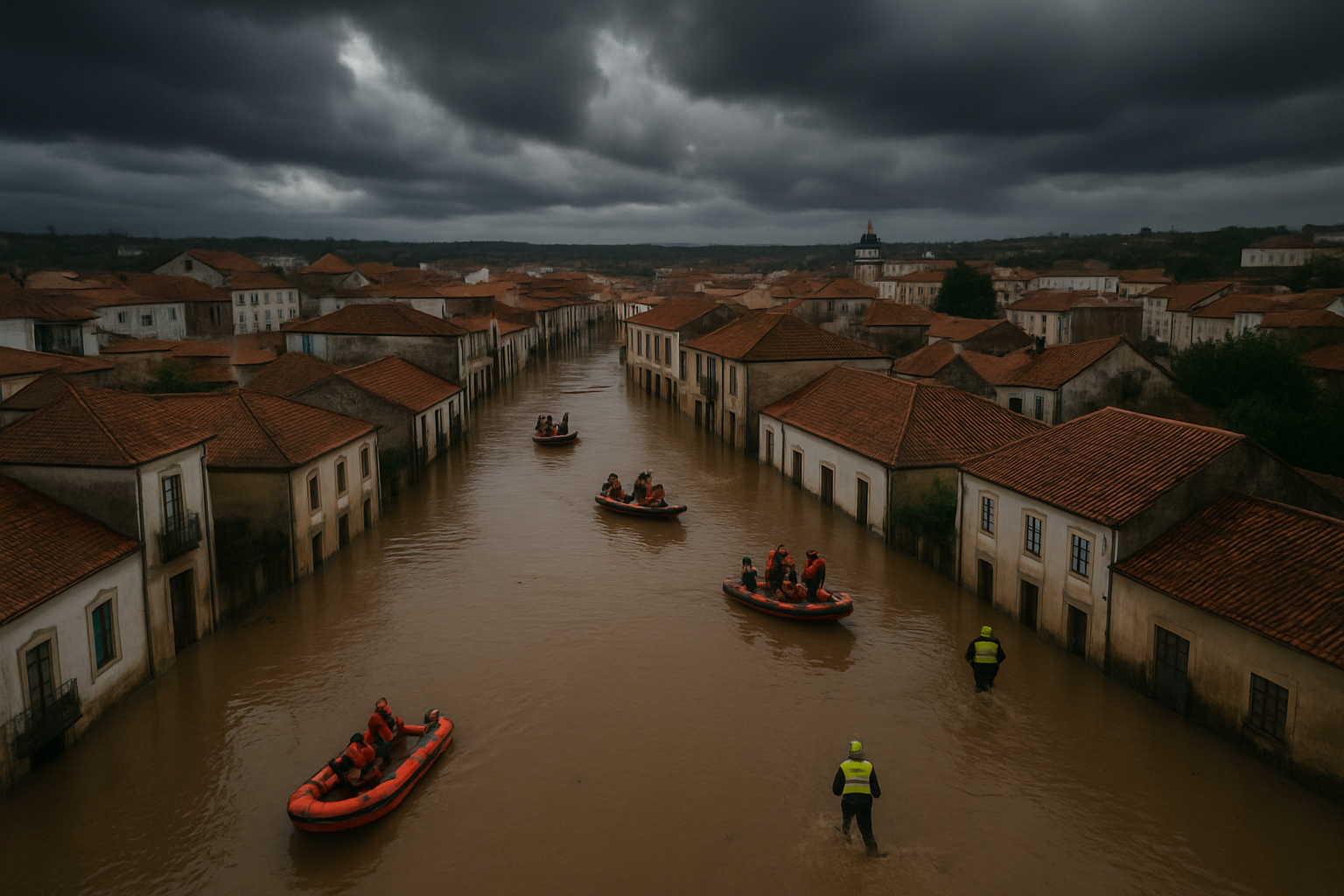
Storm Leonardo has unleashed catastrophic flooding across Portugal and Spain, claiming at least 35 lives and forcing the evacuation of over 8,000 people as torrential rains overwhelm emergency services and threaten democratic institutions across the Iberian Peninsula.
The deadly Atlantic storm system, which made landfall February 5, 2026, has brought unprecedented rainfall to regions already saturated from weeks of extreme weather. In Portugal, authorities ordered mandatory evacuations in Santarém after water levels in the Tagus River basin doubled due to dam discharges, while Spain's Andalusia region faces its worst flooding crisis in decades.
Escalating Emergency Response
Portuguese authorities have deployed 1,975 military personnel and 30 naval vessels in what represents one of the largest emergency mobilizations in recent memory. The Portuguese Civil Protection service has activated red alerts across central regions, with over 1,800 weather-related incidents reported since the storm began.
In the town of Santarém, municipal authorities ordered the "mandatory evacuation" of riverside areas within just seven hours as the Tagus River reached critical levels. The speed of the water rise caught many residents off guard, highlighting the storm's unprecedented intensity.
Spain has implemented equally dramatic measures, with the complete evacuation of Grazalema in Cádiz province—all 1,200 remaining residents were ordered to leave their homes as the town, already known as Spain's wettest location, recorded rainfall approaching its annual average in just days. This brings the total number of evacuated Andalusians to approximately 5,000 people.
Political Implications and Democratic Disruption
The crisis has extended beyond natural disaster into political disruption, with Portugal's far-right presidential candidate calling for the postponement of the second round of presidential elections. The demand underscores how extreme weather events increasingly intersect with democratic processes, raising questions about electoral continuity during climate emergencies.
Spanish authorities have suspended educational activities across most of Andalusia, with the regional government changing school closure lists four times between 8 PM and midnight, causing widespread confusion among families and demonstrating the rapidly evolving nature of the crisis.
Cross-Border Impact and Casualties
The human toll continues to mount across both nations. In Portugal, a 70-year-old man was confirmed dead after being swept away by floodwaters, while Spanish rescue teams are actively searching for a missing woman who disappeared during the storm's assault on the Pyrenean region.
The scope of infrastructure damage is becoming clearer as emergency teams gain access to affected areas. In Portugal, the entrance to Portalegre hospital was blocked by debris from the Serra de São Mamede, while railway services between Castanheira do Ribatejo and Alverca remain suspended due to flooding.
The town of Óbidos saw 10 people evacuated from flooded homes after all local rivers and streams overflowed their banks. In Cinfães, two people were displaced by a landslide that blocked Municipal Road 1025, illustrating the varied ways the storm has disrupted communities.
Historic Precedents and Climate Context
Storm Leonardo represents the latest in a series of increasingly severe weather events affecting the Iberian Peninsula. The current crisis follows Storm Kristin, which killed five people in Portugal just weeks earlier, suggesting a pattern of intensifying Atlantic storm systems.
The storm occurs during what has been confirmed as the hottest January in global recorded history, with 18 of the past 19 months exceeding 1.5°C above pre-industrial levels. This unprecedented warming trend appears to be driving more volatile weather patterns, even during periods when natural cooling cycles would typically moderate temperatures.
In Seville, authorities closed the Triana Defense Wall flood gates for only the second time in the city's history to protect against Guadalquivir River flooding, demonstrating the historic nature of the current crisis.
Regional Response and International Support
The crisis has prompted unprecedented cross-border emergency coordination between Spanish and Portuguese authorities. Portuguese emigrants have been called to assess property damage in affected areas, while the Guarda municipality has sent technical support teams to assist Marinha Grande.
This regional cooperation represents a mature response to trans-boundary natural disasters, building on lessons learned from previous extreme weather events. The coordination extends beyond immediate emergency response to include longer-term recovery planning and infrastructure assessment.
Emergency services across both countries report operating at capacity limits, with warming centers activated and vulnerable population monitoring enhanced. The agricultural sector faces extensive damage, with hectares of farmland now submerged under floodwaters.
Looking Forward: Recovery and Resilience
As Storm Leonardo continues its destructive path, authorities in both countries emphasize that the recovery phase will extend well beyond the immediate weather emergency. The scale of infrastructure damage, combined with the saturated condition of soils across the peninsula, suggests flooding risks will persist even after rainfall subsides.
The current crisis serves as a stark reminder of the need for enhanced climate adaptation measures across Southern Europe. With extreme weather events becoming more frequent and intense, both Portugal and Spain face mounting pressure to invest in resilient infrastructure capable of withstanding the new reality of climate volatility.
Emergency services maintain high alert status as weather monitoring continues across the Iberian Peninsula, while the international community watches closely for lessons applicable to disaster preparedness in an era of accelerating climate change.