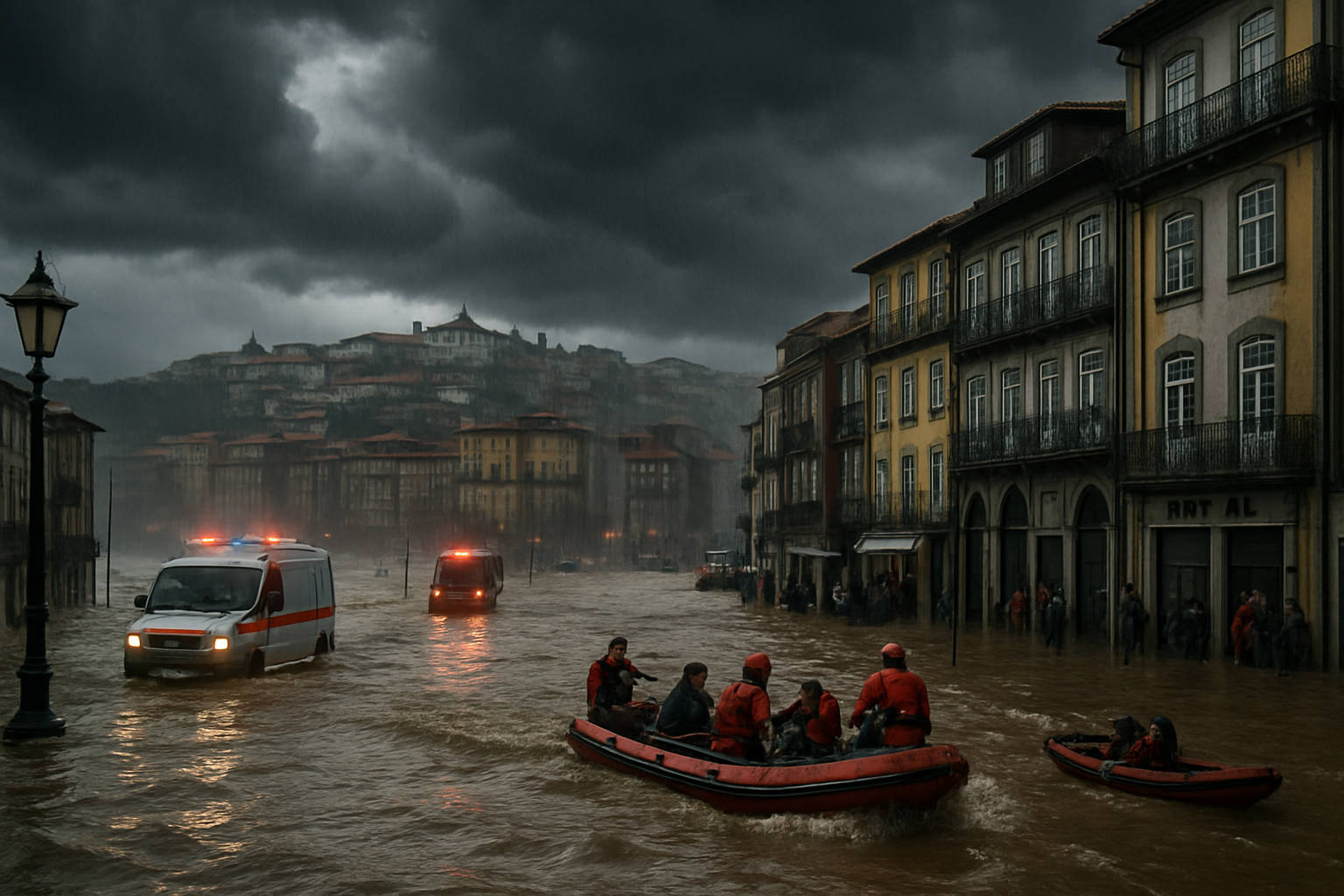
Portugal battles catastrophic flooding from Storm Leonardo as the Douro River overflows in Porto and Vila Nova de Gaia, with authorities placing red alerts on the Douro and Tejo rivers amid water levels not witnessed since 1997.
The Portuguese government announced Friday it would extend the state of calamity for another two weeks until February 15, as Prime Minister Luís Montenegro's administration maintains vigilance against incoming weather systems that threaten to compound the ongoing crisis.
Critical River Levels Prompt Red Alerts
Civil Protection authorities issued red alerts for multiple river systems across Portugal, with the Douro already breaching its banks in the country's second-largest city, Porto, and neighboring Vila Nova de Gaia. The Tejo River system also faces critical flood warnings as water levels approach the historic benchmarks last recorded during the devastating 1997 floods.
"The cautela continues to dictate the rules," government sources confirmed, emphasizing the precautionary approach as meteorological conditions remain deeply concerning across the Iberian Peninsula.
Thousands of Emergency Incidents Overwhelm Services
Portuguese emergency services have recorded over 1,800 weather-related incidents since the current crisis began, stretching Civil Protection capabilities to their operational limits. The scale of the emergency response has prompted deployment of 1,975 military personnel and 30 naval vessels to assist with rescue operations and infrastructure protection.
In Santarém, one of the hardest-hit areas, emergency responders worked through the night addressing widespread inundations that have transformed the historic city center. The municipal pavilion has been converted into an emergency shelter as authorities coordinate evacuations from flood-prone residential areas.
Transportation Networks Paralyzed
Storm Leonardo has severely disrupted Portugal's transportation infrastructure, with the critical Castanheira do Ribatejo to Alverca railway line suspended indefinitely due to flooding. This key commuter route, which connects suburban areas to Lisbon, serves thousands of daily passengers and its closure represents a significant blow to the capital region's connectivity.
Road networks across central and northern Portugal face similar challenges, with authorities reporting numerous closures and diversions as emergency crews work to clear debris and assess structural damage from the unprecedented rainfall and flooding.
Presidential Election Concerns Mount
The flooding crisis has created unexpected political complications as Portugal prepares for the second round of its presidential election scheduled for Sunday, February 8. Despite the severe weather disruptions affecting multiple regions, the National Elections Commission confirmed the vote will proceed as planned.
"The law does not permit general postponement of elections at the national level," electoral authorities stated, even as some local councils have independently delayed their own municipal elections due to infrastructure damage and accessibility concerns.
New Storm System Threatens Further Devastation
Meteorological services warn that Depression Marta is approaching Portugal and could strike Saturday, potentially bringing additional flooding to already saturated regions. The incoming system threatens to overwhelm drainage systems and emergency response capabilities that are already stretched beyond normal capacity.
Weather forecasters describe the developing situation as "a new framework of deteriorating climatic conditions" that could cause "more floods" across areas still recovering from Leonardo's initial impact.
International Context of Extreme Weather
Storm Leonardo represents part of a broader pattern of extreme weather affecting Southern Europe, with Spain simultaneously battling severe flooding that has forced evacuations of over 7,000 people across Andalusia. The cross-border nature of the crisis has prompted enhanced cooperation between Portuguese and Spanish emergency services.
The current weather emergency occurs within the context of January 2026 being recorded as the hottest month in global history, highlighting the complex relationship between global warming trends and regional extreme weather events that continue to challenge traditional forecasting models.
Recovery Challenges Ahead
As Portugal braces for potentially weeks of continued emergency response, the full extent of agricultural, infrastructure, and economic damage from Storm Leonardo remains under assessment. The government's decision to extend calamity status reflects concerns that recovery efforts will require sustained coordination between national, regional, and local authorities.
Emergency shelters remain operational across affected regions, with authorities emphasizing that public safety remains the absolute priority as the country navigates through this unprecedented weather crisis. The deployment of military assets demonstrates the severity of the situation and the government's commitment to protecting vulnerable populations.
With Depression Marta approaching and uncertainty surrounding additional Atlantic weather systems, Portugal faces the prospect of extended emergency operations that will test the resilience of both its infrastructure and emergency response capabilities in the coming weeks.