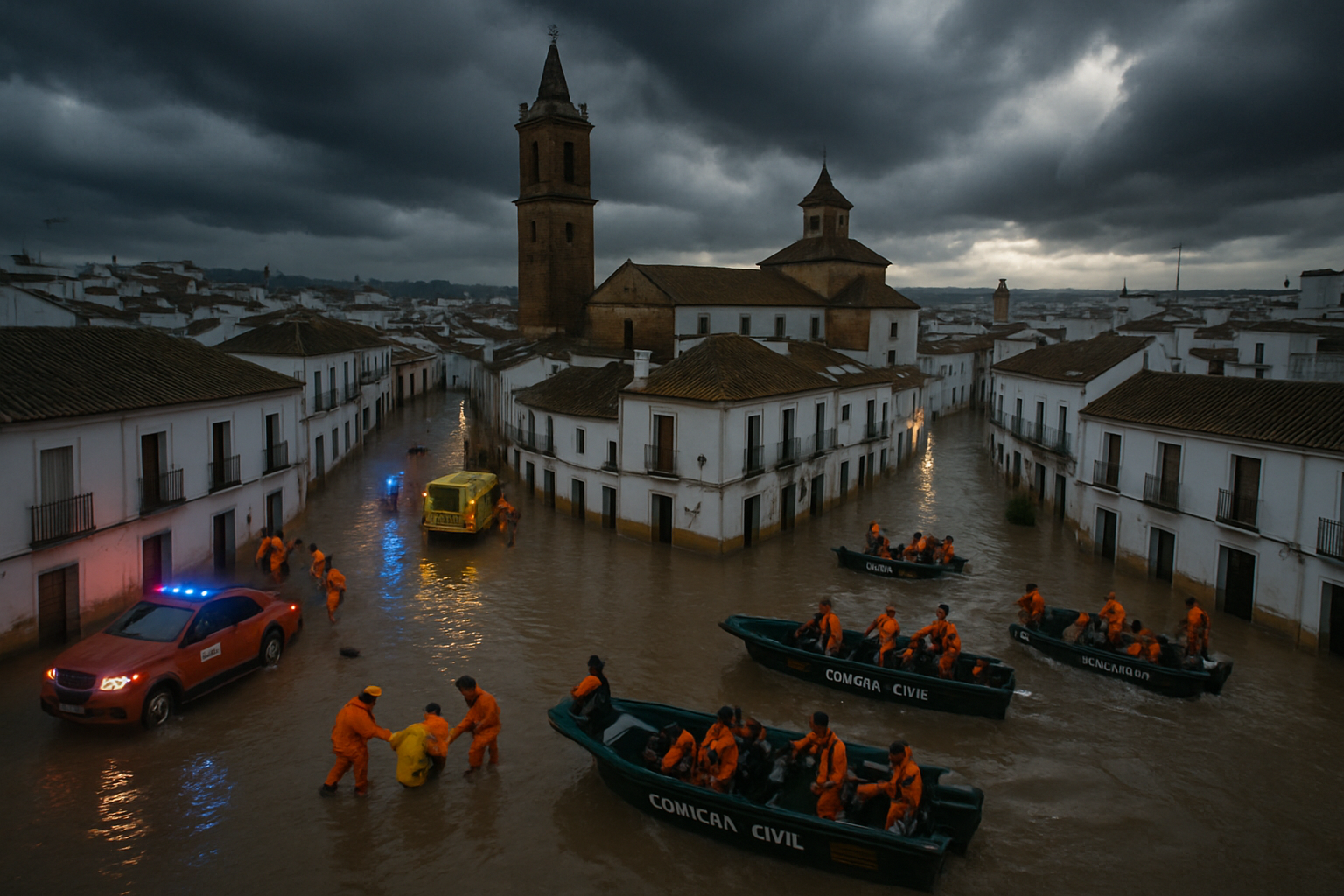
Storm Leonardo continues to batter southern Spain with extraordinary rainfall and extreme winds, forcing the evacuation of over 3,500 people across multiple provinces in Andalusia as the region faces one of its most severe weather emergencies in recent memory.
The powerful Atlantic storm system has brought chaos to the provinces of Cádiz, Málaga, and Jaén, with Spain's National Meteorological Agency (AEMET) maintaining red alerts for "extraordinary danger" across the most affected areas. The storm has paralyzed essential services and transportation networks throughout the southern peninsula, creating a humanitarian crisis that extends beyond Spain's borders.
Unprecedented Rainfall and Evacuations
According to Spanish emergency services, the evacuation of 3,500 people represents one of the largest weather-related displacement operations in Andalusia's recent history. The affected provinces have experienced extreme precipitation, with some areas recording rainfall levels that approach annual averages in just a matter of days.
The regional government of Andalusia has suspended school activities across all affected provinces except Almería, impacting thousands of students and highlighting the storm's widespread disruption to daily life. Educational authorities confirmed late Wednesday that the closure affects municipalities across Cádiz, Córdoba, Granada, Jaén, Málaga, and Sevilla provinces.
"We are facing extraordinary weather conditions that require exceptional measures to protect our citizens,"
— Andalusian Emergency Services Spokesperson
Transportation Networks Paralyzed
Storm Leonardo has brought Spain's transportation infrastructure to a standstill, with severe disruptions affecting both road and rail networks. Major highways have been closed due to flooding and dangerous conditions, while high-speed rail services between key cities have been suspended as a precautionary measure.
The storm's impact has been particularly severe on the region's connectivity, isolating communities and hampering emergency response efforts. Authorities have advised against all non-essential travel while emergency services work to maintain access to critical areas.
Regional Impact and Cross-Border Concerns
The storm system has not remained confined to Spanish territory, with Portugal experiencing significant impacts as well. Portuguese authorities have reported approximately 1,800 weather-related incidents, with Civil Protection services working around the clock to respond to emergencies.
Lisbon and five other Portuguese districts were placed under orange weather alerts, with authorities taking the precautionary measure of closing the Campo Grande tunnels. The Portuguese Institute of the Sea and Atmosphere (IPMA) issued warnings for heavy rainfall that persisted through the early morning hours.
The cross-border nature of this weather system has demonstrated the regional scope of Storm Leonardo's impact, with both Spanish and Portuguese emergency services coordinating their responses to this unprecedented weather event.
Historical Context and Flooding Memories
The current crisis has evoked memories of historical flooding events, particularly in areas like Alcácer do Sal, where residents report witnessing the worst flooding in living memory. Local reports suggest that current water levels exceed what was previously considered possible, with some comparing the situation to historical floods from 1963.
Emergency responders have deployed naval vessels for patrol missions, with more than 50 people evacuated from their homes during the most critical phase of the emergency. The scale of the response highlights the severity of the current situation and the lessons learned from previous weather emergencies in the region.
Emergency Response and Military Deployment
Spanish authorities have mobilized extensive emergency resources to address the crisis, including military personnel and specialized rescue equipment. The coordinated response involves multiple agencies working together to ensure public safety and provide assistance to affected communities.
Emergency services have established evacuation centers and are working to maintain essential services in affected areas. The response effort demonstrates the region's preparedness for severe weather events, though the scale of Storm Leonardo has tested these systems to their limits.
Climate Context and Weather Patterns
Storm Leonardo represents part of a broader pattern of extreme weather affecting Europe in February 2026. The storm system has developed within an already active weather pattern that has brought severe conditions across multiple regions of the continent.
Meteorological experts have noted that the storm's intensity and persistence reflect the challenging weather patterns that have characterized the winter of 2025-2026. The event occurs within a context of increased weather volatility that has affected communities across Europe throughout the winter months.
Infrastructure Resilience and Adaptation
The current emergency has highlighted both the strengths and vulnerabilities of regional infrastructure in the face of extreme weather events. While emergency response systems have functioned effectively, the widespread disruption to transportation and essential services demonstrates the continuing challenges posed by severe weather.
The experience of Storm Leonardo is likely to inform future infrastructure planning and emergency preparedness measures throughout the region. The lessons learned from this event will contribute to enhanced resilience against similar weather emergencies in the future.
Ongoing Recovery and Assessment
As Storm Leonardo continues to affect the region, emergency services are maintaining their heightened state of alert while beginning to assess the full extent of the damage. The recovery process will likely extend well beyond the immediate weather emergency, with communities working to restore normal operations and repair damaged infrastructure.
Authorities continue to monitor weather conditions closely and maintain their emergency response capabilities as the situation evolves. The coordinated approach between Spanish and Portuguese emergency services demonstrates the international cooperation necessary to address weather emergencies that cross national boundaries.
The current emergency serves as a reminder of the importance of preparedness and community resilience in the face of extreme weather events. As climate patterns continue to evolve, the experience gained from responding to Storm Leonardo will prove valuable for future emergency planning and response efforts across the region.