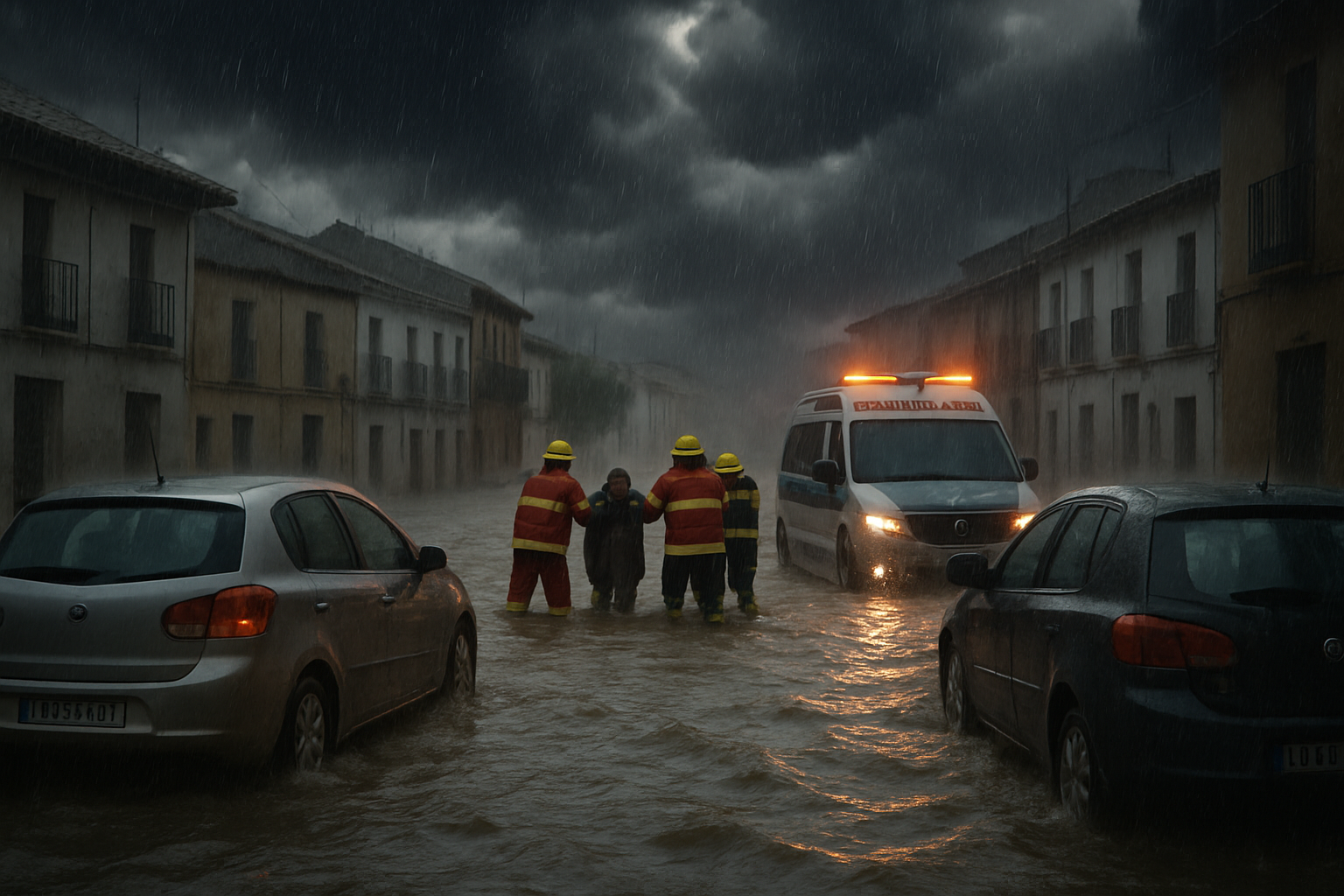
Storm Leonardo battered the Iberian Peninsula on Wednesday with what meteorologists described as "extraordinary" rainfall, forcing the evacuation of over 3,000 people from their homes in southern Spain and prompting authorities in both Spain and Portugal to deploy military forces in response to the severe weather emergency.
The powerful Atlantic storm system struck particularly hard in Spain's Andalusia region, where the national weather agency AEMET issued red alerts for "extraordinary danger" in the provinces of Cádiz, Málaga, and Jaén. The unprecedented weather conditions led to widespread school closures across the affected regions, with classes suspended everywhere except in Almería province.
Widespread Evacuations and Emergency Response
Spanish authorities confirmed that more than 3,000 residents were evacuated from their homes as floodwaters inundated communities across southern Spain. The storm brought sustained winds of up to 100 kilometers per hour and rainfall reaching 150 liters per square meter in some areas, creating dangerous conditions that overwhelmed local drainage systems.
Emergency services mobilized across the region, with particular focus on the areas around Grazalema and Ronda, where the greatest rainfall accumulations were recorded. The Spanish military was deployed to assist with slope stabilization and monitoring of mining ponds that posed additional flood risks to nearby communities.
"The situation we are facing requires all available resources to protect lives and property. We are prepared to provide whatever assistance is needed,"
— Spanish Emergency Services Coordinator
In Portugal, President Marcelo Rebelo de Sousa reinforced calls for vigilance, while Prime Minister António Costa guaranteed that "all resources" would be made available to handle the crisis. The Portuguese government deployed 1,975 military personnel and 30 boats across affected regions, with particular attention to flood-prone areas that had already been impacted by previous storms.
Transportation Networks Paralyzed
The storm caused massive disruption to transportation infrastructure across the Iberian Peninsula. In Spain alone, 76 roads were affected by snow conditions, with 11 major highways experiencing significant delays. An additional 38 secondary roads were completely closed to traffic due to flooding and dangerous conditions.
Railway services faced severe disruptions, with multiple lines suspended as a precautionary measure. Airport operations were also impacted, with numerous flight cancellations reported at major Spanish airports including those serving Málaga and Seville.
The Portuguese transport network similarly struggled under the extreme conditions, with authorities implementing widespread restrictions on road travel and advising citizens to avoid non-essential journeys.
Context of Extreme Weather Crisis
Storm Leonardo's impact comes as part of a broader pattern of extreme weather events affecting Europe and the broader Northern Hemisphere. The storm follows the devastating effects of Storm Kristin, which struck Portugal just weeks earlier, causing significant infrastructure damage and claiming five lives.
According to historical weather data, this crisis unfolds despite January 2026 being recorded as the hottest month in global history, with 18 of the past 19 months exceeding 1.5°C above pre-industrial levels. This paradox highlights the increasing volatility and unpredictability of weather patterns associated with climate change.
The current crisis is part of what meteorologists are calling a Northern Hemisphere extreme weather pattern that has already resulted in more than 110 deaths across North America from severe winter conditions, demonstrating the global scale of the current weather emergency.
Regional Impact Assessment
The storm's impact extends beyond immediate flooding concerns. Spanish reservoirs, which had been at concerning low levels, surged to 67.3% capacity with an 8.1 percentage point increase in a single week. Thirty-one reservoirs reached 100% capacity, creating new challenges for water management authorities.
Agricultural regions face significant damage, with saturated soils across the peninsula creating conditions that could affect spring planting seasons. The tourism sector, particularly important for the Spanish economy, also faces disruption as coastal areas experience dangerous conditions.
International Emergency Coordination
The crisis has prompted enhanced international cooperation, with Portugal formally requesting activation of the EU Civil Protection Mechanism to coordinate emergency resources across member states. Sweden and Denmark announced a €246 million emergency assistance package to support affected regions.
Finland, recognizing the Spain's significant Finnish expatriate community, issued warnings through its Costa del Sol Finnish school, which was closed as a precautionary measure. Norwegian meteorological services provided detailed forecasts warning of continued severe conditions, while Polish weather services tracked the storm's broader European implications.
Climate Adaptation Challenges
The severity of Storm Leonardo underscores the pressing need for enhanced climate adaptation infrastructure across Southern Europe. Emergency services across the region are operating at near-capacity limits, testing the resilience of systems designed for less extreme weather conditions.
Portuguese authorities, still managing recovery efforts from the previous week's Storm Kristin casualties, face the challenge of simultaneous emergency response and long-term resilience building. The rapid succession of severe weather events demonstrates the need for more robust early warning systems and emergency preparedness protocols.
Spanish meteorologists noted that the storm's persistence and intensity exceeded typical patterns for the region, requiring updates to existing emergency response procedures and infrastructure planning assumptions.
Looking Ahead
As Storm Leonardo continues to affect the Iberian Peninsula, authorities maintain high alert status across affected regions. Weather forecasters warn that additional rainfall and wind are expected through the remainder of the week, potentially exacerbating current flooding conditions.
The crisis serves as a stark reminder of Europe's vulnerability to extreme weather events and the need for continued investment in climate adaptation infrastructure. As emergency services work to protect lives and property, the long-term implications of increasingly volatile weather patterns remain a pressing concern for policymakers across the European Union.
Recovery efforts are expected to continue for several weeks, with particular attention to restoring transportation networks and assessing damage to critical infrastructure. The human and economic costs of Storm Leonardo will likely influence future discussions about climate resilience and emergency preparedness across the region.