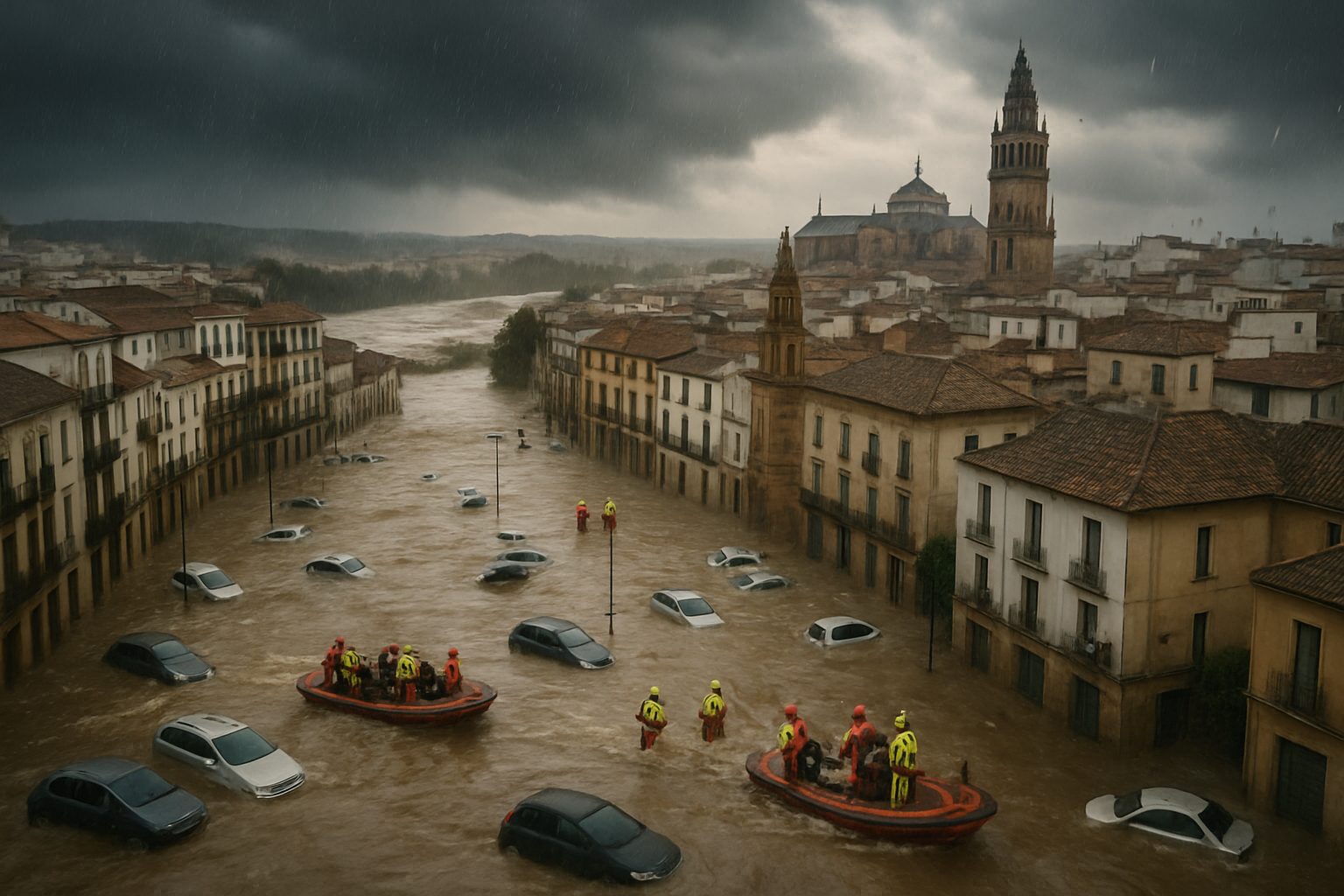
Storm Marta has devastated Spain and Portugal on February 7, 2026, claiming at least 14 lives and marking the third consecutive major Atlantic storm to batter the Iberian Peninsula in just two weeks, with winds reaching 120 km/h and catastrophic flooding forcing mass evacuations across both countries.
The Portuguese firefighter who became the latest fatality was swept away by rushing waters during a reconnaissance patrol on the banks of a river in Campo Maior, in the Portalegre district, according to Portugal's National Civil Protection Authority. The 46-year-old rescue worker was carried away by the current while attempting to cross a flooded area, making him the first confirmed victim of Storm Marta.
This tragedy comes amid unprecedented weather chaos that has plagued the Iberian Peninsula since late January. The past week has been particularly devastating for Portugal, as the powerful winds of Storm Kristin killed five people, while Storm Leonardo's rainfall claimed another life on Wednesday. Spain has simultaneously battled the same succession of storms, with thousands already evacuated from previous weather emergencies.
Unprecedented Three-Storm Succession
Storm Marta represents the eighth named storm of 2026, arriving with winds of up to 120 km/h and waves reaching 13 meters along the Atlantic coast. Portuguese authorities have extended the national calamity status through February 15, maintaining what has become the largest peacetime rescue operation in the country's history.
The scale of the emergency response is staggering: Portugal has deployed 1,975 military personnel and 30 naval vessels to respond to more than 1,800 weather-related incidents recorded since February 1. Civil Protection services registered 256 incidents in a single morning as Marta made landfall.
In Spain, the situation remains critical as authorities maintain alerts for more than 11,000 people already evacuated from previous storms. The town of Grazalema, which has borne the brunt of multiple storms, recorded an extraordinary 1,500 liters per square meter of rainfall – exceeding Madrid's entire annual precipitation total.
Infrastructure Crisis and Transportation Paralysis
The transportation networks across both countries face complete paralysis. Portugal's railway service between Castanheira and Alverca remains suspended, severely affecting Lisbon commuters. The iconic Ponte 25 de Abril bridge has closed several lanes due to dangerous wind conditions, while Lisbon's Campo Grande tunnels remain closed due to flooding risks.
Spain's transportation crisis is equally severe, with 169 roads closed in Cádiz province alone. The high-speed rail connections between Sevilla-Córdoba and Málaga-Granada remain suspended following damage from previous storms. Spanish authorities report that reservoirs have surged to 67.3% capacity, with 31 facilities now at 100% capacity.
The Guadalquivir River has emerged as a particular concern, reaching critical flood levels last seen in 1997. Emergency evacuations have been ordered in Lora del Río, Tocina, and Ubrique as the river threatens to exceed its banks. In Córdoba and Sevilla, authorities are monitoring water levels around the clock, fearing a flood that could surpass Thursday's devastating overflow.
Power Grid Crisis and Human Impact
The electrical infrastructure has suffered catastrophic damage. The number of Portuguese residents without power has tripled since dawn on Saturday, rising from 56,000 to 167,000 people. Some localities in Pombal have been without electricity for more than 10 days, prompting desperate residents to stage demonstrations demanding government intervention.
The human cost extends far beyond the death toll. Portuguese authorities evacuated 75 people from Alenquer, while communities along the Douro River in Porto and Vila Nova de Gaia face the worst flooding since 1997. The river's overflow has reached critical levels, with authorities comparing current conditions to the catastrophic floods of that year.
Agricultural devastation is mounting across both countries. Spanish farmers report "catastrophic damage" to crops, with fields submerged and millions of euros in losses to olive groves and citrus farms. The timing could not be worse, as the region was still recovering from the economic impact of previous storms.
Democratic Process Under Threat
In an unprecedented development, Portugal's presidential election runoff scheduled for February 8 faces potential disruption despite electoral authorities' insistence that voting will proceed. Portuguese electoral law prohibits national postponement of elections, creating an extraordinary intersection between extreme weather and democratic processes.
Three municipalities have already postponed local voting due to infrastructure damage, raising questions about electoral fairness and accessibility. The situation has been described as a "depression that depressed the campaign," highlighting how climate emergencies increasingly challenge democratic institutions.
International Response and Climate Context
The European Union has activated its Civil Protection Mechanism in response to the crisis, with Sweden and Denmark announcing a €246 million assistance package for the affected regions. This represents one of the largest European weather-related aid packages in recent memory.
The crisis occurs against the backdrop of January 2026 being recorded as the hottest month in global history – the 18th consecutive month exceeding 1.5°C above pre-industrial levels. Climate scientists note the concerning simultaneous occurrence of extreme heat records globally while regional Arctic conditions devastate northern Europe.
Emergency services across both countries report operating at capacity limits, with military deployment becoming necessary for basic rescue operations and infrastructure stabilization. The succession of Storms Kristin, Leonardo, and now Marta represents an unprecedented challenge to Iberian emergency response systems.
Recovery and Long-term Implications
Recovery efforts are expected to take weeks or months, with comprehensive damage assessments pending weather stabilization. The Portuguese government has established 15 mobile support units to assist affected populations, with routes defined daily and available through the government portal.
Economic impacts extend across multiple sectors, with tourism, agriculture, and transportation facing severe disruptions. The crisis demonstrates the urgent need for enhanced climate adaptation infrastructure as extreme weather events increase in frequency and intensity.
Cultural institutions have been forced to close indefinitely. Lisbon's MAAT museum, the Monument to Discoveries, and São Jorge Castle remain shuttered due to safety concerns and infrastructure damage.
The meteorological outlook offers little immediate relief, with additional Atlantic storm systems developing and threatening to bring further instability to the region. Spanish meteorological service AEMET continues to maintain emergency alerts across southern provinces.
As emergency responders work around the clock to save lives and restore basic services, the unprecedented succession of three major storms in two weeks has exposed critical vulnerabilities in European climate adaptation systems. The crisis serves as a stark reminder of the increasing volatility of weather patterns and the urgent need for comprehensive infrastructure resilience planning across the continent.
The international community watches closely as Spain and Portugal battle not just immediate emergency response needs, but the longer-term challenge of building resilience against what climate scientists warn may become the new normal for extreme weather events in Southern Europe.