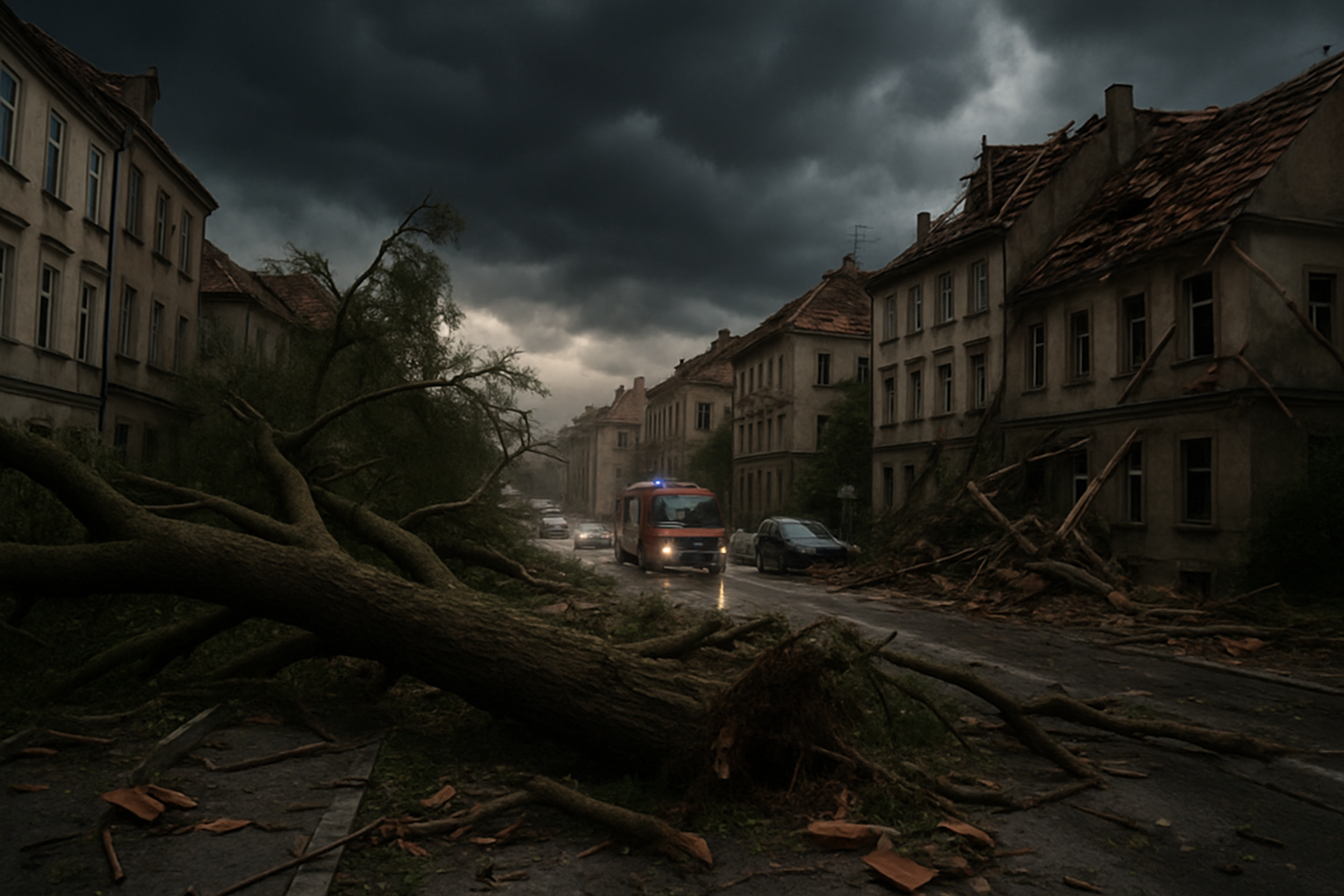
Storm Nils, the fourth major Atlantic weather system to strike Europe in February 2026, has claimed at least one life and plunged 900,000 French households into darkness while causing widespread disruption across Spain and Germany, marking the continuation of the continent's worst winter weather crisis in decades.
The powerful storm system swept across southwestern France during the night of Wednesday to Thursday, prompting Météo-France to issue red alerts for floods in Gironde and Lot-et-Garonne, violent winds in Aude and Pyrénées-Orientales, and avalanche warnings in Savoie. Wind gusts exceeded 100 km/h across western regions, with emergency services receiving over 1,600 calls for fallen trees and debris removal.
France Bears the Brunt of Storm Damage
The storm's impact on France has been particularly severe, with one fatality confirmed in the Landes region as the weather system brought destructive winds and torrential rainfall. The massive power outage affecting 900,000 households represents one of the largest weather-related electrical disruptions in recent French history, straining emergency response capabilities already stretched thin from previous storms.
French emergency services have been inundated with calls as fallen trees blocked major transportation routes and damaged property across multiple departments. The storm's timing, striking during the night hours, complicated rescue efforts and evacuation procedures in the most affected regions.
Spain Faces Transportation Crisis
In Spain, Storm Nils has caused significant disruption to the northeastern region of Catalonia, where winds topping 100 kilometers per hour injured at least 25 people, with one person suffering serious injuries. The severe weather conditions have forced widespread school closures and imposed severe restrictions on air travel throughout the region.
Catalonia's transportation networks have been particularly hard hit, with Rodalies train services suspended on critical routes including the R4 Terrassa-Manresa line and R1 Blanes-Maçanet corridor. The suspension of these key commuter links has stranded thousands of passengers and disrupted the daily routines of workers and students across the region.
Aviation authorities have implemented flight restrictions at major airports, with numerous cancellations and delays affecting both domestic and international travel. The combination of strong crosswinds and poor visibility has made landing conditions dangerous for aircraft, forcing airlines to divert flights to alternative destinations.
Germany Grapples with Extended Winter Crisis
German authorities are closely monitoring Storm Nils as it approaches their borders, with particular concern for regions already battered by an extended winter weather emergency. The storm represents the latest challenge for German emergency services, who have been dealing with prolonged black ice conditions that have repeatedly closed Berlin Brandenburg Airport and paralyzed transportation networks.
The ongoing crisis in Germany has been exacerbated by the Verdi union transport strike, affecting 100,000 workers and compounding the weather-related disruptions. This combination of industrial action and severe weather conditions has created unprecedented challenges for the country's transportation infrastructure.
Historical Context of Europe's Winter Weather Crisis
Storm Nils represents the fourth major Atlantic weather system to strike Europe in February 2026, following the devastating succession of Storms Kristin, Leonardo, and Marta that collectively killed 14 people and required the deployment of over 26,500 rescue personnel in what became Portugal's largest peacetime emergency operation.
"This winter has tested our emergency response capabilities to their limits. The frequency and intensity of these Atlantic storms is unprecedented in recent memory."
— European Civil Protection Official
The current crisis occurs against the backdrop of January 2026 being confirmed as the hottest month in global history, with 18 of the last 19 months exceeding 1.5°C above pre-industrial levels. This apparent paradox demonstrates the complex nature of climate change, where global warming can override natural cooling patterns while simultaneously enabling extreme regional weather events.
Previous Storm Impacts
The recent succession of Atlantic storms has caused unprecedented damage across the Iberian Peninsula and broader European region. Storm Marta alone resulted in 167,000 power outages in Portugal, while Storm Leonardo forced the evacuation of over 8,000 people from Spain's Andalusia region, with some areas recording rainfall exceeding their entire annual average in just 36 hours.
The cumulative impact of these weather systems has exposed critical vulnerabilities in European infrastructure, with railways suspended, major highways closed, and emergency services operating at capacity limits for weeks. The Portuguese A1 highway viaduct collapse near Coimbra, caused by flooding from the Mondego River, exemplifies the scale of infrastructure damage requiring months for repair.
Emergency Response and International Cooperation
The European Union has activated its Civil Protection Mechanism in response to the ongoing crisis, with Sweden and Denmark providing a €246 million assistance package to support affected nations. This unprecedented level of international cooperation highlights the continental scale of the weather emergency and the need for coordinated response efforts.
Emergency services across the affected regions are operating under extreme pressure, with many departments reporting that they are approaching or have reached operational capacity limits. The simultaneous nature of multiple weather emergencies across different countries has stretched international aid resources and demonstrated the need for enhanced climate adaptation strategies.
Infrastructure Vulnerabilities Exposed
The ongoing crisis has revealed significant vulnerabilities in European infrastructure systems that were designed for historical rather than future climate conditions. Transportation networks, power grids, and communication systems have all shown susceptibility to the increased frequency and intensity of extreme weather events.
The repeated closure of major airports due to black ice conditions, the paralysis of railway systems from frozen tracks, and the massive power outages from wind damage all point to the urgent need for infrastructure adaptation to handle the new normal of extreme weather patterns.
Economic Impact
The economic toll of the winter weather crisis is mounting, with billions of euros in damages across agriculture, tourism, and infrastructure sectors. The disruption to transportation networks has affected supply chains, while the tourism industry faces massive cancellations during what should be a crucial booking period for the summer season.
Agricultural sectors have been particularly hard hit, with flooded fields, damaged crops, and livestock operations disrupted across multiple countries. The long-term recovery from these impacts is expected to take months, with some regions facing years of rebuilding efforts.
Climate Change Implications
The current crisis provides a stark illustration of the complex impacts of climate change on regional weather patterns. While global temperatures continue to break records, the disruption of traditional atmospheric circulation patterns has enabled Arctic air masses to penetrate further south while simultaneously allowing more intense Atlantic storm systems to develop.
Climate scientists note that the warming of the Arctic regions has weakened the polar vortex, allowing cold air to escape southward while the warming of ocean temperatures provides more energy for storm development. This combination creates the conditions for both extreme cold and severe storm systems to affect Europe simultaneously.
Looking Ahead: Recovery and Adaptation
As Storm Nils continues its path across Europe, authorities are focusing on immediate emergency response while beginning to plan for long-term recovery efforts. The scale of damage from the succession of storms will require comprehensive rebuilding programs with enhanced climate resilience built into new infrastructure.
The concept of "building back better" has become central to recovery planning, with emphasis on creating infrastructure that can withstand future extreme weather events rather than simply replacing damaged systems with identical structures vulnerable to the same risks.
Recovery timelines vary by region and type of damage, with power restoration expected within days to weeks, transportation network repairs taking weeks to months, and major infrastructure reconstruction projects potentially requiring years for completion. The A1 highway collapse in Portugal, for example, is expected to take several weeks to repair, requiring extensive engineering work to address the underlying flooding risks.
International Response Framework
The European response to the ongoing crisis has demonstrated both the strengths and limitations of international cooperation during multi-national emergencies. While the EU Civil Protection Mechanism has facilitated resource sharing and coordination, the simultaneous nature of crises across multiple countries has strained available resources.
The crisis has highlighted the need for enhanced early warning systems, improved cross-border coordination protocols, and increased investment in climate adaptation infrastructure. The experience gained from managing this unprecedented winter weather emergency will likely influence European emergency management policies for years to come.
As Europe continues to grapple with Storm Nils and begins the long process of recovery from the winter's succession of extreme weather events, the crisis serves as a stark reminder of the urgent need for comprehensive climate adaptation strategies. The frequency and intensity of these weather systems represent a new normal that will require fundamental changes to how European societies prepare for and respond to extreme weather events.