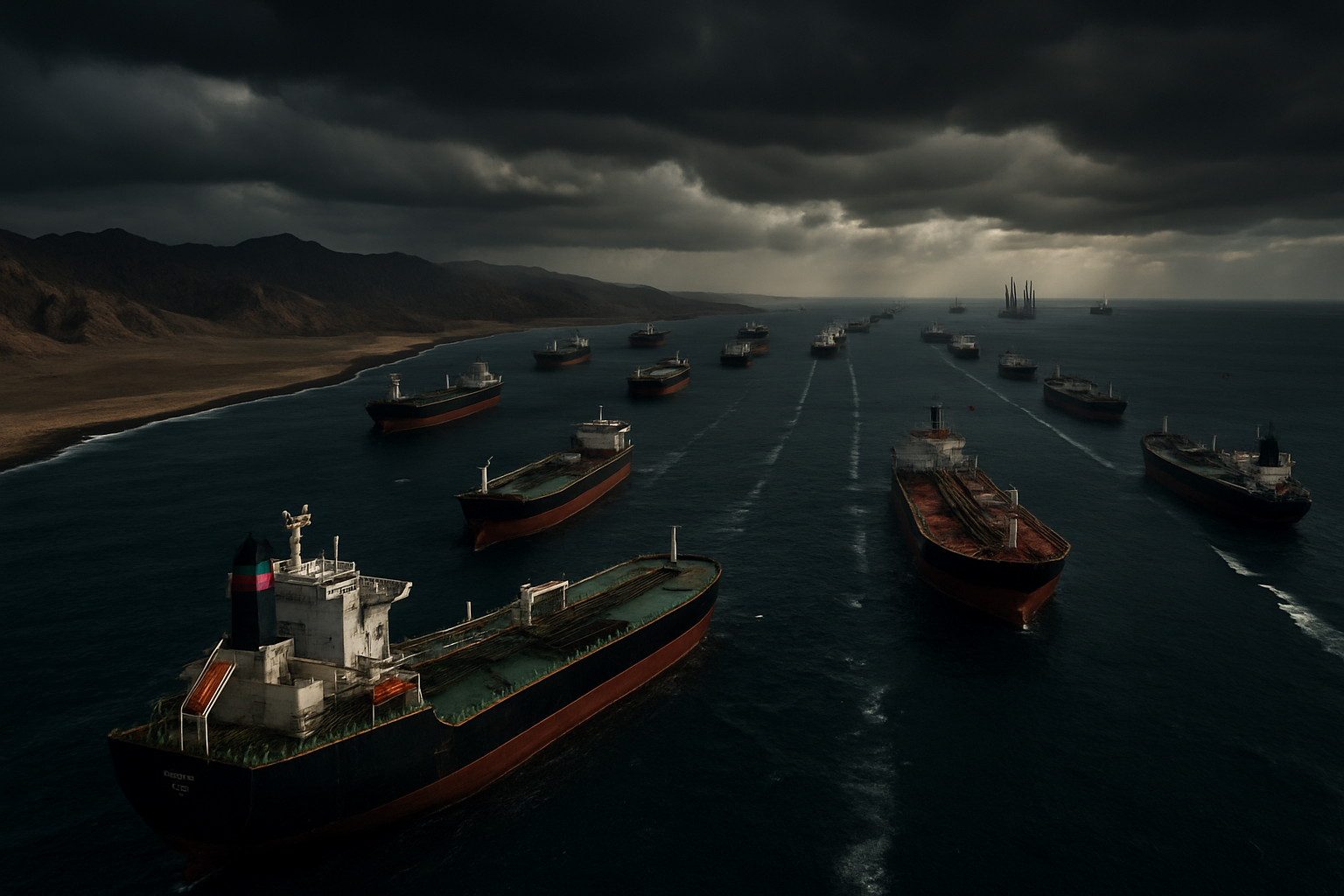
The strategic Strait of Hormuz crisis continues to disrupt global oil supplies despite a fragile ceasefire between the United States and Iran, with President Donald Trump publicly criticizing Iran for doing a "poor job" of allowing oil through the crucial waterway and implementing controversial shipping fees that threaten the stability of international energy markets.
The 21-mile-wide strait, which handles approximately 40% of the world's seaborne oil transit, remains a critical flashpoint in international relations following the dramatic April 8, 2026 ceasefire that ended what many considered the most dangerous global crisis since the Cold War. However, the implementation of the peace agreement has faced significant challenges as Iran maintains strict control over shipping through its territorial waters.
Iran's Controversial Shipping Fee System
Iran has implemented an unprecedented cryptocurrency payment system requiring oil tankers to pay $1 per barrel to transit the strait, while empty vessels are allowed to pass free of charge. The system, confirmed by Hamid Hosseini, chairman of Iran's oil exports union, represents a dramatic shift in maritime commerce and is designed to circumvent international sanctions tracking mechanisms.
President Trump has strongly condemned this arrangement, posting on his Truth Social platform that "Iran is doing a very poor job, dishonorable some would say, of allowing Oil to go through the Strait of Hormuz. That is not the agreement we have!" The president's criticism highlights growing tensions over the ceasefire's implementation and raises questions about the long-term sustainability of the peace framework.
Only a handful of vessels have successfully navigated the strait since the ceasefire took effect, including the Greek-owned NJ Earth and the Liberia-flagged Daytona Beach, which became the first non-Iranian vessels to cross at 08:44 UTC and 06:59 UTC respectively. Many shipping companies remain reluctant to send tankers through the waterway, fearing potential stranding if the fragile ceasefire collapses.
Economic Impact and Market Response
The ongoing uncertainty has kept global oil markets on edge despite the dramatic 20% price crash that followed the April 8 ceasefire announcement. Oil prices had reached historic peaks during the crisis, with Brent crude hitting $119.50 and WTI reaching $108.15 before the diplomatic breakthrough orchestrated by Pakistan's mediation efforts.
"The situation is more complex than initially thought, and financial markets remain the ultimate constraint on any prolonged conflict,"
— Damien Boey, Energy Market Analyst
The International Energy Agency (IEA) has begun reducing its record 400 million barrel strategic petroleum reserve release – the largest in 50-year history – as supply concerns have eased somewhat. However, experts warn that full market recovery will take months, not weeks, due to the complex nature of global supply chains and the persistent threat of renewed conflict.
Qatar has resumed LNG production, which accounts for approximately 20% of global exports, while shipping giants Maersk and MSC are preparing to remobilize over 150 stranded tankers worth billions in cargo. Asian markets have shown explosive rallies, with Pakistan's KSE-100 posting a record 8.15% gain following the ceasefire announcement.
Global Aviation Recovery Underway
The aviation industry is beginning to recover from what became the most severe disruption since COVID-19, with over 18,000 flights cancelled during the height of the crisis. Dubai International Airport, the world's busiest passenger hub handling 86 million travelers annually, is preparing to reopen after being shut down due to missile damage.
Eight Middle Eastern countries had simultaneously closed their airspace during the conflict, creating an "aviation black hole" that severed crucial Europe-Asia corridors. Airlines are now planning to resume Middle East routes, though the recovery timeline remains uncertain given the fragile nature of the current peace agreement.
Pakistan's Historic Mediation Success
The breakthrough ceasefire was achieved through the unprecedented diplomatic efforts of Pakistan Prime Minister Shehbaz Sharif and Field Marshal Asim Munir, who maintained round-the-clock contact with US Vice President JD Vance and Iranian officials through what they termed a "message relay system."
The "Islamabad Accord" framework represents the most direct US-Iran engagement in decades, with Iran's 10-point proposal accepted as a "workable basis for negotiations" by the Trump administration. The framework addresses critical issues including Hormuz protocols, sanctions relief, regional conflicts, and security guarantees.
Formal talks are scheduled in Islamabad with potential participation from VP Vance, Special Envoy Steve Witkoff, and Jared Kushner on the US side, while Iranian President Masoud Pezeshkian has confirmed his participation following what was described as a "warm and cordial" call with PM Sharif.
Regional Coalition Dynamics
The crisis has tested but ultimately preserved the unprecedented consensus among Saudi Arabia, UAE, Qatar, and Egypt supporting diplomatic solutions. Despite Iranian attacks during the conflict that resulted in casualties across the region – including one civilian killed in Abu Dhabi, 32 injured in Kuwait, and 8 wounded in Qatar – the coalition has maintained its backing for the Pakistani mediation efforts.
Egyptian President Abdel Fattah el-Sisi's warnings about "comprehensive chaos" spreading across "sisterly countries" appear to have been heeded, with regional powers choosing diplomatic engagement over military escalation despite the provocations they faced during the conflict.
Nuclear Diplomacy Window
The current crisis emerged from the complete collapse of US-Iran nuclear talks despite achieving what was described as "broad agreement on guiding principles" – the most progress made since the 2018 JCPOA breakdown. The fundamental scope disagreement between Iran's nuclear-only position and US demands for comprehensive agreements covering missiles, proxies, and human rights remained insurmountable.
Iran continues to enrich uranium at 60% purity with over 400 kilograms of weapons-grade material – sufficient for multiple nuclear weapons. The ceasefire creates a critical diplomatic window for addressing these concerns, particularly given that the New START treaty expired in February 2026, leaving the world without US-Russia nuclear constraints for the first time in over 50 years.
Energy Security Transformation
The crisis has exposed catastrophic vulnerabilities in global energy architecture, highlighting the dangerous over-dependence on strategic chokepoints like the Strait of Hormuz. The 21-mile waterway represents a single point of failure for modern logistics with no realistic alternatives for the volume of energy transit it handles.
Strategic petroleum reserves, while providing temporary relief, cannot substitute for fundamental supply diversification and renewable energy transitions. The crisis has accelerated discussions about energy security transformation, though experts note that such transitions require years or decades for full implementation.
Looking Ahead: Critical Two-Week Window
The success or failure of the scheduled Islamabad talks will determine whether this temporary ceasefire can be converted into a lasting peace framework. The stakes extend far beyond bilateral US-Iran relations, affecting territorial sovereignty enforcement, energy security paradigms, and conflict resolution approaches globally.
UN Secretary-General António Guterres has called this "the greatest test of multilateral cooperation in the modern era," noting that the crisis represents a template-setting moment for 21st-century international relations.
"This crisis demonstrates that diplomatic solutions are possible even in the darkest hours when maximum stakes are involved,"
— UN Secretary-General António Guterres
As consumer relief begins to materialize globally – with Bangladesh reviewing fuel rationing for 170 million people and Pakistan reconsidering wartime austerity measures – the world watches closely to see whether innovative middle-power diplomacy can bridge decades-old disagreements between major adversaries.
The current crisis has shown both the fragility of modern global systems and the potential for diplomatic innovation when traditional mechanisms fail. Whether this becomes a watershed moment for peaceful conflict resolution or a temporary respite before renewed confrontation will likely be determined in the coming weeks of negotiations in Islamabad.