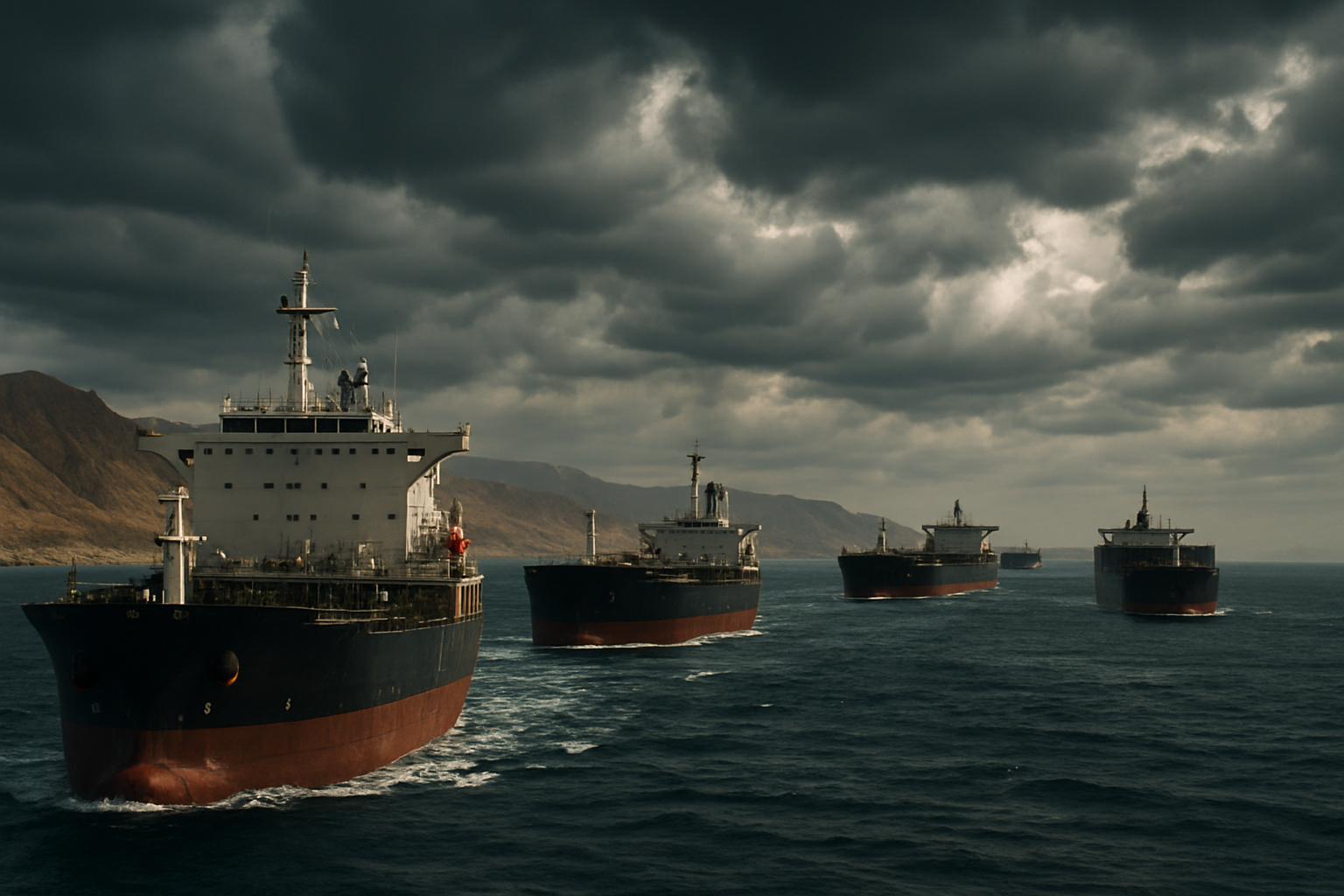
Rising tensions over navigation security in the Strait of Hormuz have triggered the most severe global energy crisis since the 1970s oil shocks, with international markets experiencing unprecedented volatility as the strategic waterway faces continued disruptions affecting 40% of global seaborne oil transit.
The crisis, which began in March 2026, has seen oil prices surge to historic levels, with Brent crude reaching $119.50 and West Texas Intermediate (WTI) hitting $108.15 - marking an 18.98% single-day jump that represents the largest on record. The developments have forced governments worldwide to implement emergency measures not seen since the energy crises of the 1970s.
Critical Waterway Under Pressure
The 21-mile Strait of Hormuz, often described as the world's most important oil chokepoint, has become the epicenter of a geopolitical crisis that threatens global energy security. Iran's Revolutionary Guard has maintained that the strait remains "unsafe for shipping," effectively controlling passage through the narrow waterway that handles approximately 21% of global petroleum liquids transit.
According to recent reports, Iran has implemented what analysts describe as a "toll booth" regime, requiring vessels to coordinate passage with Iranian authorities. This development has effectively transformed one of the world's most critical shipping lanes into a controlled checkpoint, raising serious concerns about freedom of navigation and global energy security.
"We are witnessing the most severe energy security crisis in decades, with single-chokepoint vulnerabilities completely exposed,"
— Samuel Ciszuk, Energy Security Analyst
Global Market Response and Emergency Measures
The International Energy Agency (IEA) has deployed its largest strategic petroleum reserve release in 50-year history, coordinating the release of 400 million barrels from 32 member countries. This represents more than double the 182.7 million barrels released during the 2022 Ukraine crisis, highlighting the unprecedented nature of the current situation.
Japan is leading the international response with the release of 80 million barrels - the first such deployment since the 2011 Fukushima disaster. Given Japan's 95% dependence on Middle Eastern oil, with 70% transiting through the Strait of Hormuz, the country faces particular vulnerability to the current crisis.
European nations have also stepped up emergency responses. Ireland has implemented a €235 million package cutting diesel excise by 20 cents and petrol by 15 cents, while Hungary has imposed immediate price caps to combat what officials term "war-driven explosions" in fuel costs. France has deployed 500 fuel inspectors to prevent price manipulation.
Consumer Impact Worldwide
The crisis has triggered severe consumer impacts across the globe:
- Bangladesh has implemented fuel rationing affecting 170 million people
- Pakistan faces its highest fuel prices in South Asian history at Rs321.17/liter, implementing wartime austerity measures including four-day work weeks
- Sweden reports electricity increases of 10-20 öre and gasoline increases of 1-2 kronor, with Malmö particularly exposed due to continental integration
- Ireland faces heating oil approaching €2/liter in what officials describe as "brazen rip-offs"
- Australia confronts fuel prices past $2.50/liter approaching the $3 threshold
Aviation and Supply Chain Disruption
The crisis has created unprecedented disruption to global aviation, with over 18,000 flights cancelled worldwide - the most extensive disruption since the COVID-19 pandemic. Eight countries have implemented simultaneous airspace closures, creating what industry experts describe as an "aviation black hole" severing crucial Europe-Asia corridors.
Dubai International Airport, the world's busiest with 86 million annual passengers, remains shut due to missile damage. Major airlines including Emirates, Air France-KLM, Wizz Air, and Bulgaria Air have suspended operations indefinitely. Jet fuel costs have surged 122%, jumping from $85-90 to $150-200 per barrel, forcing airlines to implement emergency fare surcharges.
Supply chain impacts extend far beyond energy. Major shipping companies Maersk and MSC have suspended operations in the Persian Gulf, leaving over 150 oil and LNG tankers stranded with billions in cargo value. The Persian Gulf serves as a critical trade hub affecting consumer goods and industrial materials worldwide.
Financial Market Turmoil
Global financial markets have experienced severe volatility, with Pakistan's KSE-100 index recording its largest single-day decline in history at -8.97%. South Korea's KOSPI index fell 12%, triggering circuit breakers as the Korean won hit a 17-year low amid foreign capital flight.
Natural gas prices have exploded 24% in Europe and 78% in the United States, reaching €47.32/MWh - the highest levels since February 2025. Qatar has been forced to halt LNG production at its Ras Laffan and Mesaid facilities, which represent approximately 20% of global exports.
"Gulf states may declare force majeure within weeks if oil approaches $150 per barrel, which could bring down economies of the world,"
— Saad Al Kaabi, Qatar's Energy Minister
International Coalition Response
More than 40 countries have formed an unprecedented international coalition led by British Foreign Secretary Yvette Cooper to address the crisis. The coalition is pursuing what officials describe as "collective mobilization of the full range of diplomatic and economic tools" to restore freedom of navigation.
A significant breakthrough occurred when a French-owned container ship, CMA CGM Kribi, became the first Western European-linked vessel to successfully transit the strait since the crisis began. The vessel stayed close to the Iranian coastline, suggesting possible coordination mechanisms.
Ukraine has offered assistance, with President Zelensky stating that "only joint action by nations can yield results" and offering Ukraine's help in reopening the strategic waterway during Middle East diplomatic visits.
Nuclear Diplomacy Context
The current crisis emerges from the complete breakdown of US-Iran nuclear negotiations, despite previous progress that represented the most significant diplomatic advancement since the 2018 JCPOA collapse. The talks faltered over fundamental scope disagreements, with Iran excluding ballistic missiles and regional proxies as "red lines" while the US demanded comprehensive discussions including missiles, armed groups, and human rights.
The situation has been further complicated by the expiration of the New START Treaty in February 2026, marking the first time in over 50 years without US-Russia nuclear constraints. Iran continues uranium enrichment at 60% levels with over 400kg of weapons-grade material - sufficient for multiple nuclear weapons.
Humanitarian and Maritime Crisis
The International Maritime Organization has reported that over 20,000 seafarers remain stranded on 3,200 vessels in what represents the most severe maritime humanitarian crisis in decades. The IMO is working to establish "safe corridors" for merchant vessel evacuation while calling for adherence to fundamental sailor rights in war zones.
International evacuations have reached the largest scale since the Arab Spring of 2011, with Australia reporting 115,000 people trapped and Germany evacuating 30,000 tourists. The European Union activated its ESTIA evacuation mechanism for Cyprus for the first time in the bloc's history.
Energy Architecture Implications
Energy experts warn that the crisis has exposed dangerous vulnerabilities in global energy architecture. The 21-mile Strait of Hormuz represents a single-point failure in modern logistics with no realistic alternatives. Alternative routes through the Arabian Peninsula lack adequate capacity and involve significant time and cost penalties.
The crisis highlights the urgent need for fundamental transformation in energy security planning, requiring supply diversification and accelerated transitions to renewable alternatives. While strategic petroleum reserves provide temporary buffers, sustained disruptions require years or decades of infrastructure development.
"This represents the greatest test of multilateral cooperation in crisis management of the modern era, with nuclear risks at their highest levels in decades,"
— UN Secretary-General António Guterres
Looking Forward: Recovery and Reform
The recovery timeline remains uncertain, depending on military and diplomatic developments rather than predictable economic factors. Unlike weather-related disruptions, the current crisis requires resolution of underlying geopolitical tensions before normal operations can resume.
The situation represents what experts describe as a "template-setting" moment for 21st-century conflict resolution. Success in containing the crisis could provide a framework for nuclear crisis resolution and strengthen diplomatic precedents. However, failure could accelerate military solutions, reshape Middle Eastern geopolitics for decades, encourage nuclear proliferation globally, and undermine diplomatic credibility worldwide.
As international coalitions work to address immediate shipping needs, the broader implications for global energy security, nuclear governance, and international law enforcement continue to unfold. The crisis serves as a stark reminder of the vulnerabilities inherent in the current international system and the urgent need for comprehensive reforms to reduce dependence on strategic chokepoints.
Economic Recovery Prospects
Financial markets have demonstrated that they serve as the "ultimate constraint" on prolonged conflict, with traditional monetary policy showing limited effectiveness against structural geopolitical disruptions. Central banks from the European Central Bank to the Bank of Japan are coordinating emergency liquidity measures to prevent contagion.
The crisis has forced multiple nations to abandon free-market principles in favor of direct consumer protection measures. From fuel rationing to price caps, governments are implementing interventions not seen since the 1970s energy crises, highlighting the extraordinary nature of the current situation.
As the situation continues to develop, the international community faces critical decisions balancing immediate supply needs against long-term energy security architecture. The choices made in the coming weeks and months will likely reshape global energy markets and international relations for generations to come.