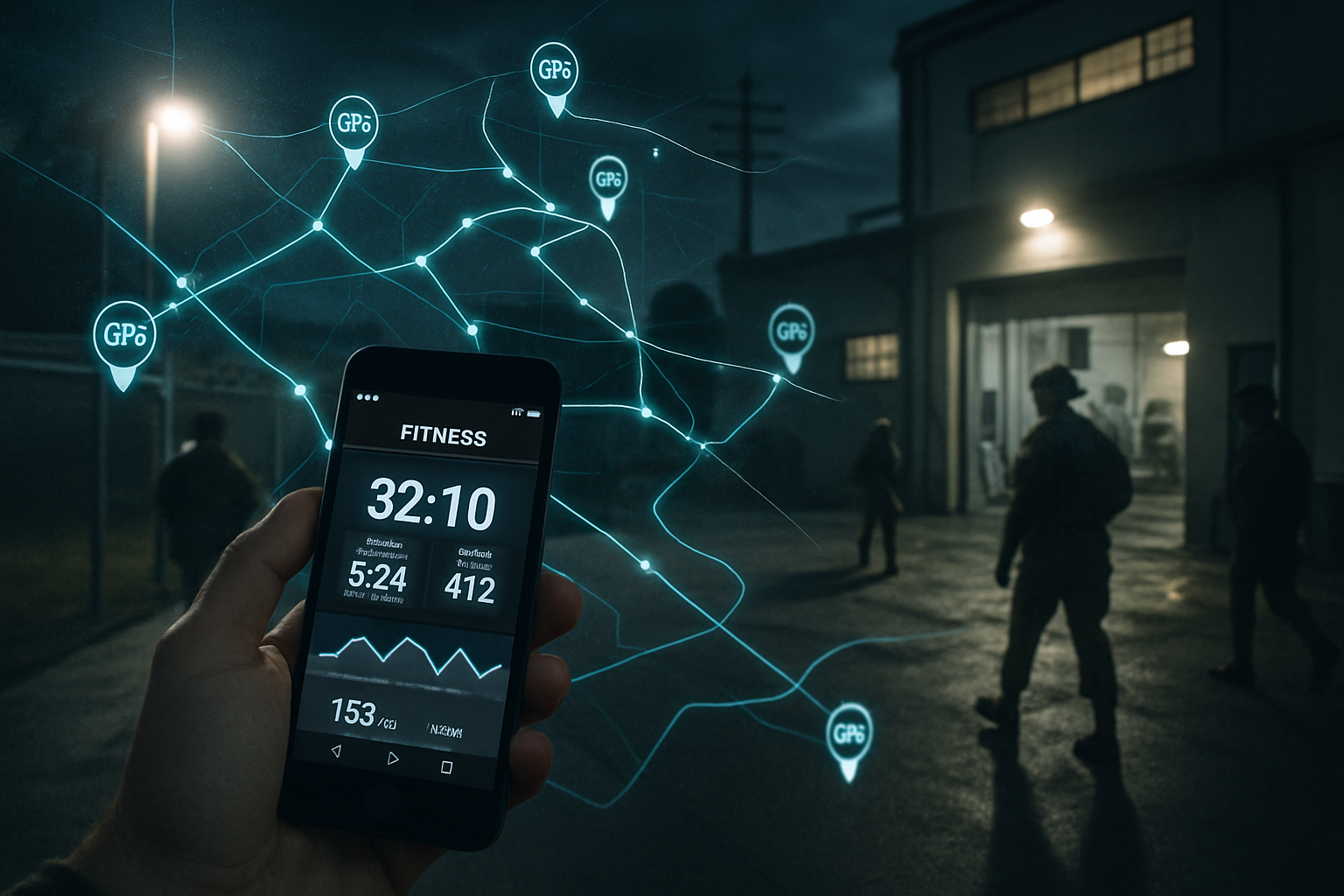
French military operations face unprecedented security vulnerabilities after Le Monde revealed that Strava fitness tracking data enabled systematic surveillance of 18,000 military personnel across sensitive zones for over two years, exposing critical weaknesses in digital privacy protection during an era of escalating cyber threats.
The investigation, published March 29, 2026, demonstrates how commercially available fitness tracking applications can compromise national security through inadvertent location disclosure. French military personnel using Strava unwittingly broadcast their movements across classified installations, operational zones, and deployment areas, creating detailed intelligence profiles accessible to hostile actors.
The Scale of Digital Exposure
Le Monde's comprehensive analysis tracked approximately 18,000 French military personnel through Strava's publicly available data, monitoring daily movements within highly sensitive security zones. The investigation revealed systematic patterns of personnel deployment, base operations, and mission timing that could enable foreign intelligence services to predict military activities.
"Their movements can be observed in sensitive zones, threatening both operations and those who participate in them," the investigation concluded, highlighting how individual fitness tracking choices create collective security vulnerabilities affecting entire military units and strategic installations.
The breach extends beyond simple location tracking, revealing operational rhythms, personnel numbers, facility layouts, and deployment patterns that sophisticated adversaries could exploit for strategic intelligence gathering or targeted operations against French military assets.
Global Digital Privacy Crisis Context
This military surveillance revelation emerges within a broader global digital privacy crisis affecting millions of citizens worldwide. The Netherlands recently suffered a telecommunications breach affecting 6.2 million customers—nearly one-third of the population—described by cybersecurity experts as a "gold mine for criminals" due to exposed location data, communication patterns, and personal identification.
Jordan's National Cybersecurity Center reported a 20.6% surge in cyber incidents during Q4 2025, with 1,012 attacks including 1.8% classified as serious threats to national infrastructure. Criminal organizations increasingly exploit artificial intelligence capabilities, instructing chatbots as "elite hackers" for automated vulnerability detection and systematic data theft.
Cyprus Data Protection Commissioner Maria Christofidou warns that "personal data has become the currency of the digital age," as democratic institutions struggle to regulate digital infrastructure while preserving beneficial connectivity essential to modern society.
"The convergence of fitness tracking with military surveillance represents a perfect storm of digital vulnerability, where personal health choices become national security threats."
— Dr. Sarah Chen, Cybersecurity Institute
Infrastructure Vulnerabilities and Criminal Exploitation
The military surveillance crisis occurs during a "critical vulnerability window" created by global semiconductor shortages. Memory chip prices have increased sixfold, affecting Samsung, SK Hynix, and Micron production until new facilities come online in 2027. This shortage constrains deployment of advanced security systems precisely when threats are escalating.
Criminal networks exploit these resource limitations while operating with state-level technological capabilities. Recent international law enforcement operations, including the LeakBase takedown involving Dutch police, Europol, FBI, and 13 countries, demonstrate successful cooperation against sophisticated criminal infrastructure, yet traditional enforcement remains inadequate against digitally native organizations capable of instant relocation across jurisdictions.
The Estonian-Ukrainian collaboration against international scamming operations, maintained despite wartime conditions, illustrates both the potential and complexity of international cybersecurity cooperation in addressing threats that transcend national boundaries.
Regulatory Revolution and Democratic Governance
European nations are implementing unprecedented regulatory frameworks to address digital privacy violations. Spain leads with criminal executive liability measures creating personal imprisonment risks for technology executives whose platforms enable systematic privacy breaches, while maintaining democratic oversight principles.
Alternative governance approaches are emerging globally. Malaysia emphasizes parental responsibility through digital safety campaigns, with officials stating that "parents must control device access versus relying on digital babysitters." Oman implements "Smart tech, safe choices" education initiatives focusing on conscious digital awareness rather than regulatory enforcement.
This philosophical divide between government intervention and individual agency represents a fundamental challenge in democratic technology governance, particularly when individual choices—like military personnel using fitness apps—create collective security vulnerabilities affecting national defense capabilities.
Economic and Social Implications
The "SaaSpocalypse" of February 2026 eliminated hundreds of billions in technology market capitalization amid regulatory uncertainty and cybersecurity concerns. Consumer trust erosion affects platform adoption, with companies like Coupang experiencing 3.2% user decline following data breaches.
Government-backed digital solutions demonstrate superior stability compared to private platforms vulnerable to privacy rollbacks under regulatory pressure. Slovakia's €1.3 billion digital euro pilot and Zimbabwe's Ndarama platform showcase how democratic institutions can provide secure alternatives to compromised commercial systems.
The economic stakes extend beyond individual privacy to democratic society preservation, as systematic privacy erosion undermines public confidence in digital infrastructure essential for modern governance, commerce, and social coordination.
Protection Strategies and Future Implications
Military organizations worldwide must implement comprehensive digital security protocols addressing both individual device usage and institutional policy frameworks. This includes mandatory privacy settings audits, encrypted communication alternatives, network segmentation, and regular security training addressing evolving threat landscapes.
The intersection of consumer technology with national security requires sophisticated approaches balancing personal freedom with collective security needs. Success demands technological innovation combined with legal frameworks, international cooperation, and public education that protects democratic values while enhancing security capabilities.
Democratic institutions face a critical test in March 2026: whether they can regulate multinational technology platforms while preserving digital connectivity benefits essential to modern life. The resolution establishes precedents for 21st-century technology governance affecting billions globally.
The Stakes for Democratic Society
The Strava military surveillance crisis symbolizes fundamental challenges in protecting citizens while preserving digital rights during an era of unprecedented technological change and criminal sophistication. The window for effective coordinated action is narrowing as criminal capabilities advance faster than defensive measures.
Success requires unprecedented international cooperation addressing systematic vulnerabilities in interconnected digital infrastructure. This includes enhanced legal frameworks with privacy protections, platform accountability measures, transparent governance with democratic oversight, and public education balancing security with privacy protection.
The stakes include whether digital technologies serve human flourishing and democratic accountability, or become surveillance and control tools beyond democratic oversight. March 2026 represents a critical inflection point determining technology governance frameworks for decades, affecting the fundamental relationship between democracy, individual agency, and human rights in an increasingly digital age where physical and virtual realities intersect in complex and consequential ways.