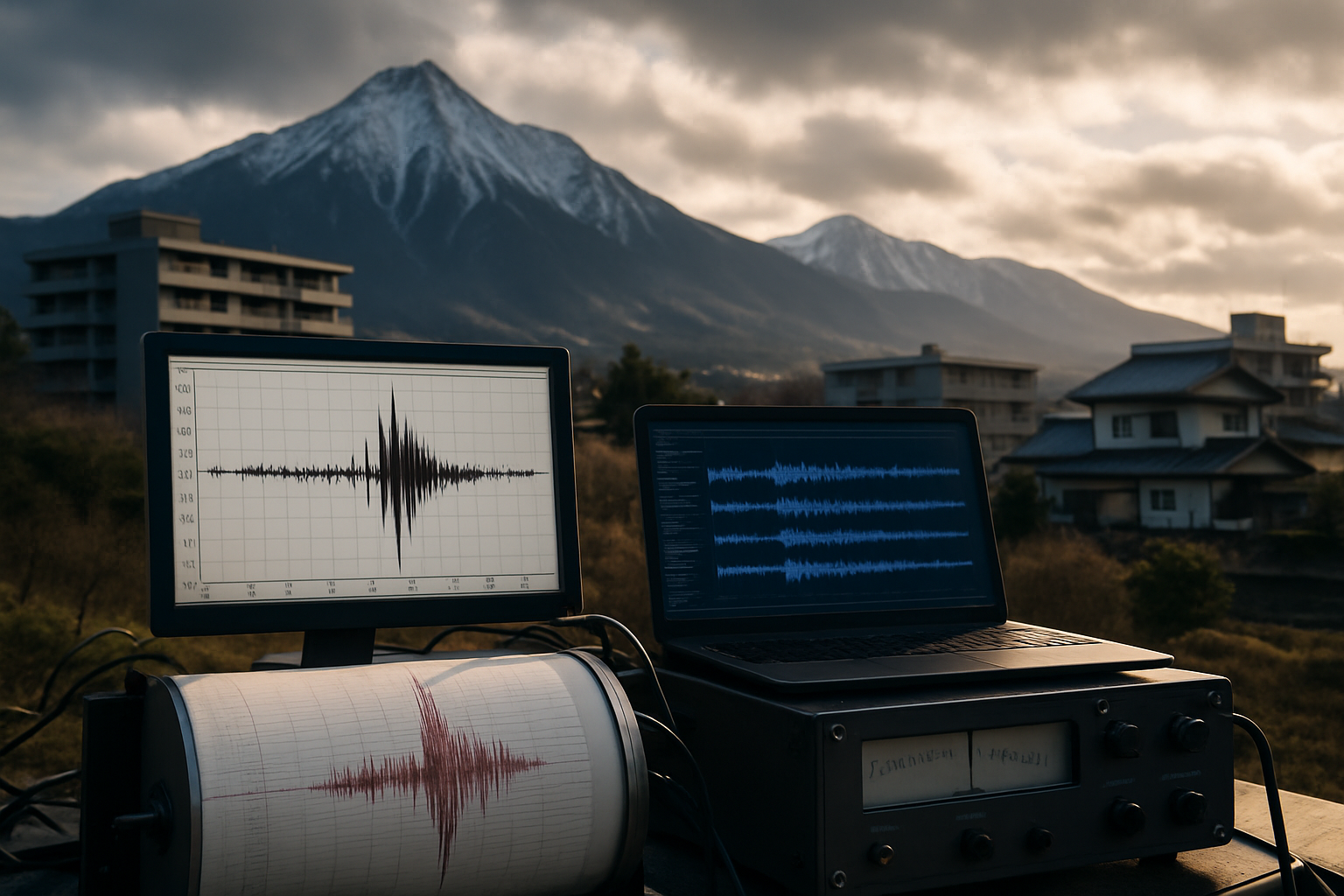
A magnitude 6.2 earthquake struck Hokkaido in northern Japan early Monday morning at 5:23 a.m. local time, marking the latest significant seismic event during the country's elevated mega-quake warning period that began following a magnitude 7.7 earthquake last week.
According to the Japan Meteorological Agency (JMA), the earthquake occurred at a depth of approximately 83 kilometers in southern Hokkaido, with its epicenter located roughly 200 kilometers east of Sapporo, the prefecture's main city. Initial reports from the agency indicated a magnitude of 6.1, which was later revised upward to 6.2.
No tsunami warning was issued for the event, and early assessments from authorities indicate minimal immediate damage given the earthquake's location in a sparsely populated area. However, the timing of this tremor is particularly significant as it occurs during Japan's first-ever mega-quake advisory period, implemented following the April 20 magnitude 7.7 earthquake off the northeastern coast.
Elevated Risk Period Continues
The latest earthquake comes as Japan remains under an unprecedented mega-quake warning affecting 182 municipalities across seven prefectures, including Hokkaido, Aomori, Iwate, Miyagi, Fukushima, Ibaraki, and Chiba. This advisory, issued by the Japan Meteorological Agency, warns of a "relatively higher probability" of another major earthquake occurring, specifically a magnitude 8.0 or larger event.
The elevated risk period, set to continue until April 27 at 5:00 PM, represents a historic first for Japan's earthquake early warning system. The advisory was triggered by the April 20 earthquake, which struck the same region devastated by the 2011 Great East Japan Earthquake that killed over 15,000 people and triggered the Fukushima nuclear crisis.
"The probability of another major earthquake occurring is relatively higher than in normal times," stated the Japan Meteorological Agency in its unprecedented warning.
— Japan Meteorological Agency
Prime Minister Sanae Takaichi has maintained an emergency task force throughout this period, demonstrating the government's heightened preparedness stance. Citizens across affected regions have been urged to maintain emergency supplies, secure furniture, and confirm evacuation routes.
Regional Impact and Response
The Monday morning earthquake was felt across multiple regions of northern Japan, with tremors reported in various cities throughout Hokkaido and surrounding areas. While no major casualties or infrastructure damage have been reported, the event serves as a stark reminder of the ongoing seismic threat facing the region.
Emergency services across Hokkaido activated standard response protocols, conducting rapid assessments of critical infrastructure including bridges, tunnels, and public buildings. The region's enhanced monitoring systems, significantly upgraded since the 2011 disaster, enabled rapid detection and immediate threat assessment.
International monitoring stations across the Pacific also detected the event, with the US Geological Survey confirming the earthquake's magnitude and depth. The cross-border detection capabilities demonstrate the sophisticated international cooperation networks established for seismic monitoring in the Pacific Ring of Fire.
Historical Context and Preparedness
Japan experiences approximately 30-50 earthquakes annually, but the current period represents an extraordinary convergence of seismic activity in the region most vulnerable to mega-earthquakes. The April 20 earthquake that triggered the current warning period occurred in the same Pacific Ocean waters off the Sanriku coast that generated the devastating 2011 tsunami.
Since 2011, Japan has invested billions in earthquake preparedness infrastructure, including advanced early warning systems, enhanced building codes, and comprehensive emergency response protocols. The rapid detection and assessment of Monday's earthquake validates these investments in protecting public safety.
The affected region sits at the intersection of the Pacific Plate and the North American Plate, making it one of the most seismically active areas on Earth. This geological positioning has historically generated some of the most powerful earthquakes in recorded history, necessitating Japan's world-leading disaster preparedness systems.
Ongoing Monitoring and International Cooperation
Seismologists continue intensive monitoring of aftershock activity and potential seismic patterns that could indicate additional large earthquakes. The enhanced surveillance includes both domestic Japanese monitoring stations and international Pacific tsunami warning networks activated following major Pacific events.
Australia has confirmed monitoring of its 115,000 nationals in Japan, while Pacific nations have activated regional warning networks as part of enhanced post-2004 tsunami cooperation frameworks. This international response demonstrates the sophisticated global systems now in place for rapid earthquake and tsunami threat assessment.
Tourism operators throughout the region, including Hong Kong's EGL Tours with 40 tour groups currently in Japan, have activated emergency protocols while maintaining normal operations under enhanced safety measures. The tourism industry's response reflects lessons learned from previous major earthquake events.
Scientific Significance
The current sequence of earthquakes provides crucial data for understanding seismic patterns in one of the world's most geologically active regions. The April 20 mega-earthquake, followed by Monday's magnitude 6.2 event, offers scientists unprecedented real-time data about earthquake clustering and aftershock evolution.
Modern seismic networks enable detection within seconds and coordinated government response, representing significant advancement in earthquake early warning technology since the 2011 disaster. The automatic alert systems, comprehensive building assessments, and emergency coordination protocols demonstrate Japan's evolution into a global leader in earthquake preparedness.
The Pacific Ring of Fire location where these earthquakes occur represents the intersection of major tectonic plates, creating the geological conditions that generate both frequent moderate earthquakes and occasional mega-earthquakes. Understanding this activity is crucial for long-term regional safety and disaster preparedness planning.
Looking Ahead
As Japan continues through this elevated risk period until April 27, authorities maintain heightened vigilance while balancing public safety with normal daily activities. The mega-quake warning system represents a careful balance between providing essential safety information and avoiding unnecessary panic.
The current events occur during a period of heightened global geological activity throughout the Pacific Ring of Fire, with significant seismic events recorded in multiple countries throughout 2026. This pattern emphasizes the continued importance of international cooperation in earthquake monitoring and emergency response.
Community preparedness initiatives activated during this period serve as valuable exercises for Japan's comprehensive disaster response capabilities. The combination of advanced technology, international cooperation, and community preparedness represents a sophisticated approach to managing seismic risk in one of the world's most earthquake-prone regions.
Scientists emphasize that while the current advisory indicates elevated risk, Japan's enhanced preparedness systems provide robust protection for residents and visitors. The successful management of this mega-quake warning period will likely influence international approaches to earthquake risk communication and emergency preparedness protocols.