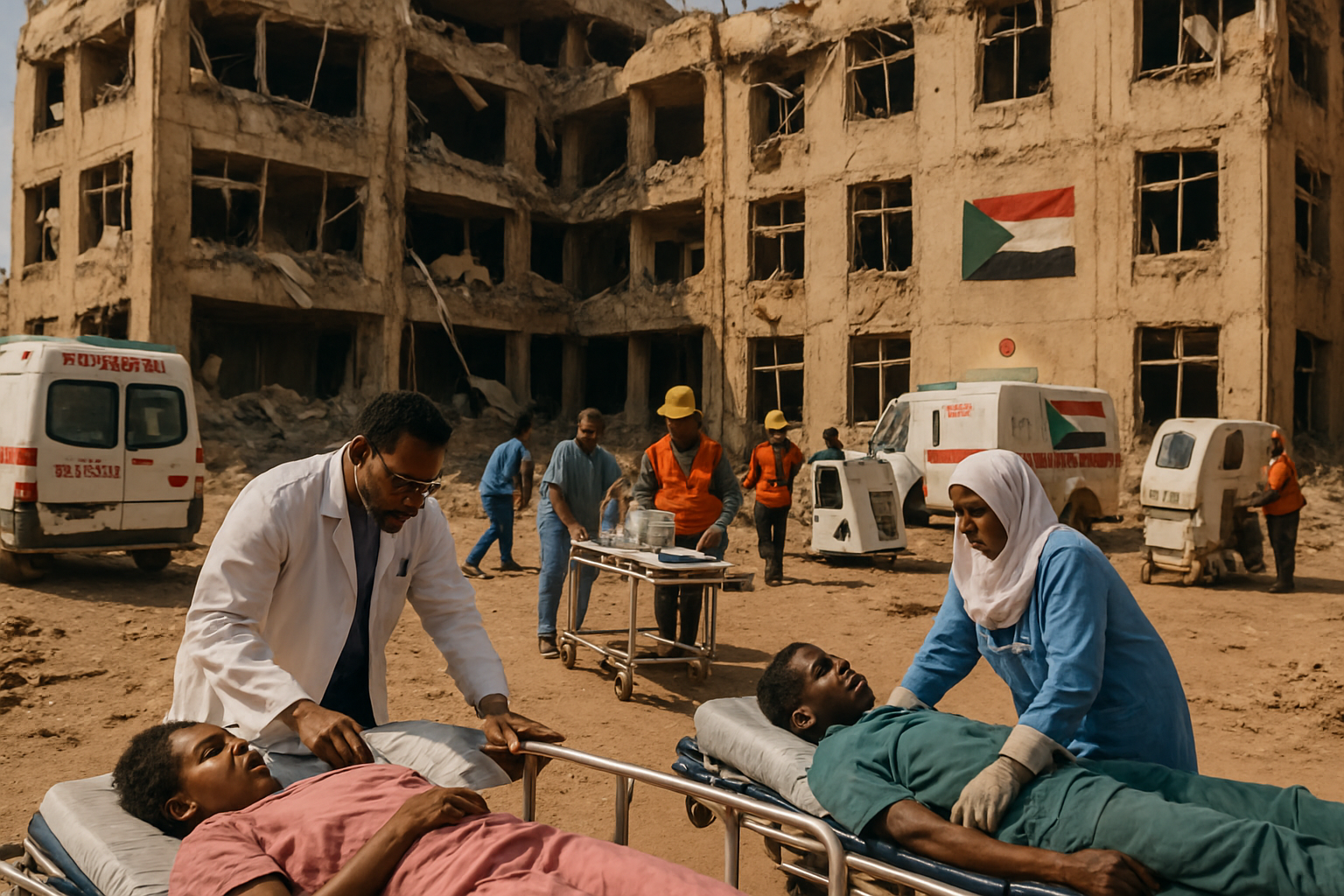
At least 64 people were killed, including 13 children, in a deadly strike on Al Deain Teaching Hospital in East Darfur, Sudan, the World Health Organization confirmed on Saturday, marking another devastating attack on civilian healthcare infrastructure in the country's brutal civil war.
WHO Director-General Tedros Adhanom Ghebreyesus confirmed the attack on the teaching hospital in Al Deain, the capital of East Darfur state, which also wounded 89 others. Among the dead were 13 children, two nurses, one doctor, and a number of patients, representing the continued systematic targeting of civilian healthcare infrastructure during Sudan's 20-month conflict.
Attack Details and Casualties
The strike on Al Deain Teaching Hospital has rendered the medical facility "non-functional" according to WHO, following a disturbing pattern of deliberate healthcare infrastructure destruction across Sudan. The UN humanitarian office expressed being "appalled" by the strike on a hospital that killed "dozens, including children."
The attack occurred in East Darfur, one of the regions most severely affected by the ongoing conflict between the Sudanese Armed Forces (SAF) and the Rapid Support Forces (RSF). The hospital served as a critical healthcare lifeline for the region's civilian population, making its targeting particularly devastating for the local community.
"We have verified another attack on health care facilities in Sudan. This time, Al Deain Teaching Hospital in the capital of East Darfur was targeted, resulting in the deaths of at least 64 people, including 13 children, two nurses, one doctor, and several patients."
— Dr. Tedros Adhanom Ghebreyesus, WHO Director-General
Pattern of Healthcare System Destruction
This latest incident continues a systematic pattern established since Sudan's civil war began in April 2023. In February 2026, an RSF attack on a military hospital killed 22 people, including the hospital director and medical staff. The systematic healthcare targeting violates the Geneva Conventions and constitutes war crimes under international law.
The healthcare system collapse has reached critical levels, with WHO providing emergency medical oxygen to only 23 hospitals nationwide while hundreds of health centers have been forced to close. The targeting of medical facilities has left millions of Sudanese without access to basic healthcare during a humanitarian crisis affecting 17.8 million people requiring urgent assistance.
Emergency Lawyers, a Sudanese rights group documenting war crimes, continues tracking systematic violations of international humanitarian law. The group has documented numerous attacks on hospitals, schools, and other civilian infrastructure throughout the conflict.
Broader Humanitarian Crisis
The hospital attack occurs within the broader context of Sudan's catastrophic humanitarian crisis. Famine conditions have been declared in multiple North Darfur areas, including Um Baru, which shows a catastrophic 53% acute malnutrition rate in children under 5 - nearly double the 30% famine threshold.
The conflict stems from the April 2023 power struggle between SAF General Abdel Fattah al-Burhan and RSF leader General Mohamed Hamdan Dagalo (known as Hemedti). The RSF emerged from the Janjaweed militias responsible for the Darfur genocide two decades ago, creating historical continuity in systematic atrocities against civilian populations.
Regional Implications and Response
The crisis has created massive displacement both within Sudan and across regional borders. Millions have fled to neighboring Chad and South Sudan, creating a regional refugee emergency that strains resources across the Horn of Africa. The disruption of agricultural production and trade routes affects food security throughout the region.
The international response has been limited by access restrictions, funding shortfalls, and competing global emergencies in Ukraine and Gaza. The African Union suspended Sudan's membership, creating diplomatic isolation that complicates efforts to find a peaceful resolution to the conflict.
War Crimes and International Law
The systematic targeting of healthcare facilities represents clear violations of international humanitarian law. Medical facilities, personnel, and vehicles are protected under the Geneva Conventions, and their deliberate targeting constitutes potential war crimes that require international investigation and accountability.
UN experts have previously determined that RSF actions show "hallmarks of genocide" against non-Arab communities, particularly following the October 2024 El Fasher offensive that killed over 6,000 people in three days. The UN Security Council has imposed sanctions on RSF commanders, but violence continues to escalate.
Challenges to Accountability
Despite mounting evidence of systematic violations, accountability mechanisms remain limited. The international community faces challenges in documenting crimes and pursuing justice while the conflict continues. Access restrictions prevent independent investigations, and the focus remains on stopping immediate violence rather than pursuing longer-term justice.
International Community Response
The limited international response reflects broader challenges in addressing complex humanitarian crises amid multiple global emergencies. Funding shortfalls have forced aid organizations to reduce operations precisely when needs are greatest. The crisis represents a critical test of the Responsibility to Protect principle and international humanitarian law enforcement.
Regional implications extend beyond Sudan's borders, affecting stability mechanisms across the Horn of Africa. The success or failure of international efforts to address this crisis will influence approaches to similar conflicts and set precedents for humanitarian intervention in the 21st century.
Path Forward
The hospital attack underscores the urgent need for sustained international attention and coordinated response mechanisms. Medical facilities must be protected, and those responsible for targeting civilian infrastructure must be held accountable under international law.
The crisis requires immediate humanitarian assistance for the millions facing starvation and longer-term efforts to address the root causes of conflict. Documentation of violations provides evidence for future accountability mechanisms, but the immediate priority remains stopping the violence and providing life-saving assistance to Sudan's suffering population.
As Sudan transforms from what was once northeast Africa's breadbasket into a humanitarian catastrophe zone, the international community faces a defining moment in demonstrating its commitment to protecting civilians and upholding the fundamental principles of international humanitarian law.