Sudan's devastating humanitarian crisis has reached new depths as three aid workers were killed and four wounded in a drone attack by the Rapid Support Forces (RSF) in Kordofan state, coinciding with a damning UN report that found "hallmarks of genocide" in the paramilitary group's actions in Al-Fasher.
The deadly February 20 attack on humanitarian personnel underscores the extreme dangers facing those attempting to deliver life-saving assistance in what the United Nations describes as the world's worst humanitarian crisis. The strike occurred as a UN fact-finding mission concluded that RSF forces had acted "with genocidal intent" during their seizure of Al-Fasher, the capital of North Darfur state.
Systematic Targeting of Civilians and Aid Workers
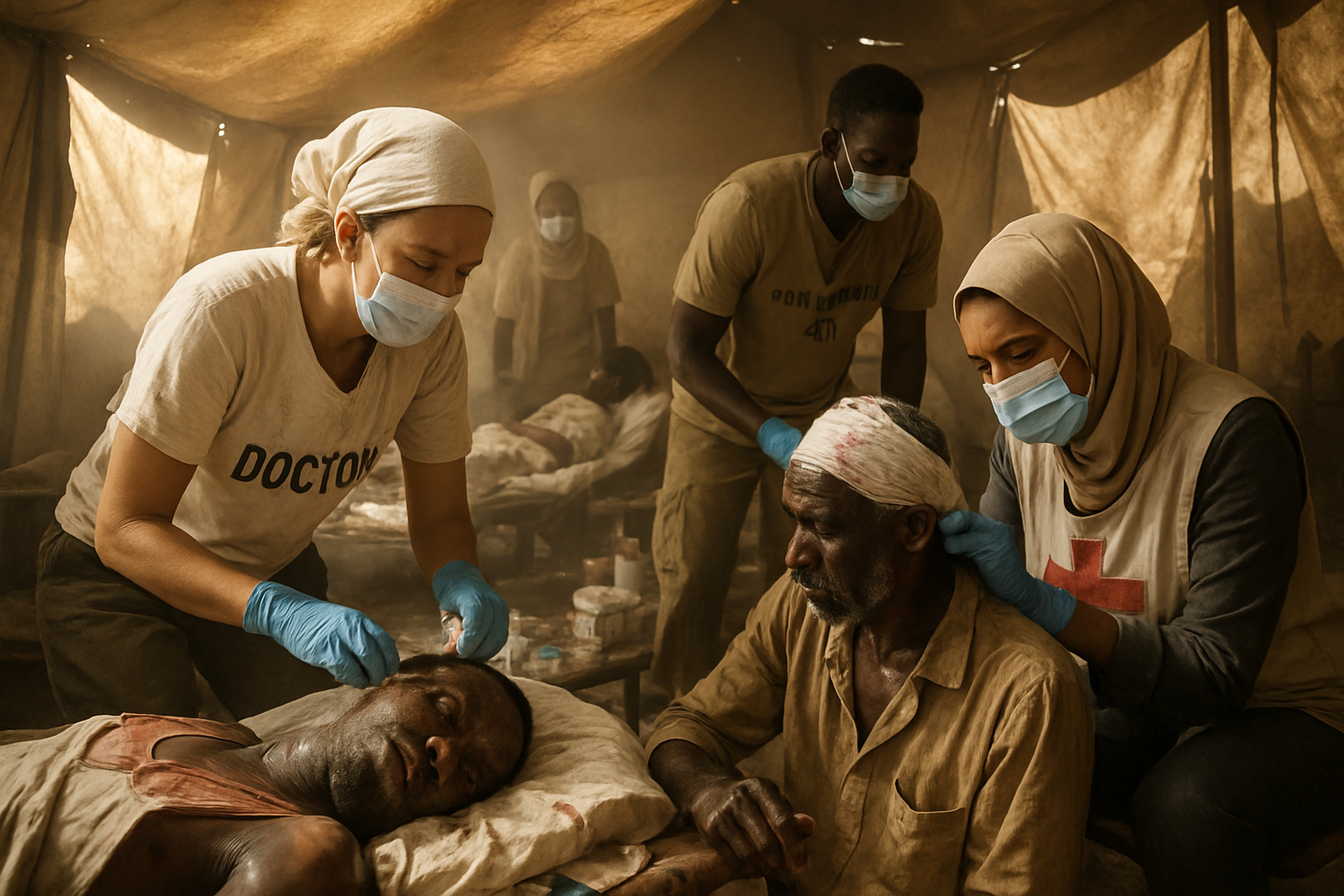
The humanitarian organization Médecins Sans Frontières (MSF) reported treating 167 patients in just two weeks who suffered severe injuries from drone attacks across Sudan. These victims presented with penetrating injuries to the chest and abdomen, multiple bone fractures, head injuries, and shrapnel wounds – testimony to the devastating impact of modern warfare on civilian populations.
The pattern of attacks has expanded beyond traditional combat zones, with both the Sudanese Armed Forces (SAF) and RSF conducting drone strikes on civilian areas and critical infrastructure. Schools, markets, healthcare facilities, and water sources have all become targets in this brutal conflict that began in April 2023.
"Drone attacks carried out by the Sudanese Armed Forces and Rapid Support Forces are hitting civilian areas and critical infrastructure, placing civilians and humanitarian workers at grave risk."
— Médecins Sans Frontières statement
On February 15, an MSF team in Adré, eastern Chad, received 18 civilians – including four women and three children – who were injured in SAF drone strikes on a fuel market just across the border in Adikong, West Darfur state. This cross-border impact demonstrates how Sudan's internal conflict is creating regional humanitarian emergencies.
UN Documents "Genocidal Intent" in Al-Fasher
The UN fact-finding mission's determination that RSF actions bear "hallmarks of genocide" represents a watershed moment in documenting the systematic nature of violence against non-Arab communities in Darfur. The October 2024 assault on Al-Fasher resulted in over 6,000 documented deaths during a three-day offensive that UN experts described as a "wave of violence shocking in scale and brutality."
Al-Fasher's strategic importance cannot be overstated – it was the last major Darfur stronghold under SAF control. Its capture would give the RSF complete control over the Darfur region, representing one-third of Sudan's territory. The systematic targeting of ethnic communities based on identity has met the legal threshold for genocide determination under international law.
The RSF emerged from the Janjaweed militias that were responsible for the original Darfur genocide two decades ago, creating a disturbing historical continuity. The current conflict stems from an April 2023 power struggle between SAF General Abdel Fattah al-Burhan and RSF leader General Mohamed Hamdan Dagalo, known as Hemedti.
Catastrophic Humanitarian Emergency
The scale of Sudan's humanitarian catastrophe is staggering. According to UN assessments, 17.8 million people now require assistance, with millions internally displaced and hundreds of thousands more fleeing to neighboring countries, creating a regional refugee crisis affecting Chad and South Sudan.
Famine has been declared in North Darfur areas, including Um Baru, where 53 percent of children under five suffer from acute malnutrition – nearly double the 30 percent threshold that defines famine conditions. The healthcare system has been systematically targeted and destroyed, leaving single surgeons to serve massive populations in some areas.

Agricultural systems have collapsed, transportation infrastructure has been destroyed, and the systematic destruction of civilian institutions appears designed to break the population's morale and institutional capacity. This represents what experts describe as a deliberate strategy of destroying the state's ability to function.
International Response Hampered
The international community's response has been severely limited by access restrictions, funding shortfalls, and competing global emergencies including the conflicts in Ukraine and Gaza. Sudan's diplomatic isolation continues, with the African Union having suspended its membership, further complicating efforts to address the crisis through regional mechanisms.
The AU's acknowledgment of limited effectiveness in addressing "genocide, insurgencies, and coups" across the continent reflects the broader challenges facing African institutions in responding to systematic violations of international humanitarian law. Recent AU summits have struggled to produce concrete action beyond symbolic commitments.
The genocide determination by UN experts creates legal and moral obligations for the international community that have not yet been fulfilled. The Responsibility to Protect principle, designed to prevent atrocities like those occurring in Sudan, faces a critical test as the international community watches systematic violations unfold.
Regional and Global Implications
Sudan's crisis has far-reaching implications for regional stability in the Horn of Africa. Trade routes have been disrupted, food security has been compromised, and the refugee crisis is placing enormous strain on neighboring countries that are themselves facing economic and political challenges.
The documentation of genocide and systematic war crimes provides crucial evidence for future accountability mechanisms through national, regional, or international courts. However, the immediate priority remains stopping the violence and providing humanitarian assistance to millions of people facing starvation and death.
Urgent Need for Coordinated Action
MSF's call for the immediate protection of civilians and health workers reflects the urgent need for the international community to move beyond statements of concern to concrete action. The systematic targeting of aid workers not only violates international humanitarian law but also prevents the delivery of life-saving assistance to those most in need.
The current situation represents one of the world's most urgent humanitarian emergencies, requiring sustained international attention and coordinated response mechanisms. The window for effective intervention is rapidly narrowing as the humanitarian catastrophe deepens and the conflict's regional implications expand.
"The pattern of attacks is placing civilians and humanitarian workers at grave risk, and we call for the immediate protection of civilians and health workers."
— Médecins Sans Frontières
As the international community grapples with multiple global crises, Sudan's descent into what UN experts now classify as genocide cannot be allowed to continue without decisive intervention. The deaths of aid workers, the systematic targeting of civilians, and the documented genocidal intent demand immediate action to prevent further atrocities and begin the long process of rebuilding a shattered nation.
The choice facing the international community is stark: act now to prevent further genocide and humanitarian catastrophe, or watch as one of Africa's largest countries descends deeper into violence that threatens to destabilize the entire region for generations to come.