The United Nations has documented one of the deadliest single attacks in Sudan's ongoing civil war, revealing that more than 6,000 people were killed during a three-day assault by paramilitary Rapid Support Forces (RSF) on the city of el-Fasher in October 2024.
The horrific scale of violence was detailed in a new report from the UN High Commissioner for Human Rights, which described the RSF offensive as unleashing "a wave of violence... shocking in its scale and brutality" across North Darfur province. The attack on el-Fasher, the capital of North Darfur state, represents one of the most devastating civilian massacres since Sudan's civil war erupted in April 2023.
Systematic War Crimes Documented
The UN report provides chilling details of the October assault, which aimed to capture el-Fasher from Sudanese Armed Forces (SAF) control. According to UN investigators, the RSF offensive included "widespread atrocities that amount to war crimes and possible crimes against humanity."
The three-day killing spree in late October targeted civilians indiscriminately, with UN officials documenting mass executions, systematic looting, and the destruction of civilian infrastructure including hospitals, schools, and residential areas. The attack represents a significant escalation in the targeting of non-combatants in Sudan's 20-month conflict.
"The scale and systematic nature of these killings represents a grave violation of international humanitarian law and may constitute crimes against humanity."
— UN High Commissioner for Human Rights
Strategic Importance of El-Fasher
El-Fasher holds crucial strategic importance as the last major stronghold in Darfur still under SAF control. The city serves as the capital of North Darfur state and has been under siege by RSF forces for months. Its fall would give the RSF complete control over the vast Darfur region, which comprises roughly one-third of Sudan's territory.
The October assault marked the RSF's most intensive effort yet to capture the city, employing heavy artillery, armed vehicles, and coordinated ground attacks. The paramilitary force's willingness to inflict massive civilian casualties demonstrates their determination to secure this strategic prize regardless of humanitarian costs.
Military analysts note that control of el-Fasher would provide the RSF with a significant propaganda victory and consolidate their territorial gains across western Sudan. The city's capture would also cut off potential supply lines to remaining SAF positions in the region.
Pattern of Civilian Targeting
The el-Fasher massacre fits within a broader pattern of systematic civilian targeting by RSF forces throughout Sudan's conflict. UN investigators have previously documented similar attacks in other Darfur cities, including Geneina and Zalingei, where thousands of civilians were killed in ethnically motivated violence.
Recent memory of Sudan's humanitarian crisis includes the February 2026 drone strike on a mosque in North Kordofan state that killed three children during Quran lessons, with 13 others wounded. Sudan's Doctors Network attributed that attack to RSF forces, representing the systematic targeting of civilian infrastructure including religious sites and educational facilities.
The RSF's tactics mirror those employed during the genocide in Darfur two decades ago, when Arab militias known as Janjaweed – the predecessor organization to the RSF – carried out mass killings of African ethnic groups. Many of the current RSF commanders were former Janjaweed leaders who escaped accountability for their earlier crimes.
Humanitarian Catastrophe Deepens
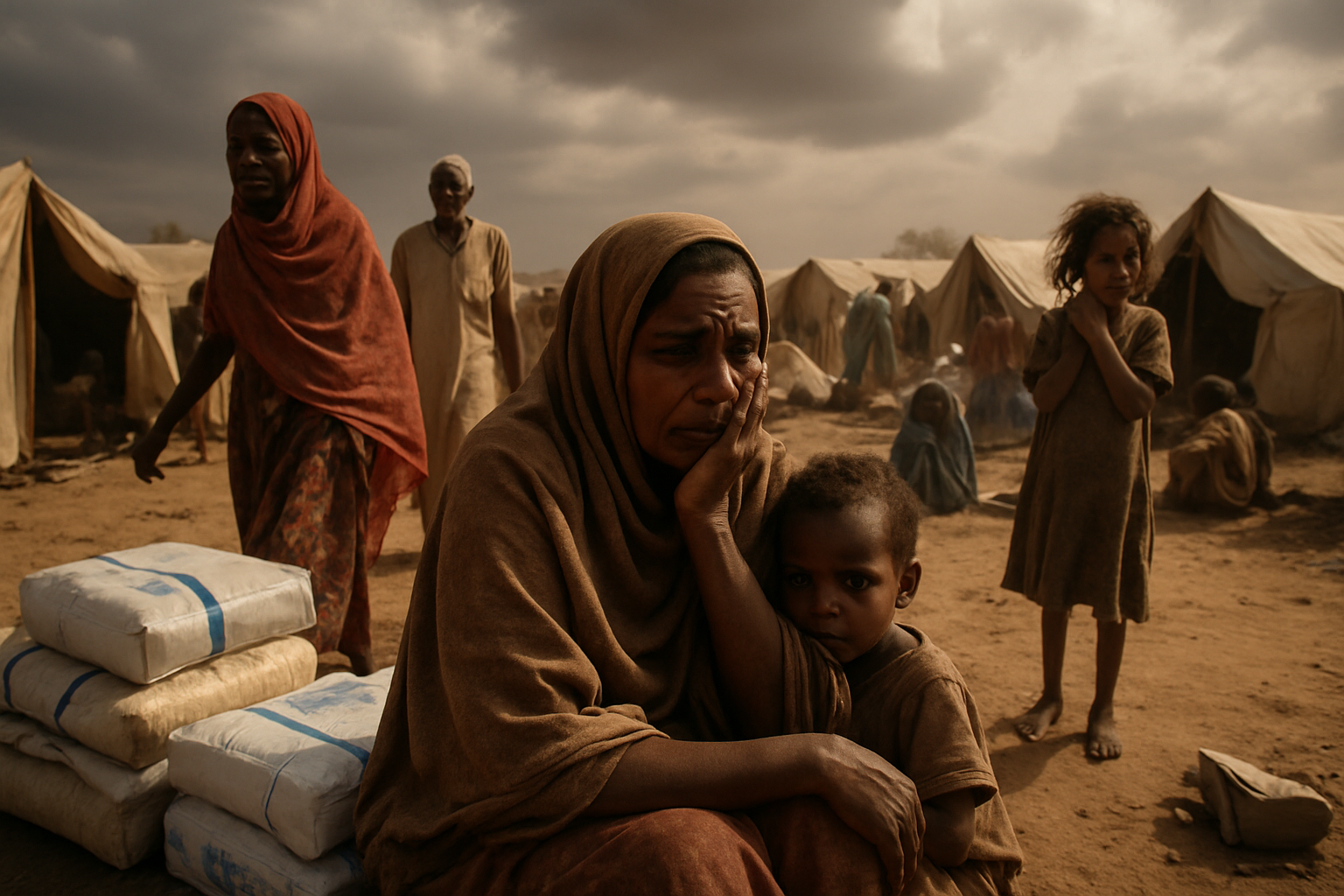
Sudan's civil war has created one of the world's worst humanitarian crises, with over 17.8 million people requiring assistance. The conflict has displaced millions internally and forced hundreds of thousands to flee to neighboring countries, creating a regional refugee emergency.
The UN has declared famine conditions in multiple areas of North Darfur, with Um Baru showing a catastrophic 53% acute malnutrition rate among children under five – nearly double the 30% famine threshold. Healthcare facilities face systematic attacks, forced closures, and resource shortages, crippling the medical system when it's needed most.
The el-Fasher attack occurred amid broader systematic destruction of civilian infrastructure. Ferry disasters and transportation breakdowns have left civilians with dangerous options for basic mobility, while agricultural production has collapsed across much of the country.
International Response and Accountability
The international community faces mounting pressure to respond to what UN officials describe as systematic violations of international humanitarian law. Egypt's Foreign Minister confirmed that no consensus has been reached within the African Union regarding the restoration of Sudan's suspended membership, maintaining the country's diplomatic isolation.
Regional implications of Sudan's crisis continue to reverberate across the Horn of Africa, with refugee pressures mounting on Chad and South Sudan. Disrupted trade routes and agricultural collapse are affecting food security throughout the region, transforming Sudan's civil war into a broader regional crisis.
Human rights organizations are calling for the establishment of accountability mechanisms to address systematic war crimes targeting protected civilian sites. The scale of documented atrocities, including the el-Fasher massacre, has prompted renewed discussions about potential international judicial intervention.
Origins and Trajectory of the Conflict
Sudan's current civil war began in April 2023 following a power struggle between military leaders over RSF integration into the national army and disagreements over the timeline for civilian rule. What started as a dispute between former allies – SAF commander General Abdel Fattah al-Burhan and RSF leader General Mohamed Hamdan Dagalo (known as Hemedti) – has evolved into a devastating nationwide conflict.
The RSF, which emerged from the Janjaweed militias that participated in the Darfur genocide, has systematically expanded its territorial control. The paramilitary force now controls large swaths of western and central Sudan, using brutal tactics to consolidate power while the international community struggles to respond effectively.
Recent RSF attacks on military hospitals have killed dozens, including medical staff, representing a grave escalation in targeting healthcare infrastructure. The systematic nature of these attacks suggests a deliberate strategy to destroy Sudan's institutional capacity and civilian morale.
Urgent Need for International Action
The UN documentation of the el-Fasher massacre underscores the urgent need for coordinated international action to address Sudan's humanitarian catastrophe. The systematic nature of civilian targeting, combined with the scale of displacement and famine conditions, requires immediate humanitarian intervention and long-term accountability measures.
International response has been hampered by access restrictions, funding shortfalls, and competing global emergencies in Ukraine and Gaza. However, the documented evidence of mass atrocities in el-Fasher may galvanize stronger international pressure for intervention and accountability.
The crisis now represents one of the world's most urgent humanitarian emergencies, requiring sustained international attention and coordinated response mechanisms. Without decisive action, Sudan risks complete state collapse with devastating consequences for regional stability and global security.
As the conflict enters its third year, the el-Fasher massacre serves as a stark reminder that the international community's failure to act decisively has enabled one of the 21st century's worst humanitarian disasters to unfold largely unaddressed.