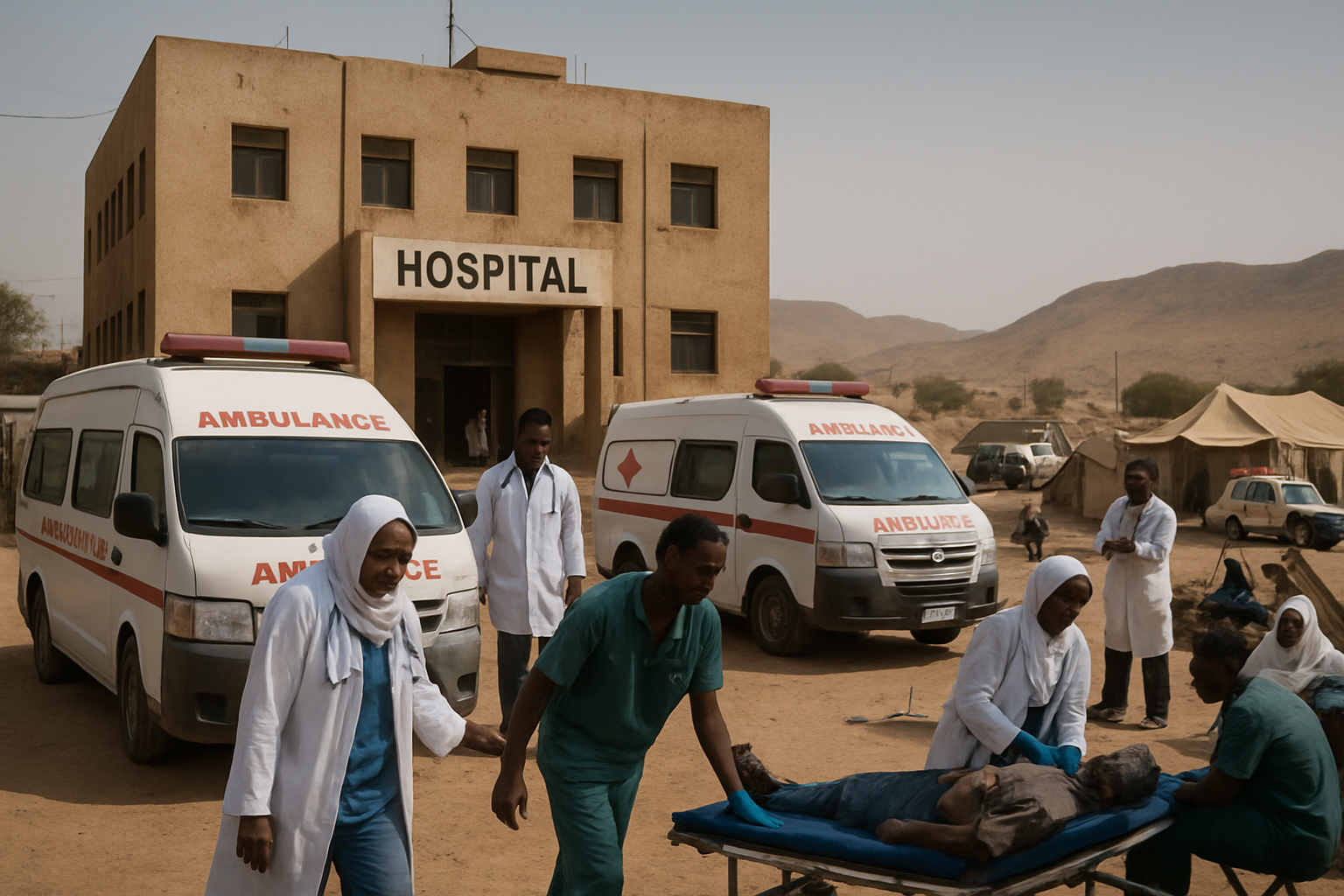
Sudan's humanitarian crisis reached new depths of despair this week as paramilitary forces launched a deadly attack on a military hospital in the country's south, killing 22 people including medical staff, while international food security experts warned that famine conditions have spread to two more areas of the war-ravaged Darfur region.
The hospital attack, which claimed the lives of the facility's director and three medical staff members among the 22 victims, represents a grave escalation in the targeting of healthcare infrastructure during Sudan's ongoing civil war. The assault by Rapid Support Forces (RSF) underscores the systematic destruction of civilian services that has characterized the 20-month conflict between the paramilitary group and Sudan's regular army.
Famine Conditions Expand Across Darfur
Meanwhile, the Integrated Food Security Phase Classification (IPC), a global consortium of food security experts backed by the United Nations, issued an alarming alert on Thursday declaring that acute malnutrition has reached famine levels in North Darfur State's contested areas of Um Baru and Kernoi.
In Um Baru, the rate of acutely malnourished children under five years old has reached a staggering 53 percent—nearly double the 30 percent threshold that defines famine conditions. This catastrophic figure represents one of the highest malnutrition rates documented in modern humanitarian crises, reflecting the devastating impact of prolonged conflict on civilian populations.
The IPC alert, while not constituting a formal famine declaration, highlights alarming levels of hunger based on the latest available data. The expansion of famine-like conditions to these two additional areas compounds an already desperate situation in western Sudan, where previous assessments had identified widespread food insecurity across the Darfur region.
Healthcare Under Siege
The deliberate targeting of medical facilities represents a war crime under international humanitarian law, yet such attacks have become increasingly common as the conflict between RSF paramilitaries and Sudan's military has intensified. The hospital attack that killed 22 people, including healthcare workers on the front lines of Sudan's humanitarian response, exemplifies the systematic assault on civilian infrastructure that has characterized this war.
"The targeting of hospitals and medical personnel constitutes a grave violation of international humanitarian law and directly impacts civilians' access to life-saving care."
— International humanitarian law expert
Healthcare facilities across Sudan have faced repeated attacks, forced closures, and resource shortages that have crippled the country's medical system precisely when it is needed most. The loss of medical infrastructure has created a vicious cycle where malnutrition and preventable diseases spread unchecked, while the capacity to treat victims of violence continues to diminish.
The Human Cost of Conflict
Sudan's civil war, which erupted in April 2023 between the RSF and the Sudanese Armed Forces, has created one of the world's most severe humanitarian crises. The conflict has displaced millions of people internally and forced hundreds of thousands to flee to neighboring countries, creating a regional refugee emergency that has strained resources across the Horn of Africa.
The war originated from a power struggle between military leaders who had previously cooperated in overthrowing Sudan's civilian government, but disagreements over the integration of the RSF into the regular army and the timeline for civilian rule sparked the current conflict. What began as a political dispute in the capital Khartoum has since spread across the country, with Darfur becoming one of the most severely affected regions.
International Response and Challenges
The international community has struggled to mount an effective response to Sudan's crisis, hampered by access restrictions, funding shortfalls, and the ongoing security situation. Humanitarian organizations report significant challenges in reaching affected populations, particularly in contested areas where fighting continues.
Previous international efforts to address humanitarian crises in Sudan, including extensive involvement during earlier conflicts in Darfur in the 2000s, provide context for understanding both the cyclical nature of violence in the region and the limitations of external interventions without sustainable political solutions.
The current crisis occurs against the backdrop of global humanitarian funding challenges, with competing emergencies in Ukraine, Gaza, and other conflict zones straining international resources. This competition for attention and resources has left Sudan's crisis relatively underreported and underfunded compared to other global emergencies.
Regional Implications
The expanding humanitarian catastrophe in Sudan has significant implications for regional stability across the Horn of Africa and the broader Sahel region. Refugee flows into Chad, South Sudan, and other neighboring countries have created additional pressures on nations already struggling with their own internal challenges.
The conflict has also disrupted trade routes and economic connections that link Sudan to both African and Middle Eastern markets, creating ripple effects that extend far beyond the country's borders. Agricultural disruption in Sudan, traditionally a significant food producer in the region, has contributed to broader food insecurity challenges across the Horn of Africa.
Looking Forward
The simultaneous escalation of violence against healthcare facilities and the spread of famine conditions to new areas represents a dangerous trajectory for Sudan's humanitarian crisis. Without immediate intervention to protect civilian infrastructure and ensure humanitarian access, the situation threatens to deteriorate further.
International humanitarian law requires all parties to conflict to protect medical facilities and personnel, while the responsibility to prevent famine falls on both warring parties and the international community. The current trajectory suggests that without significant changes in approach, Sudan faces the prospect of becoming one of the world's most severe humanitarian catastrophes.
The resilience of Sudanese communities, demonstrated throughout decades of conflict and political instability, remains a crucial factor in determining how the crisis will unfold. However, community resilience has limits, and the current combination of violence, hunger, and destroyed infrastructure is testing those limits in unprecedented ways.